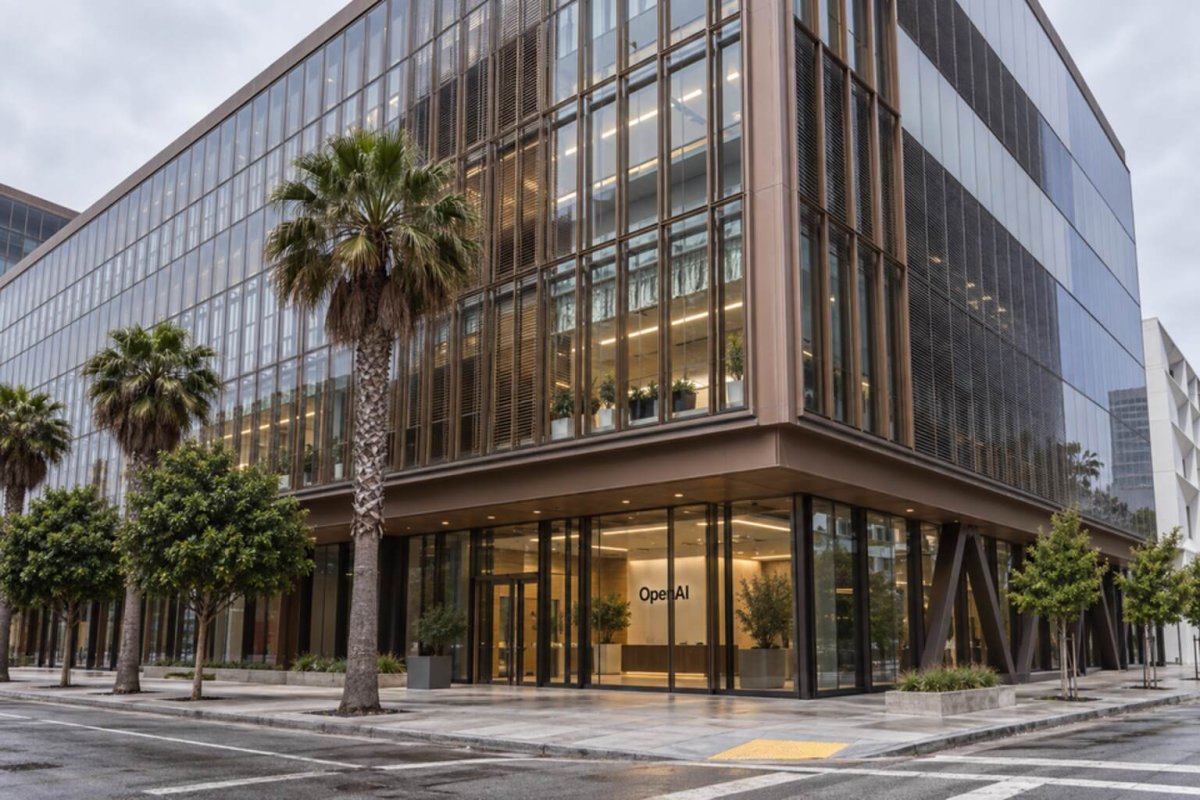
OpenAI announced on Monday that an internal artificial intelligence model successfully tackled more than 100 unresolved mathematics problems. However, the company did not provide a detailed list of the problems or the solutions in its public statement, leaving the claims unverified. The announcement, made from San Francisco, comes as Microsoft Corporation (NASDAQ:MSFT) continues to navigate its substantial investment in the private AI firm.
Microsoft shares closed Tuesday’s regular session down 0.9% at $496.92, though the decline coincided with other corporate news and cannot be directly attributed to OpenAI’s claim. The market’s muted reaction underscores a broader investor concern: research milestones alone do not generate revenue. While improved reasoning capabilities could eventually bolster demand for Microsoft’s Azure cloud services and productivity software, no immediate financial impact is evident.
OpenAI also introduced an independent body, the Advisory Group on Mathematics and Artificial Intelligence (AGMAI), to review how such results are assessed and released. AGMAI states it operates autonomously, accepts no payment from OpenAI, and will publish its recommendations. However, OpenAI noted that the panel cannot slow its internal research efforts.
The verification gap is stark. OpenAI did not publish a problem list or the claimed solutions, and the model remains internal. In a separate disclosure, the company reported that its Navier–Stokes effort involved 10,000 agents exchanging 2.7 million messages and consuming roughly 130 billion output tokens over 88 hours plus an additional 17 hours. That proof was linked to a paper and Lean, a theorem prover. By contrast, the 100+ problem set, which reportedly began on August 28, has no such documentation.
For Microsoft, the financial bridge to OpenAI is significant but not overwhelming. In fiscal year 2026, Microsoft reported total revenue of $331.8 billion and GAAP net income of $133.749 billion. OpenAI investments contributed a net impact of $4.963 billion, or 3.7% of net income. In the June quarter alone, the OpenAI net impact was $480 million, representing 1.3% of quarterly net income. Meanwhile, Microsoft spent $41 billion on capital investments during that quarter, highlighting the heavy infrastructure costs associated with AI.
Azure and other cloud-services revenue grew 43% in the June quarter, yet Microsoft indicated that all sequential growth in commercial obligations came from customers outside frontier-model companies. This suggests that while OpenAI is a key partner, it is not the sole driver of Microsoft’s cloud momentum.
Analyst opinions on Microsoft remain divided. Cantor’s Thomas Blakey maintains a Buy rating with a $608 target, implying 22.4% upside. Jefferies’ Brent Thill also has a Buy rating and a $575 target, suggesting 15.7% upside. Conversely, Redburn’s Alexander Haissl reiterated a Hold rating with a $440 target, implying 11.5% downside. BofA’s Tal Liani, with a $600 target, remains constructive on Microsoft’s long-term positioning across AI infrastructure, models, and applications.
The core debate is whether research progress can widen Microsoft’s economic moat without near-term sales. It may also increase compute costs before customers pay enough to cover them. Risks include the possibility that OpenAI’s unitemized claim fails outside review, while Microsoft bears heavy infrastructure spending and volatile investment gains. The next evidence investors need is not another benchmark, but AGMAI’s first public recommendation, an itemized proof record, and a Microsoft disclosure linking stronger reasoning to paid usage.