Oracle Corporation shares advanced on Friday, closing at $160.14, a gain of 2.34%, as trading activity paused for the Presidents Day holiday. U.S. equity and bond markets are closed Monday, with regular sessions resuming on Tuesday, February 18. The shortened trading week places heightened attention on the software giant's upcoming moves and broader market catalysts.
Funding Strategy Under Scrutiny
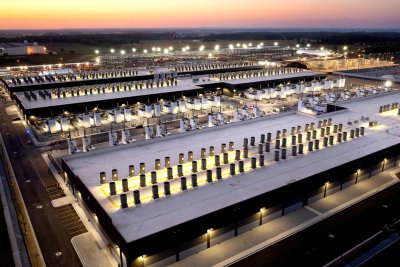
The immediate narrative for Oracle centers on its ambitious capital plan to finance a significant expansion of its cloud infrastructure. Earlier this month, the company outlined expectations to raise between $45 billion and $50 billion in 2026. This capital is earmarked for adding data center capacity to support growth in its Oracle Cloud Infrastructure (OCI) business, a critical segment as enterprise demand for artificial intelligence and computing resources intensifies.
According to a recent SEC 8-K filing, the funding strategy involves a multi-pronged approach. It includes an "at-the-market" equity program authorizing the sale of up to $20 billion in common stock over time, supplemented by a notes offering intended to raise approximately $25 billion in debt. This mixed financing model aims to balance the company's capital structure while funding aggressive growth investments.
Investor Calculus: Growth Versus Dilution
Market participants are intently evaluating whether Oracle can sustain robust cloud revenue growth sufficient to counterbalance the financial impacts of its funding plan. Key concerns include potential share dilution from the equity sales and increased interest expenses from additional debt, particularly if macroeconomic conditions lead to higher borrowing costs. The company's stock currently trades substantially below its 52-week high of $345.72, reflecting market apprehension about the cost of expansion.
The risk scenario, as analysts note, is that the financing burden could pressure the share price before new cloud capacity generates meaningful revenue. This is especially pertinent if customer demand for AI-related services moderates or if enterprise clients delay migrating workloads. Oracle's competitive position adds another layer of complexity, as it contends with hyperscale rivals and enterprise software peers who are also making massive data center investments.
Earnings Context and Spending Outlook
The funding debate occurs against a backdrop of recent financial performance. Oracle's latest quarterly earnings fell short of expectations, and the company issued a higher spending outlook in December. These factors remain in the background for many investors, informing their assessment of the capital plan's viability. The central question is whether the projected cloud growth will justify the substantial capital outlay and associated financial risks.
Investor sensitivity is heightened in the current market environment, which has become less forgiving of large-scale technology spending tied to AI without clear, near-term monetization pathways. The specter of "build it and they will come" strategies failing to deliver expected returns looms over the sector.
Market and Macro Backdrop
With no U.S. trading session on Monday, attention will pivot to Tuesday's market open and the broader economic calendar. Midweek, traders will scrutinize signals from the Federal Reserve, with the minutes from the January 27-28 Federal Open Market Committee meeting scheduled for release. These minutes may provide further insight into the central bank's interest rate trajectory, influencing capital cost assumptions for companies like Oracle undertaking major debt-funded expansions.
Oracle's journey highlights a pivotal moment for legacy software firms transitioning to cloud-centric models. The company's ability to execute its capacity buildout efficiently, manage its capital structure prudently, and capture growing demand in a fiercely competitive landscape will likely determine its stock performance in the coming quarters. As markets reopen, the focus will be on any incremental updates regarding the funding timeline and cloud demand indicators.