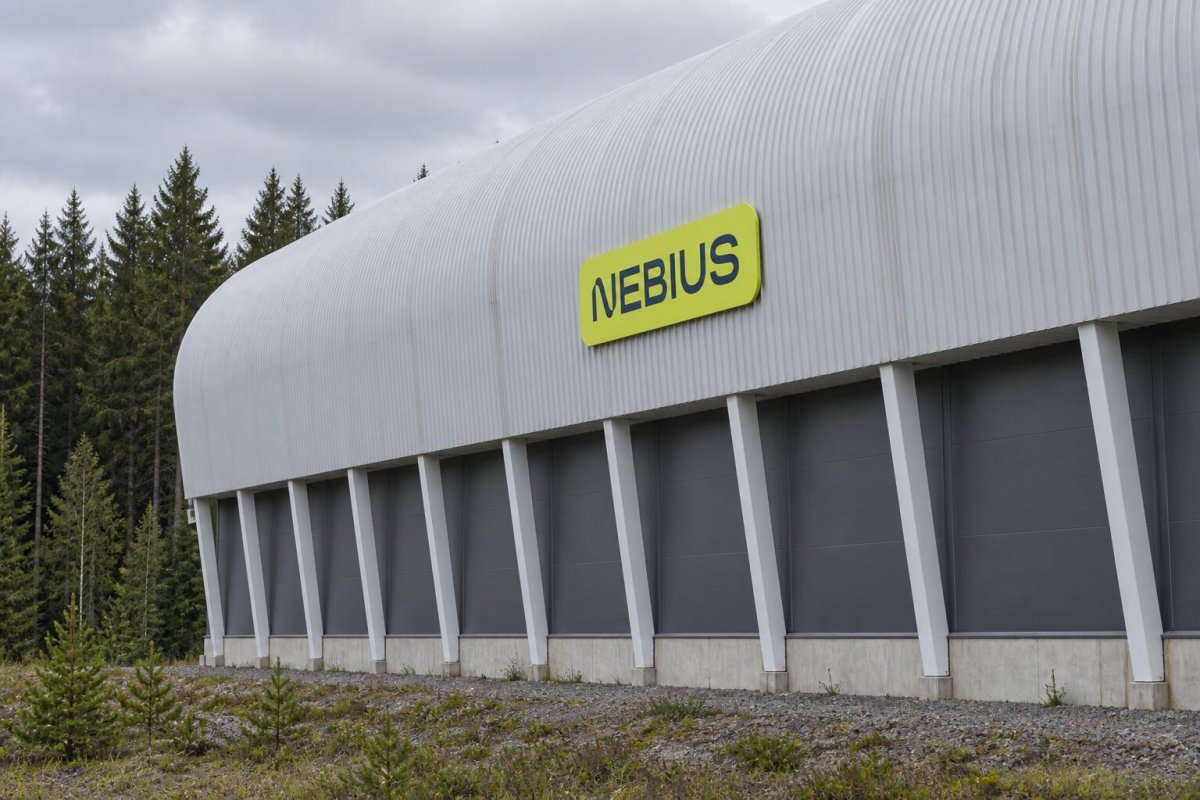
Palantir Technologies has designated Nebius Group as its preferred infrastructure partner for sovereign artificial intelligence initiatives, a strategic endorsement announced on September 8. However, the collaboration's financial significance remains unclear, as neither company disclosed a contract value, customer commitment, or expected revenue contribution. This omission is particularly notable given the recent volatility in Nebius shares (NBIS), which surged 7.7% to $243.88 on the announcement day, only to retreat over the following three sessions, closing at $224.55 by September 11.
The market's initial positive reaction followed by profit-taking suggests investors are wrestling with the deal's true economic substance. While the partnership grants Nebius access to Palantir's enterprise ecosystem, the lack of concrete financial metrics means the arrangement currently transfers reputation rather than measurable revenue. For Nebius, the strategic value lies in distribution: Palantir's established relationships with security-conscious organizations could shorten the path from AI application development to infrastructure deployment.
What the Partnership Entails
Under the agreement, Nebius compute and inference endpoints will be integrated into Palantir's enterprise environment after a technical integration period. Eligible commercial customers will then be able to deploy open models on Nebius infrastructure while maintaining control over their data, compute, and models. The companies also plan to bring new capacity online, including modular data centers at sites with existing power availability.
However, the term "preferred" does not equate to a purchase commitment. The announcement does not specify exclusivity, identify a launch customer, or guarantee a minimum compute volume that Palantir will direct to Nebius. Access remains contingent on the integration timeline and restricted to eligible Palantir clients. These caveats do not negate the partnership's commercial potential, but they prevent investors from booking it as backlog.
Scaling Challenges Amid Rapid Growth
Nebius is no longer a small player, which raises the stakes for such agreements. Its second-quarter filing revealed group revenue of $582.3 million, a 454% year-over-year increase. AI-cloud revenue accounted for $574.9 million, nearly 99% of the total, while the company reported an operating loss of $175.9 million as it continues heavy investment in infrastructure.
The company also highlighted $3.0 billion in annualized run-rate revenue for its AI cloud, though this figure is calculated by multiplying the final month's revenue by 12, representing a snapshot rather than contracted forward revenue. The critical question is whether named customers will generate recurring cloud revenue without eroding the economics of the capacity Nebius must finance and install.
Capital Position and Investor Considerations
Nebius recently strengthened its balance sheet with a $5.75 billion convertible-note offering completed on August 24, aimed at funding data-center construction, GPU acquisitions, and cloud platform expansion. Simultaneously, the company exchanged $800 million of older notes for approximately 15.8 million Class A shares. While this funding provides management with ample runway, the added debt and share issuance make utilization rates, contract quality, and returns on new capacity increasingly consequential for shareholders.
What Would Change the Analysis
The bullish thesis is that Palantir offers Nebius a ready route into regulated and security-conscious enterprises, enabling faster monetization of capacity than a stand-alone sales effort could achieve. The counterargument is that the announcement currently lacks measurable economics: no disclosed order, usage floor, take-or-pay clause, or timetable for material revenue.
Investors can validate the partnership's value through four specific disclosures: completion of the integration, the first named customer, committed megawatts or contract value routed through Palantir, and the resulting impact on cloud revenue and operating profit. Until any of these materialize, "preferred partner" remains a strategic endorsement rather than a financial unit suitable for revenue modeling.
For now, the market must weigh the potential of this alliance against the absence of hard numbers. The coming quarters will reveal whether this partnership translates into tangible revenue growth for Nebius or remains a symbolic association with limited financial impact.