London's equity market delivered a mixed performance on Monday morning, with the blue-chip FTSE 100 index advancing while its mid-cap counterpart declined. The divergence highlights a market that remains selective, with gains concentrated in defensive sectors and energy producers rather than reflecting broad investor confidence.
At 09:39 BST on September 14, the FTSE 100 stood at 10,702.85, up 0.49% from Friday's close. In contrast, the FTSE 250, which tracks the next tier of companies, fell 0.50% to 23,855.75 just ten minutes later. This one-percentage-point gap is a telling signal: the FTSE 100's rise was not a vote of confidence in UK equities as a whole, but rather a reflection of strength in a narrow group of large-cap stocks.
Defensive Stocks and Oil Producers Lead the Charge
The strongest performers in the FTSE 100 during the morning session were Unilever (up 2.35%), AstraZeneca (up 2.24%), and BAE Systems (up 1.77%). These companies, which operate in consumer staples, pharmaceuticals, and defense, are less dependent on a rebound in UK household spending, making them attractive in times of economic uncertainty.
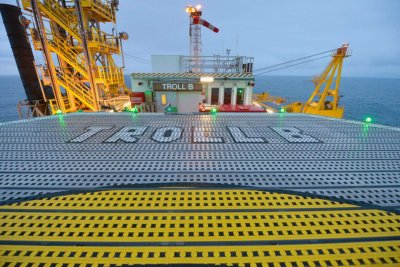
Oil producers also provided a significant buffer. BP rose 1.29% and Shell gained 1.07% as Brent crude futures traded at $107.95 per barrel, up 3.19%. The rise in oil prices directly benefits upstream producers, although it also adds to fuel and transport costs across the economy.
However, the commodity sector was not uniformly strong. Miners experienced a selloff, with Antofagasta falling 4.38%, Fresnillo dropping 2.89%, Glencore losing 2.64%, Anglo American declining 2.43%, and Rio Tinto down 2.39%. This divergence indicates that energy strength was offsetting weakness in mining stocks, rather than signaling broad demand for resource shares.
FTSE 250 Weakness Undermines Bullish Interpretation
The FTSE 250, which represents roughly 15% of UK market capitalization according to FTSE Russell, declined, making the opening divergence between the two indices more significant. Investors were clearly paying up for a narrow group of defensive and energy exposures, not lifting London shares indiscriminately.
A softer pound also played a role in the FTSE 100's outperformance. GBP/USD was down 0.35% at $1.3482, which boosts the value of overseas earnings for multinational companies when translated back into sterling. However, intraday currency moves do not immediately affect reported profits, and many firms hedge their currency exposure.
Oil Price Rally: A Double-Edged Sword
The strongest counterargument to the FTSE 100's resilience is the source of its support. While higher oil prices benefit BP and Shell, they can also prolong inflationary pressures, delay potential rate cuts, and squeeze margins across transport, industrial, and consumer sectors. Indeed, Lloyds and NatWest were already down 0.67% and 0.77%, respectively, in the morning snapshot.
Monday's close will provide a clearer test of market strength. If the FTSE 100 maintains its gain while the FTSE 250 remains negative, the session will be characterized as a defensive, large-cap driven rally. A rebound in mid-caps and miners would be required to signal a broader UK equity uptrend.