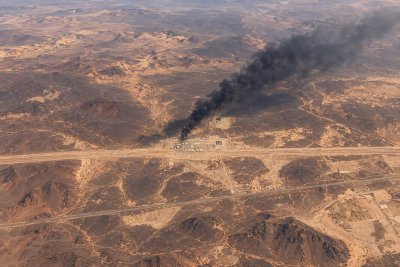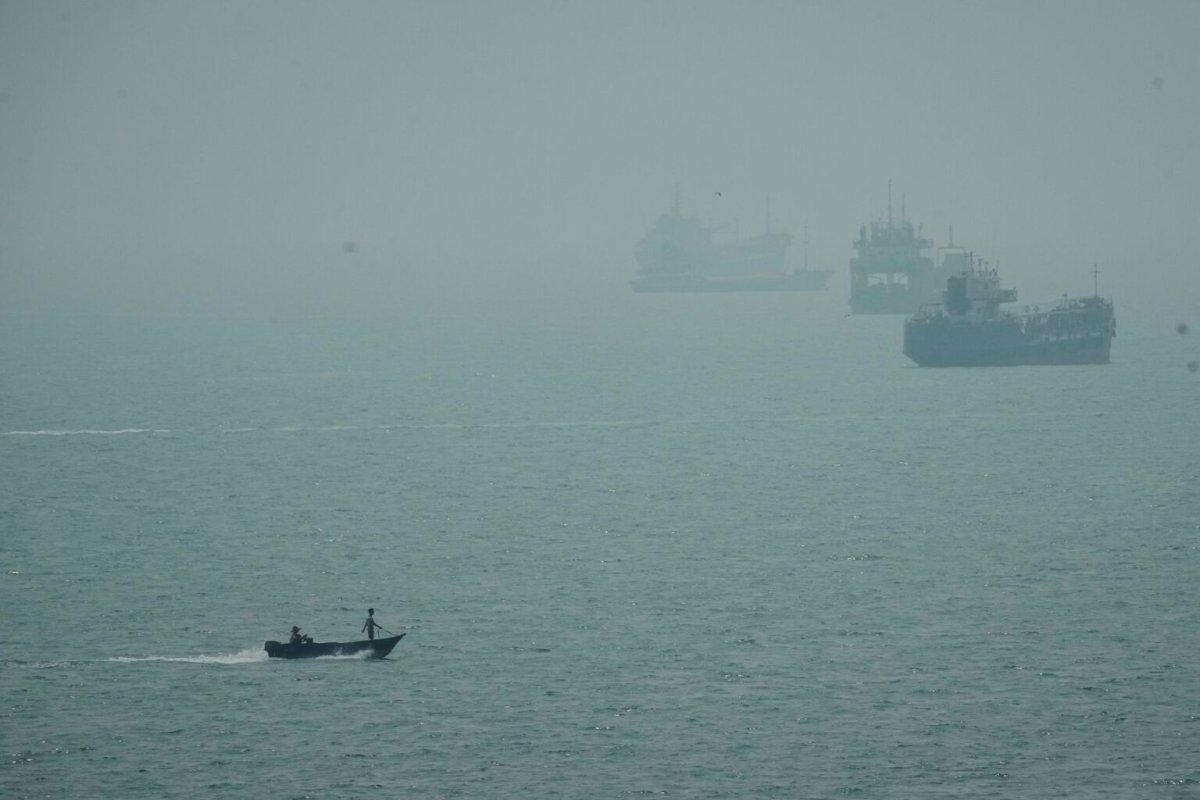
Oil markets opened the week with heightened tension as two critical supply corridors faced fresh disruptions. Iranian state media reported a cargo vessel strike off Qeshm Island in the Strait of Hormuz on Sunday, while Saudi Arabia temporarily halted operations on its East–West pipeline following drone attacks. Although no additional crude supply losses have been confirmed, the incidents have narrowed the margin for error in an already fragile global energy system.
The early reports remain fragmented. Iranian officials stated that one person was killed and four others wounded in the strike. Separately, the United Kingdom Maritime Trade Operations (UKMTO) monitor reported that a vessel transiting the strait was hit by a projectile, causing a severe fire and forcing an evacuation. It is unclear whether these reports refer to the same ship, according to the Associated Press. Neither account identified the attacker.
The timing is significant. Friday's market relief was partly built on hopes of a temporary shipping arrangement with Iran. November Brent settled at $104.61 per barrel, down 2.8% for the session after nearing $110, yet still posted a weekly gain of more than 8%, according to Friday's market data. The Sunday incident arrived just before a planned Monday meeting in Oman regarding the management of the strait.
Route Dynamics
The Strait of Hormuz has already seen a dramatic reduction in oil traffic. By the second quarter, it was moving less than one-quarter of its prewar volume. Meanwhile, traffic through Bab el-Mandeb rose as Saudi barrels were redirected west. That substitution is why attacks on the East–West pipeline and new instability near the Red Sea carry more weight than they would in isolation.
Data from the U.S. Energy Information Administration (EIA), published September 9, 2026, illustrate the shift: Strait of Hormuz flows fell from 21.6 million barrels per day in Q4 2025 to 4.9 million in Q2 2026, a decline of 77%. In contrast, Bab el-Mandeb volumes increased from 5.4 million to 8.1 million barrels per day, a 50% rise.
Saudi Arabia's East–West pipeline has a capacity of 7 million barrels per day, with about 5 million barrels per day available for exports, the EIA estimated in July. Capacity is not the same as actual throughput, and Saudi authorities described the closure as temporary. Still, the system has been the main bypass while Hormuz traffic remained severely constrained. A prolonged outage would force either lower exports, greater reliance on storage and alternative routes, or some combination of the two.
Market Implications
A quick pipeline restart, continued vessel traffic, and a workable outcome from the Oman meeting would test how much of Brent's 8%-plus weekly rise was an insurance premium. Demand offers another brake. The International Energy Agency's September report forecasts world oil demand will fall by 2.5 million barrels per day in 2026, a downgrade of 940,000 barrels per day from its previous estimate.
Delays would change that calculation even without a formal closure of either route. Higher insurance costs, crews declining voyages, slower inspections, or uncertainty about the pipeline restart can reduce effective capacity before governments report a physical production loss. Reuters reported Sunday that the Saudi pipeline had become the chief outlet for Middle East supplies during the six-month disruption at Hormuz.
The strongest counterargument is that Sunday's reported target was a cargo vessel, not a confirmed oil tanker, and no new barrel loss has been measured. A headline-driven jump could therefore reverse if transit continues and the pipeline resumes service. For energy shares, airlines, inflation-sensitive bonds, and broad equity indexes, the decisive confirmation will be mundane: sustained vessel passages through Hormuz and verified operating status for the Saudi bypass.