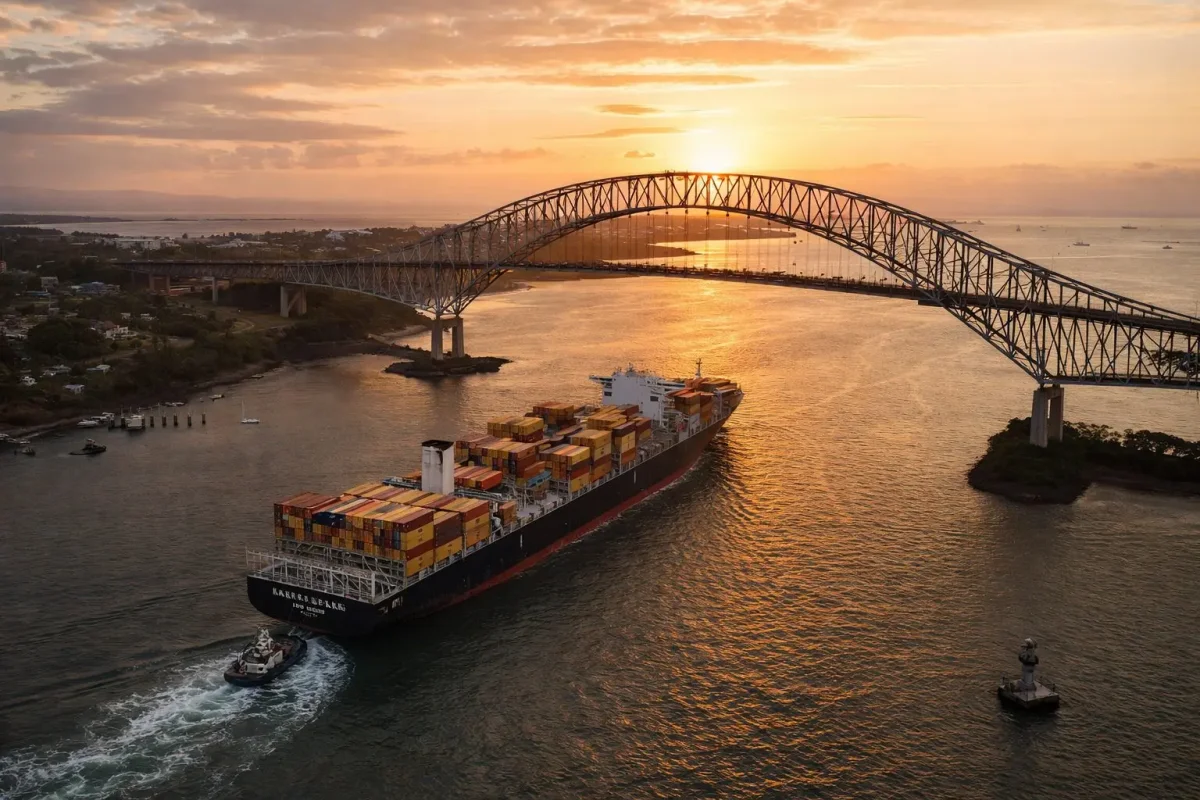
Panama Canal authorities report a notable uptick in maritime traffic as escalating Middle Eastern conflicts and associated fuel price increases drive shippers toward more efficient routes. Deputy Administrator Ilya Espino de Marotta confirmed a measurable rise in transits, stating the canal is witnessing a "slight increase" in vessel crossings following a challenging period of drought restrictions.
According to an internal report, total canal transits climbed 2.8% year-over-year to 4,156 vessels during the first four months of the current fiscal year through January. The increase was particularly pronounced for tankers, which saw crossings jump 11.2%. This resurgence follows a severe drought linked to the 2023-2024 El Niño weather pattern, which had forced the canal authority to reduce daily passages to as low as 24, significantly below normal capacity.
Administrator Ricaurte Vásquez identified rising energy, fuel, and navigation costs as primary factors redirecting shipping traffic back to the Panama Canal. "When costs increase, in general when the price of marine fuel rises, the Panama Canal becomes a more attractive route," Vásquez explained. He emphasized the route's efficiency, noting it can trim voyage times by three to fifteen days while consuming less bunker fuel compared to longer alternatives.
The strategic shift is unfolding against a backdrop of oil prices hovering near $100 per barrel and significant disruption risks around the Strait of Hormuz, a chokepoint for roughly 20% of globally traded crude oil. Vásquez indicated that container ships, dry bulk carriers, and liquefied natural gas (LNG) tankers are likely the first vessel classes to be rerouted. Analysts are preparing for increased movements of U.S. LNG exports through the canal to Asia if instability in the Gulf persists, potentially altering traditional gas trade flows between Europe and Asia.
Daily transit numbers have rebounded to between 40 and 41 vessels, surpassing the typical pre-drought average of 36. Espino de Marotta cautioned that maintaining 41 or 42 daily transits is not sustainable, but a steady pace of approximately 38 is achievable. This recovery is aided by wetter-than-normal conditions during the current dry season.
The canal's geographic advantage is a key factor in its renewed appeal. At approximately 50 miles in length, the Panama Canal is less than half the distance of the 120-mile Suez Canal. This shorter passage translates directly into lower fuel consumption, a consideration that grows critically important as bunker fuel prices climb.
Industry observers are weighing the potential for longer-term trade route adjustments. Gerardo Bósquez of the Panama Maritime Chamber suggested a prolonged conflict could reshape global shipping lanes, particularly benefiting gas shipping. However, Administrator Vásquez offered a more reserved outlook, noting that cargo owners will likely postpone permanent logistical changes until the duration and severity of Gulf instability becomes clearer.
Despite the current momentum, gains for the Panama Canal may be temporary. Diplomatic sources indicate Tehran is not actively seeking to close the Strait of Hormuz, though tanker movements through the region have already been severely impacted. The overall outlook for global trade routing remains highly fluid.
Looking beyond immediate crisis response, Panama is advancing ambitions to expand its logistics and energy footprint. The canal authority announced plans to award contracts for two new ports and a natural gas pipeline by June 2027. This infrastructure initiative signals a strategic intent to capture a greater share of global cargo and energy traffic for the long term, positioning the canal as a central hub in hemispheric trade networks.