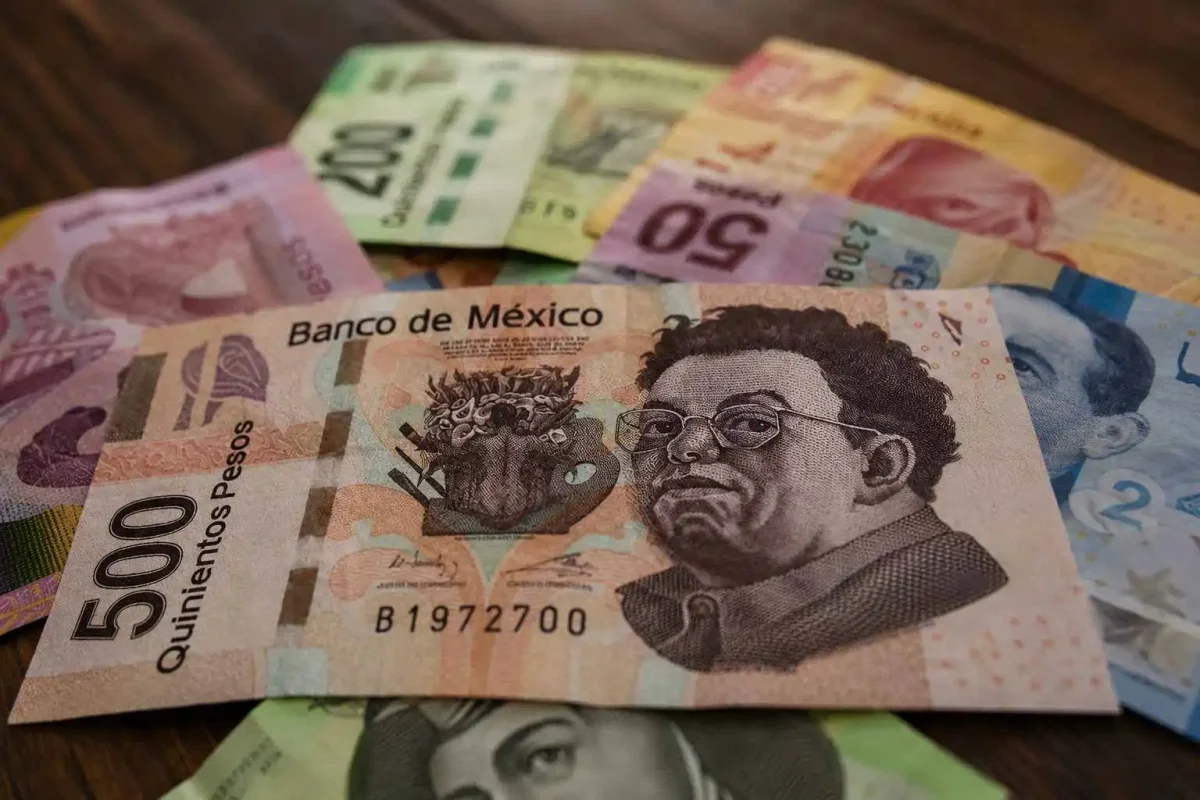
The Mexican peso closed July with a monthly gain of 1.02%, but the currency's recent strength has significantly reduced the profitability of the carry trade. According to official data from Banxico, the peso ended the session at 17.3207 per dollar on Friday, up 0.11% on the day and 0.94% for the week.
The central bank's policy rate stands at 6.50%, which is 287.5 basis points above the U.S. Federal Reserve's target midpoint of 3.625%. Over a 335-day period, this spread translates to a simple carry return of approximately 2.64%. However, a consensus survey of 24 currency analysts conducted on July 1 projects a median exchange rate of 17.78 per dollar in one year, implying a depreciation of 2.65% from Friday's close. This leaves the net carry advantage at essentially zero, a razor-thin margin that offers little buffer for investors.
Market Dynamics
The peso's appreciation has been notable across various timeframes. From the start of July, the currency strengthened by 1.02%, while from the beginning of the year, it has gained 3.82%. Over the past twelve months, the appreciation is more pronounced at 8.20%. These gains have increased the cost of entering new peso positions, reducing the spot protection available to investors if the currency reverses course.
The recent strength can be partly attributed to Mexico's robust economic performance. Preliminary data show that the country's GDP grew 1.5% quarter-over-quarter in the second quarter, and 2.1% year-over-year. Both figures exceeded Reuters' estimates of 1.3% and 1.5%, respectively. The secondary sector expanded 1.6%, while services grew 1.5%, indicating a broad-based recovery.
Policy and Data Focus
Next week brings critical policy events. Banxico is scheduled to announce its interest rate decision on August 6, with markets widely expecting the central bank to hold rates at 6.50%. The following day, the U.S. Labor Department will release July jobs data, which could influence the Federal Reserve's policy path. The Fed kept rates unchanged at 3.50%-3.75% this week, but three members dissented in favor of a 25-basis-point hike, signaling potential upward pressure on U.S. rates.
Commerzbank's Michael Pfister attributed the peso's stability to optimism about U.S. economic growth, stating that "a more robust U.S. real economy from which Mexico should benefit." However, he cautioned that further adjustments cannot be ruled out.
Implications for Investors
For investors, the near-zero carry margin means that any adverse move in the exchange rate could wipe out returns. If U.S. employment data comes in strong, Treasury yields and the dollar could rally, putting pressure on the peso. Conversely, if Banxico unexpectedly cuts rates, the rate differential would shrink immediately, further eroding the carry appeal. Additionally, any disruptions to energy supplies could fuel inflation, leading to greater rate volatility.
Despite the peso's recent gains, Mexican equities remain below their February highs. The IPC index closed at 66,936.99, down about 7.2% from its peak. This suggests that while the currency has strengthened, the broader market has not fully participated in the rally.
