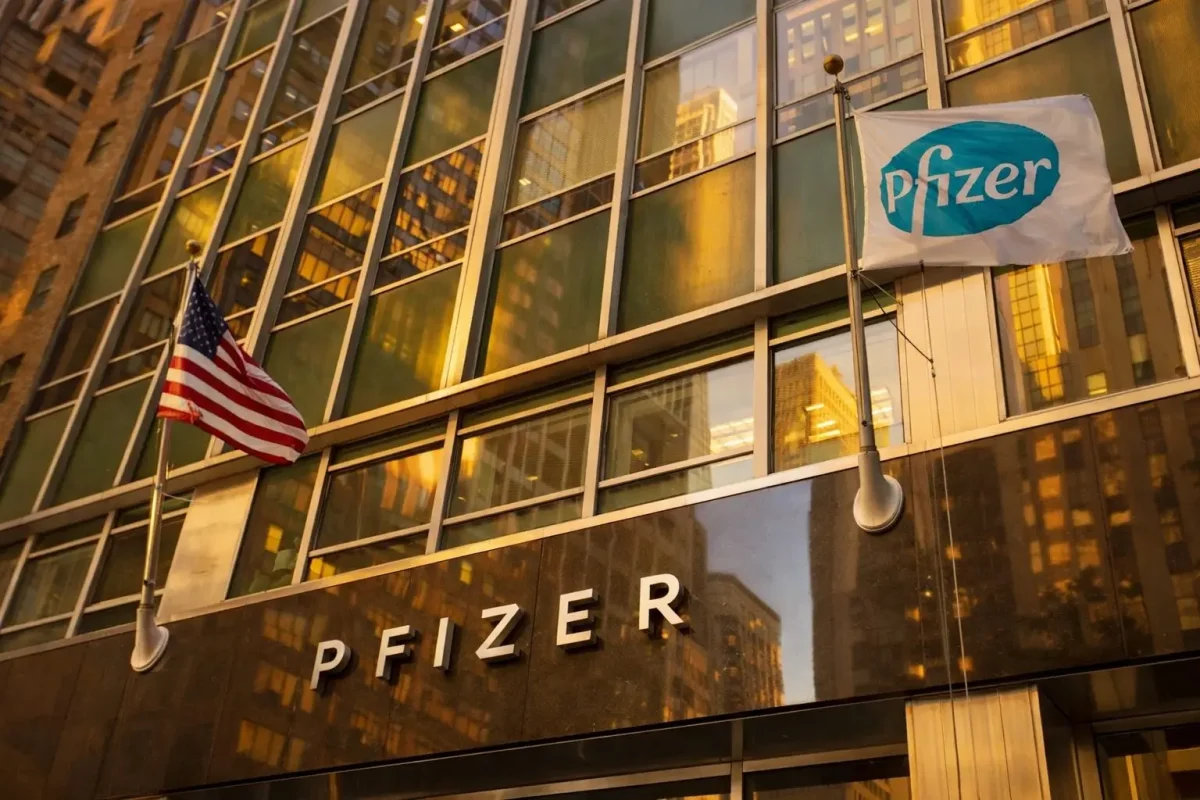
Pfizer Inc. reached a significant milestone on Tuesday, with its stock climbing to a 52-week peak of $28.30 during trading in New York. The pharmaceutical giant's shares settled at $27.87 later in the session, surpassing a previous high of $27.92. This upward movement reflects a shift in investor focus from the company's declining COVID-19-related revenue toward its emerging portfolio in oncology, vaccines, and metabolic diseases.
Financial Performance and Guidance
The company's fourth-quarter financial results, reported on February 3, provided a solid foundation for the recent optimism. Pfizer posted quarterly revenue of $17.56 billion, exceeding market expectations. Management reaffirmed its full-year 2026 revenue target, projecting a range of $59.5 billion to $62.5 billion, with adjusted earnings per share anticipated between $2.80 and $3.00. Notably, excluding contributions from its COVID-19 segment, the company demonstrated underlying growth, with revenue increasing 6% for the full year 2025 and 9% in the fourth quarter alone.
Pipeline Catalysts Drive Bullish Sentiment
Recent clinical trial successes are fueling positive analyst commentary. On March 19, Pfizer announced that its late-stage TALAPRO-3 study met its primary endpoint. The combination of Talzenna and Xtandi significantly delayed disease progression in patients with advanced prostate cancer. Jeff Legos, Pfizer's Chief Oncology Officer, described the results as "unprecedented," while lead investigator Neeraj Agarwal noted the therapy "significantly extends" the time before cancer worsens.
Additional pipeline progress includes positive Phase 2 data for the breast cancer therapy atirmociclib, which demonstrated a 40% reduction in the risk of disease progression or death. Furthermore, analysts have highlighted tilrekimig, an eczema candidate, as a potentially competitive asset that could provide another near-term catalyst for the company's pipeline development efforts.
The Obesity Market Challenge
A critical battleground for Pfizer is the lucrative obesity treatment market. Following its acquisition of Metsera, the company is targeting a potential 2028 launch for its once-monthly injectable therapy. Chief Scientific Officer Chris Boshoff has expressed confidence that the candidate could compete effectively with existing market leaders. However, some observers, including Daniel Barasa of Gabelli Funds, have tempered expectations, noting that early weight-loss data appeared "good, but not category-defining." Risks remain substantial, with approximately 10% of patients discontinuing the mid-stage trial due to side effects.
Valuation Concerns and Analyst Divergence
Despite the rally, a stark divide exists among market observers. Some analysts point to the company's robust pipeline and execution as reasons for optimism. A March 29 analysis suggested Pfizer's strategic pivot, including the Metsera acquisition, could ultimately reward patient investors as the company attempts to narrow the gap with rivals Eli Lilly and Novo Nordisk.
Conversely, significant valuation concerns persist. As of March 26, analysis from Acquirer's Multiple, employing a discounted cash flow model, estimated Pfizer's intrinsic value at just $14 to $15 per share. This represents a potential downside of roughly 45% from the stock's trading level around $27 at that time, highlighting the substantial gap between market price and some fundamental valuations.
Strategic Execution and Future Risks
Investors are currently granting Pfizer leeway to execute its strategic transition. The company has flagged approximately 20 pivotal trial launches planned for 2026, which are essential for securing future regulatory approvals. However, questions linger regarding the return on the company's significant acquisition spending. David Wagner of Aptus Capital Advisors emphasized the need for these investments to generate "sizeable returns" for shareholders.
Other pipeline assets face hurdles. A Lyme disease vaccine developed with Valneva showed over 70% efficacy in recent data but fell short of a key statistical threshold. Analysts are divided on the regulatory pathway, with some suggesting authorities might take a "sympathetic" view, while others, like Cantor's Carter Gould, characterized the results as only "directionally supportive" of eventual approval.
Investment Outlook
The immediate future for Pfizer's stock appears to hinge on the company's ability to convert clinical successes into commercial victories. Bulls are betting on the potential of late-stage trial readouts and new drug launches to offset revenue declines from older products facing patent expirations. Bears, however, point to the company's own projection that a return to meaningful revenue growth may not materialize until 2029, alongside persistent questions about valuation and competitive intensity in key therapeutic areas. The coming quarters will be crucial in determining whether the current share price strength reflects sustainable momentum or optimistic speculation.