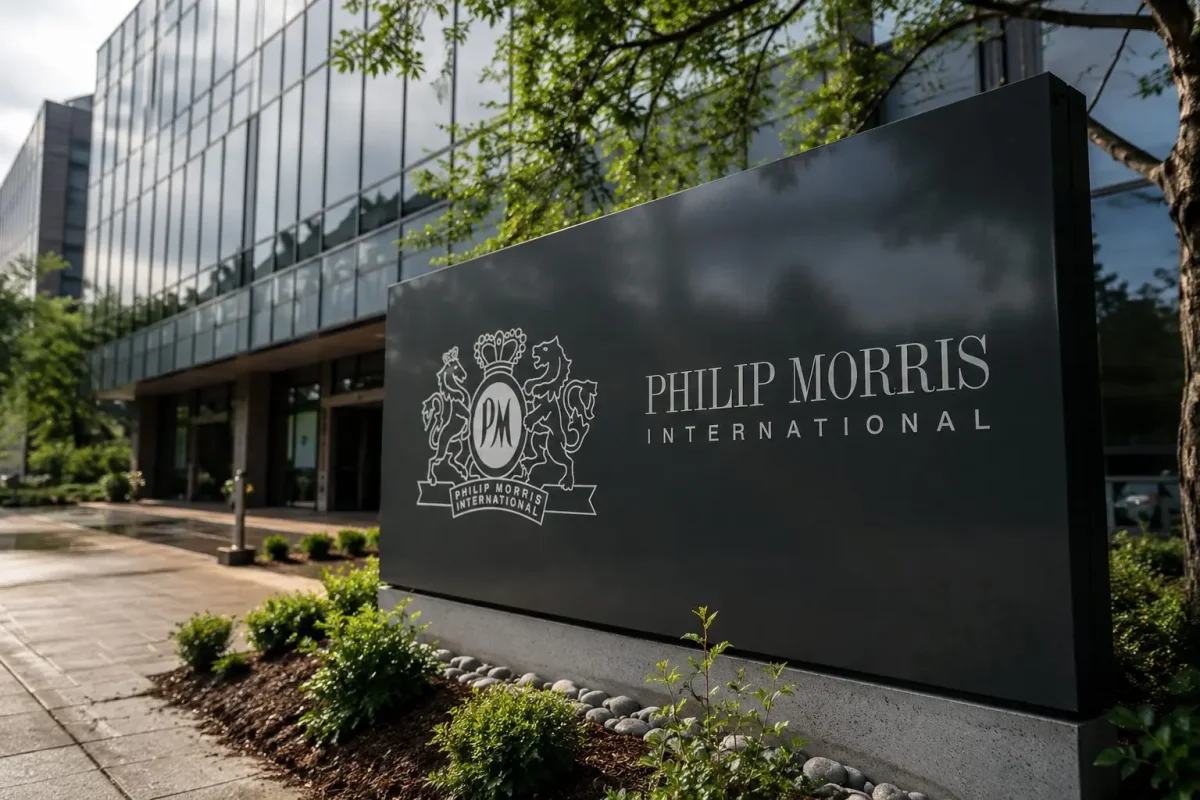
Shares of Philip Morris International (NYSE:PM) declined in premarket trading on Wednesday, July 22, 2026, after the company reported second-quarter results that topped expectations but issued a weaker-than-anticipated outlook for the third quarter. The stock was seen around $184.74, roughly 1.8% below Tuesday's closing price of $188.04.
Adjusted earnings per share for Q2 reached $2.20, surpassing the LSEG consensus estimate of $2.05 by 7.3%. Net revenue came in at $11.19 billion, also above the $10.63 billion forecast. However, the midpoint of the company's Q3 adjusted EPS guidance range of $2.20 to $2.25 is approximately 8.1% below the Wall Street estimate of $2.42, prompting investor caution.
The earnings beat was largely driven by quality, with currency accounting for roughly one-third of the outperformance versus management's previous expectations. The remaining gains came from timing of spending and cigarette volumes. However, CFO Emmanuel Babeau noted that the cigarette performance was not expected to be repeated to the same magnitude for the full year.
Certain commercial expenses originally scheduled for Q2 have been moved to Q3, including increased spending on Zyn marketing, distribution, and retail locations. This shift contributed to the softer Q3 guidance. The full-year adjusted EPS forecast was revised to $8.26 to $8.41, down from the prior range of $8.31 to $8.46, with the adjustment attributed solely to currency headwinds. The anticipated currency benefit dropped to 15 cents from 20 cents.
Smoke-free offerings accounted for approximately 42% of total group revenue, up 0.5 percentage point year-over-year. International revenue from smoke-free products grew by 14.2%. IQOS shipments increased by 7.6%, and Philip Morris continued to hold about three-quarters of the global heat-not-burn market.
In the U.S., business performance was mixed. Revenue declined by 0.7%, but Zyn shipments rose 1.8% to 2.9 billion pouches. Zyn maintained nearly 57% of the U.S. pouch retail value. Management highlighted shortcomings in stronger and more moist offerings, as well as a higher price premium. In June, the company introduced new moist Zyn Ultra versions, priced per pouch below the main Zyn brand, to compete with British American Tobacco's Velo product.
The company is also making progress on new product launches. The 1.5 mg and 8 mg dry Zyn formulations are expected in the current quarter, and commercial-scale manufacturing in Colorado began in July. Preparations for the IQOS Iluma launch continue, pending FDA decision.
PM shares closed Tuesday at $188.04, down 2.43% from the prior session. The stock had reached a 52-week high of $194.90 on Monday. Despite the recent pullback, shares remained up roughly 17% year-to-date as trading began Wednesday.
Risks to the outlook include margin pressure from a firmer dollar, increased price competition for Zyn, higher costs for U.S. launches, and regulatory challenges. On the upside, faster IQOS expansion or stronger Zyn demand could help offset these headwinds. The premarket decline suggests investors are weighing the Q2 beat against the cautious Q3 outlook, with the regular trading session likely to provide further clarity.