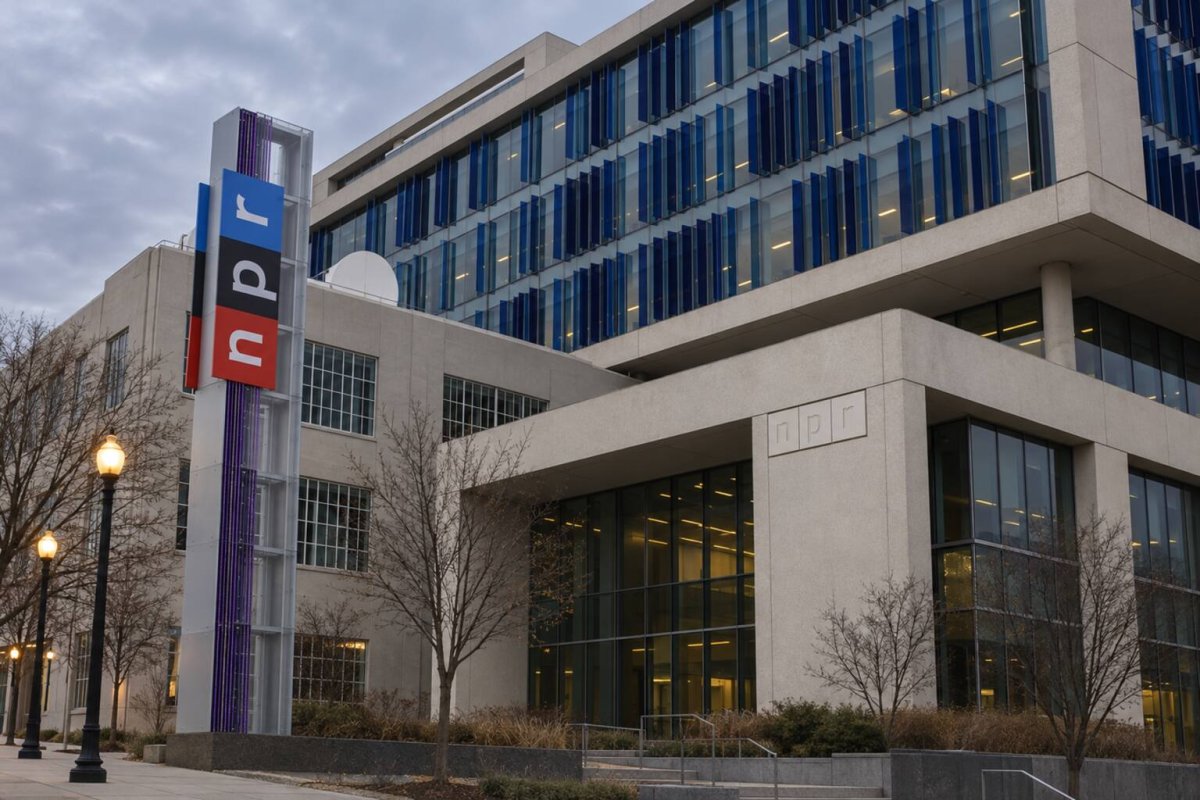
The temporary fundraising boom triggered by last year's federal funding threat has subsided, leaving public radio stations and NPR to confront a stark financial normalization. New donor acquisition across radio organizations plummeted by a median 75% in the three months ending July compared with the same period in 2025, according to the Contributor Development Partnership (CDP) index released September 10. Membership revenue for radio stations fell 7%, while large gifts of $500 or more dropped 29%.
These figures, however, do not signal a collapse in public radio giving. The sharp declines are measured against the extraordinary May–July 2025 period when the threat of federal funding cuts spurred a historic surge in donations. During that earlier window, new donors across all CDP-participating organizations jumped 156%, and radio stations saw growth exceeding 500%. The current data reflect a return to baseline, not a freefall.
NPR's Fiscal Year-End Challenge
The unfavorable year-over-year comparisons arrive at a critical juncture for National Public Radio, Inc. (NPR). As the nonprofit approaches its September 30 fiscal year-end, it faces an $8 million gap in its roughly $300 million annual budget, as disclosed in May. NPR projects a $15 million decline in member station fees and anticipates softer corporate sponsorship revenue. The network's financial health is closely tied to the fiscal well-being of its member stations, which pay core fees based on local membership revenue and content license fees linked to total revenue.
Normalization or Structural Shift?
The CDP data suggest a normalization rather than a persistent decline. Systemwide membership revenue dipped only 0.8% against a prior-year period that had seen a 146% surge. Crucially, sustainers—donors who make recurring gifts—increased 14% year-over-year, and July 2026 revenue remained well above July 2024 levels. This indicates that the 2025 surge may have expanded the recurring donor base, providing a buffer against the drop in first-time donors. The key question is whether stations can retain these new supporters as the political catalyst fades.
Radio-only organizations underperformed their television and joint-licensee counterparts, which posted 5% membership revenue growth in the same May–July window. This divergence highlights the unique challenges facing radio in retaining donors beyond crisis moments.
Restricted Gifts vs. Operating Revenue
NPR's headline-grabbing $113 million in restricted gifts—$80 million from Connie Ballmer and $33 million from an anonymous donor—cannot be used to close the operating gap. These funds are earmarked for technology improvements, shared tools, and services across the public radio system, not for covering payroll or other operating costs. This distinction is fundamental in nonprofit finance: restricted money can strengthen an organization's long-term capabilities but does not alleviate immediate income statement pressure. NPR has already initiated cost-saving measures, including voluntary buyouts for about 300 employees, with targeted layoffs possible if participation falls short.
What to Watch
NPR is not a publicly traded entity, so this story does not directly impact equity markets. However, the financial health of public radio has broader implications for media and nonprofit sectors. The key metrics to monitor are station renewal rates, unrestricted operating support, and the size of NPR's final fiscal-year deficit. The CDP index provides an early warning, but NPR's audited results will offer a clearer picture.
If recurring donors hold steady and the technology investments improve digital fundraising, the current gap may prove manageable. Conversely, continued declines in radio membership revenue could turn lower station fees into a structural problem. The next fiscal disclosures will determine which scenario unfolds.
