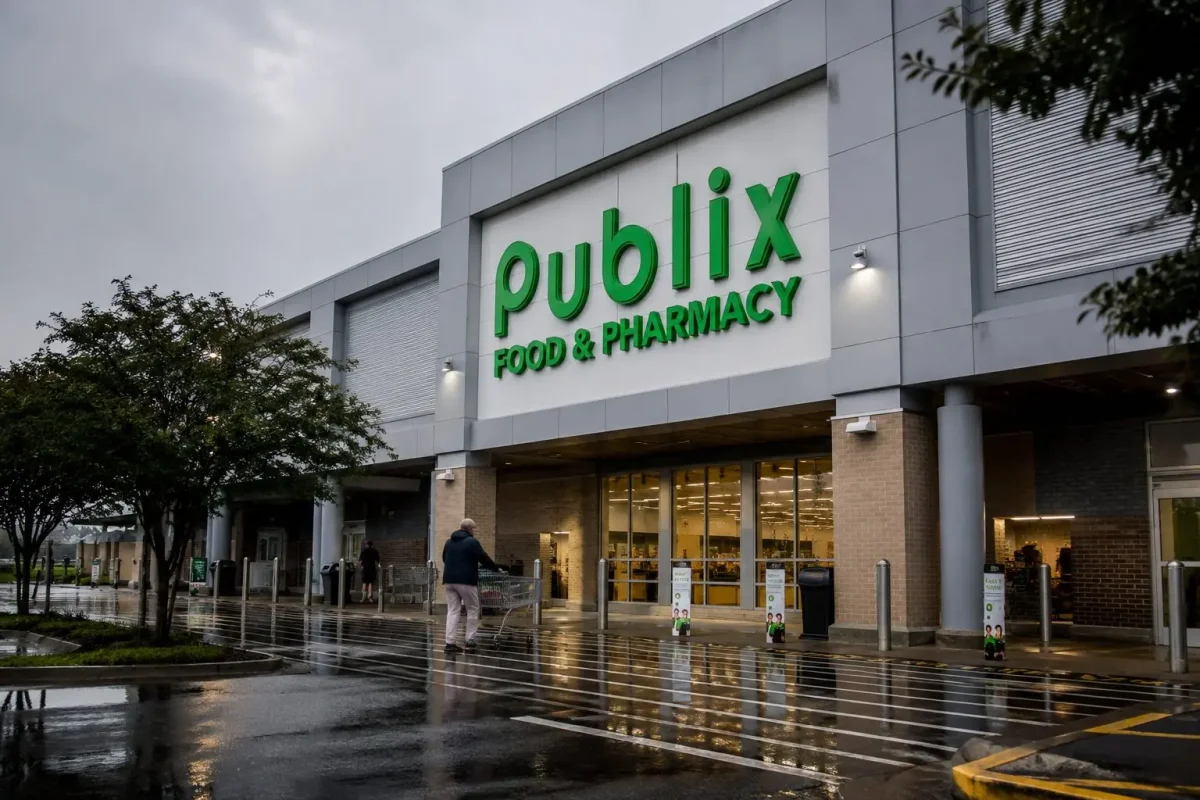
Publix Super Markets shuttered eight stores in the first quarter, with most closures tied to a broader network modernization plan, even as same-store sales growth evaporated. The employee-owned grocer reported flat comparable-store sales in Q1, a sharp reversal from the 4% growth seen a year earlier, according to its latest SEC filing.
Capital Spending Surge
Capital expenditures soared 44.9% to $674 million, representing 4.2% of sales, up from 2.9% in the prior-year period. The chain is on track to invest approximately $2.4 billion in 2026, consistent with the $2.3 billion deployed last year. Funds are being directed not only to new stores but also to distribution centers, technology upgrades, and shopping center developments.
Store Closures and Replacements
Of the eight supermarkets closed during the quarter, seven were either immediately replaced or are slated for replacement on the same sites. The lone closure without a replacement plan represents less than 0.1% of Publix's total store base. One notable closure was the Palm Bay Center store at 4711 Babcock Street, which had operated for nearly 50 years before shutting its doors on July 11 for redevelopment. Just five days later, a new 54,964-square-foot store opened at Mariana Acres in Winter Haven, though that location serves a separate market and is not a direct replacement.
Earlier announced closures for 2026 include stores in St. Petersburg and the Miami area, underscoring a strategic property shuffle rather than a retreat from key markets.
Financial Impact and Margin Pressure
Total sales edged up 2% to $16.1 billion, but the growth was almost entirely driven by new store openings. Operating margin slipped to 8.0% from 8.5%, as selling, general, and administrative expenses rose to 18.8% of sales from 18.3%, reflecting higher spending on staffing and facilities. Net earnings, excluding equity-market fair-value swings, fell 3% to $1.142 billion.
Publix treats sales from rebuilt stores as new-store revenue, since the old location typically remains closed for 12 to 15 months. This accounting approach can boost reported growth once the new store opens, even if spending at older locations remains stagnant. However, the strategy carries risk: replacement projects create sales gaps that must be filled by sufficient revenue from the new units to support the higher cost structure.
Financial Strength and Outlook
Publix has ample liquidity to fund its capital program without tapping public markets. As of March 28, the company held $17.9 billion in cash and investments and generated $2.2 billion in operating cash flow during the quarter. Executives plan to cover the remaining $1.7 billion in 2026 capital spending with operating cash flow and other liquid assets.
The company's private share price was set at $20.45 as of May 1, up 4.1% from the prior valuation. For employee shareholders, the key metric will be whether new stores can generate enough sales to sustain revenue growth without further margin erosion.