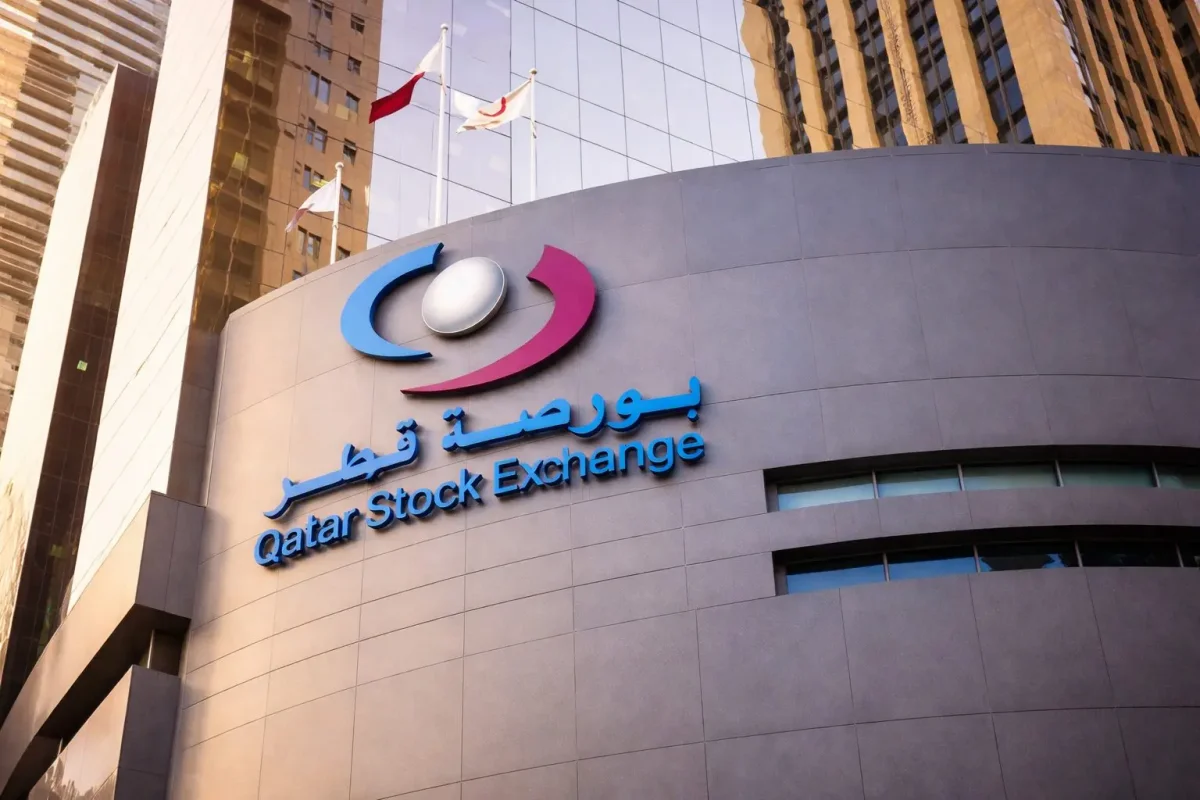
The Qatar Stock Exchange will remain shuttered on Sunday, March 1, 2026, for an official bank holiday, postponing the market's reaction to a weekend of heightened geopolitical tensions in the Gulf region. Trading activity is scheduled to resume at the opening bell on Monday, March 2, setting the stage for a critical test of investor sentiment following a sharp late-week selloff and external security shocks.
Weekend Closure Follows Steep Friday Decline
The QE Index concluded the previous trading session on Friday with a significant loss of 1.91%, closing at 11,055 points. This drop contributed to a weekly decline of approximately 1.55% for the benchmark index. While the index finished the month of February in negative territory, local media reports, citing investment managers, note it maintains a positive performance for the year-to-date period.
Ramzi Qasmieh, an investment manager at Qatar Securities Company, attributed the Friday weakness to a confluence of factors. He cited ongoing geopolitical concerns, routine profit-taking activity, and technical index-driven movements. Qasmieh also highlighted the impact of "ex-dividend" trading in several major stocks, where shares trade without the right to a recently declared dividend. Furthermore, he pointed to the implementation of the latest MSCI index review, a periodic rebalancing that can compel passive funds to adjust their holdings, creating transient selling pressure.
Regional Markets React to Military Escalation
While Qatari markets were silent on Sunday, other Gulf bourses traded sharply lower in response to military developments. According to Reuters, markets across the region fell following reports of strikes by Israel and the United States on Iranian targets and subsequent retaliatory actions by Tehran. This escalation has forced investors to rapidly reassess the risk of broader regional conflict and potential disruptions to trade and energy flows.
Hani Abuagla, a senior market analyst at XTB MENA, warned of "heightened correction risk and volatility" as the situation fosters a risk-averse atmosphere. He specifically mentioned threats to commercial shipping in the critical Strait of Hormuz, a vital waterway for global energy exports. In a related move, analysts at Barclays raised their Brent crude oil price forecast to approximately $100 per barrel on Saturday, citing the increased geopolitical premium, Reuters reported.
Corporate Spotlight: Qatar Islamic Bank's Sukuk Issue
Beyond geopolitics, a major corporate event is drawing investor attention. Qatar Islamic Bank (QIB) has successfully returned to the international Islamic finance market with a substantial $750 million sukuk issuance. The senior unsecured Sharia-compliant bond carries a five-year tenor and was priced with a profit rate of 4.402%, representing a spread of 80 basis points over benchmark U.S. Treasuries.
The issuance witnessed robust demand, with the order book swelling to $1.7 billion, indicating strong international appetite. Bassel Gamal, the bank's chief executive, described the successful deal as a testament to "the depth of global investor confidence" in Qatar's economy. The sukuk, which carries an 'A' rating from Fitch, is slated for listing on the London Stock Exchange's International Securities Market.
Local Economic Factors in Play
Adding to the domestic economic context, QatarEnergy has adjusted local fuel prices for March, as reported by the Qatar News Agency (QNA). The new pump prices set diesel at 2.05 Qatari riyals per liter, while higher-grade gasoline (95) is priced at 1.90 riyals and regular gasoline (91) at 1.85 riyals. These adjustments are another variable for investors to consider regarding local corporate and consumer costs.
Monday's Open: A Volatility Risk
Market participants are preparing for a potentially volatile reopening on Monday. The QE Index's trajectory is typically influenced by the performance of its heavyweight banking and industrial sectors. Near-term trends will likely reflect fund managers' evolving assessments of regional stability and the crucial oil-linked revenue streams that underpin Gulf economies.
A key question for the week ahead is whether the weekend's security shock translates into tangible business disruptions—affecting travel, logistics, shipping, and corporate planning—or proves to be a short-lived market scare. Analysts note a specific downside risk: with liquidity often thin following a market closure, price movements can become exaggerated rapidly. This effect could be amplified if foreign institutional investors decide to reduce exposure to Gulf markets collectively.
Immediate focus will be fixed on the opening hour's price action as the market seeks to price in the missed trading session. Subsequent attention will shift to ongoing escalation risks, potential bottlenecks near the Strait of Hormuz, and the QE Index's ability to defend the psychologically significant 11,000-point level throughout the first full week of March.