Shares of Rigetti Computing retreated in late trading on Thursday, March 19, 2026, closing at $15.41, a decline of 1.7%. The move reflected a broader pullback in the quantum computing sector, with peers IonQ and D-Wave Quantum also losing ground by approximately 1.5% and 2.5%, respectively. The sell-off underscores a growing investor focus on near-term financial performance and executable business plans, rather than long-term technological ambition.
UK Quantum Initiative Fails to Spark Rally
The sector weakness arrived just two days after the United Kingdom unveiled a substantial new quantum computing initiative. The program, valued at up to £2 billion, forms part of a broader £2.5 billion commitment to artificial intelligence and quantum technologies. Industry executive Jonathan Legh-Smith of UKQuantum highlighted the government's procurement pledge as a critical signal for future investment. Despite this significant policy backing from a major economy, the news provided no immediate lift to related equities, suggesting market sentiment remains firmly fixed on fundamentals.
Rigetti's Financial Position and Outlook
Investor attention has sharpened on Rigetti's financial metrics amid a lack of recent corporate updates. The company's last investor communication on March 4 detailed fourth-quarter revenue of $1.9 million, bringing full-year 2023 revenue to $7.1 million. Rigetti reported a strong liquidity position with $589.8 million in cash, cash equivalents, and investments. CEO Subodh Kulkarni pointed to increasing demand for on-premises quantum systems from government and research clients, indicating that orders for its Novera systems should drive significant year-over-year revenue growth in the first quarter.
Key Orders and Technical Milestones
The company's near-term revenue trajectory is heavily dependent on hardware deliveries. In January, Rigetti secured an $8.4 million order from India's Centre for Development of Advanced Computing (C-DAC) for a 108-qubit quantum computer, with delivery scheduled for the second half of 2026. On the technical front, Rigetti has reported achieving 99.9% two-qubit gate fidelity on a prototype system. Gate fidelity is a crucial metric measuring the accuracy of quantum operations, with higher fidelity being essential for practical, error-resistant computation.
Valuation and Competitive Pressures
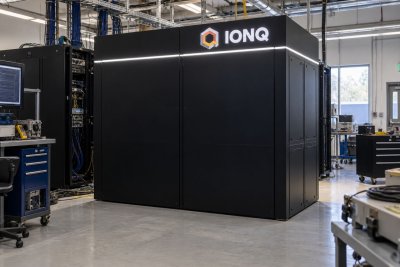
The sector continues to grapple with complex valuation challenges. As Benchmark analyst David Williams noted in November, assessing quantum computing companies is "more of an art than a science," reflecting the difficulty of pricing pre-revenue, high-potential technology firms. Competitive dynamics are also intensifying. The recent UK funding package specifically mentioned IonQ's partnership in Cambridge, yet IonQ's stock also declined on Thursday, indicating the downdraft was sector-wide rather than company-specific.
Risk Factors and Execution Hurdles
In its annual regulatory filing, Rigetti outlined several material risks. The company noted that pursuing government contracts involves significant cost and complexity, and such agreements can be terminated or modified. Potential delays in product development and commercialization could postpone revenue recognition. Furthermore, should research and development expenses increase or external funding become constrained, the company might be forced to seek additional capital earlier than anticipated.
Market Context and Forward Look
The current market phase places execution squarely in the spotlight. While substantial government support packages, like the one from Britain, may improve sector sentiment over the long run, Thursday's trading action delivered a clear message: policy tailwinds are not enough to offset concerns over the timeline to profitability and scale. Investors are signaling a desire for concrete revenue growth and near-term operational milestones over promises of distant technological transformation. The volatility in quantum computing stocks is likely to persist until the industry can demonstrate a clearer and more immediate path to commercial adoption and sustained financial results.