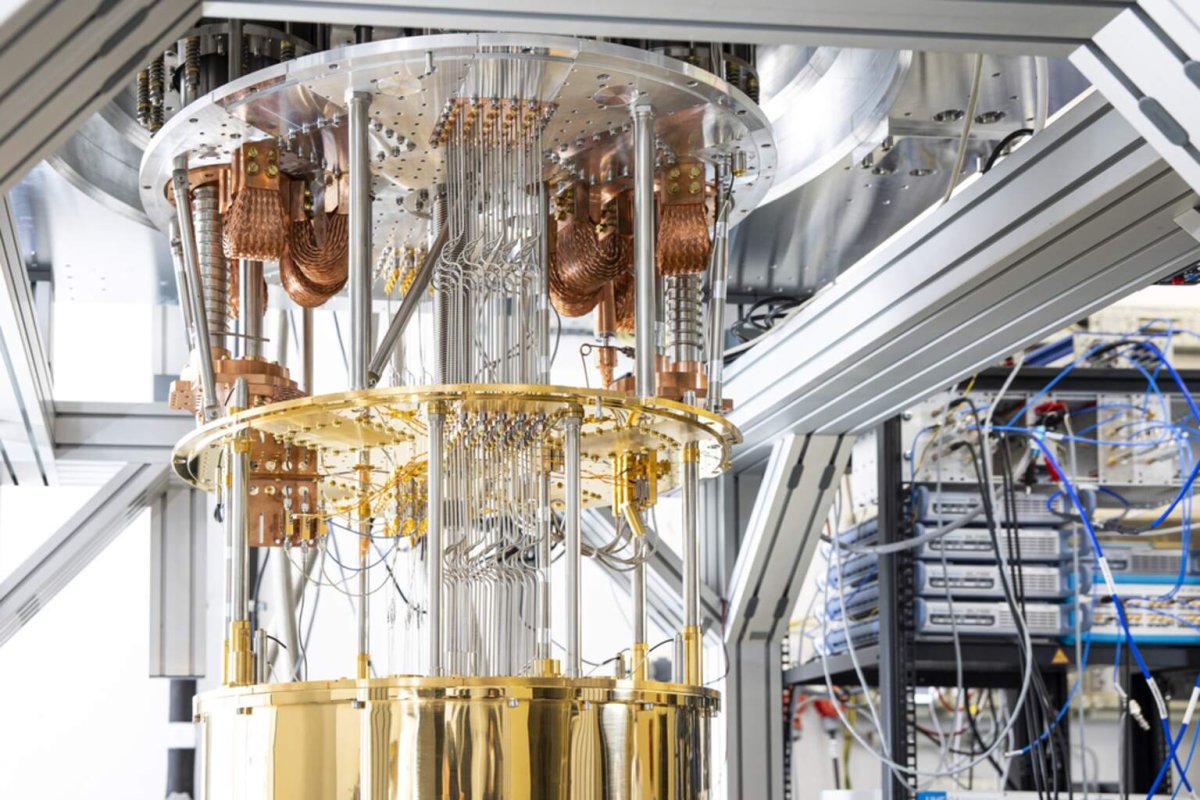
In a significant step for quantum computing, researchers in Germany have reported quantum operations that complete in just 6.8 nanoseconds with an accuracy exceeding 99.98%. The findings, published in Nature Communications on October 23, were based on experiments with a single isolated superconducting qubit, marking a milestone in the quest to improve quantum processor performance.
The work addresses a critical timing constraint in quantum processors: qubits lose information while calculations run, so shorter operations can reduce that exposure to decoherence. However, faster pulses also risk pushing the device outside its intended computational states, potentially causing errors. The team at Jülich shaped microwave pulses to suppress these unwanted transitions, achieving a more than twentyfold reduction in leakage compared to standard correction methods.
Key Metrics and Methodology
The measured gates on a single qubit showed impressive results: X operations took 6.8 nanoseconds with a fidelity of 99.981% ± 0.001%, while X/2 operations also took 6.8 nanoseconds with a fidelity of 99.989% ± 0.001%. Leakage was measured below 0.002% per operation, a critical improvement for error correction.
The team measured gate errors of 190 parts per million for X operations and 110 for X/2, each with an uncertainty of 10 parts per million. These are benchmarked gate errors, not whole-program success rates. Leakage accounted for fewer than 20 parts per million per operation, and the researchers separated leakage from loss of quantum coherence and other control errors. Decoherence remained the main limitation in the error budget.
Calibration and Speed Limits
Calibration was crucial to the experiment. The researchers used repeated pulse sequences to amplify otherwise tiny leakage signals, allowing them to resolve coherent leakage near one part per million. The paper also identifies a practical speed boundary: at 6.6 nanoseconds, leakage into a higher state became more prominent, and shorter pulses made calibration unstable.
This result comes as the QSolid project moves from individual components toward integrated systems. In a separate update on October 23, Fraunhofer IPMS announced that a 30-qubit system was undergoing tests, while its 10-qubit demonstrator had already been made accessible to users. The two milestones have different scopes: the gate study provides component-level evidence, while the user system and larger system represent system-scale integration.
Context and Implications
The 10-qubit system was made accessible to external users in a test phase that began on November 17, 2025, according to earlier Fraunhofer releases. This access predates this week's gate paper. QSolid coordinator Frank Wilhelm-Mauch linked performance to completing computational steps with few errors, noting that faster gates allow “more computational steps to be performed in the same amount of time.”
Fraunhofer's integration work addresses a different physical constraint: heat reaching the sensitive quantum chip. They describe interposers connecting quantum and control chips in a compact package, ensuring reliable signal transmission coexists with thermal protection.
Source and Evidence Matrix
The Nature paper reported the 6.8 ns gates with error rates of 190/110 ppm for X/X/2 operations. The Jülich report focused on one isolated qubit and noted that larger-system validation is still required. Fraunhofer provided details on the 10-qubit access and 30-qubit system tests. All three sources were published on October 23, 2026, and describe work by the participating research consortium.
Risks remain: the fast pulses have not been validated on a larger processor. Microwave crosstalk and two-qubit operations could change the measured error budget. The consortium's 26 partners will meet in Jülich on October 27–29 to present their results. The €76.3 million programme is scheduled to finish in December 2026. The key question is how much of the timing advantage survives when neighbouring qubits operate together.