AST SpaceMobile (NASDAQ:ASTS) has taken a significant step toward expanding its direct-to-device satellite service in Brazil by signing agreements with three regional telecom operators. The partnerships, disclosed in a securities filing by Unifique on October 23, involve Unifique (BVMF:FIQE3), Brisanet (BVMF:BRST3), and Iez! Telecom. Under the arrangement, these carriers will provide access to 700 MHz spectrum and fund the construction of ground infrastructure to connect their networks with AST's satellite constellation.
The agreements shift a portion of the deployment responsibility onto Brazil's terrestrial operators. Brisanet, in a separate filing, outlined its commitment to invest in the necessary infrastructure to link its network to AST's satellites. However, the filings indicate that final contractual details are still being negotiated, leaving the scope of each carrier's obligations and the exact terms of the satellite capacity sharing unresolved.
Spectrum Details: More Than Just a Band
While the 700 MHz band is a common frequency for mobile services, the filings do not specify how much of that spectrum will be allocated to satellite traffic. Brazil's telecom regulator, Anatel, auctioned two 10 MHz blocks in this band: one at 708–718 MHz and another at 763–773 MHz, together providing 20 MHz of paired spectrum. Neither Unifique nor Brisanet disclosed the satellite share in their October 23 filings, leaving a critical gap in understanding the potential capacity of the service.
Brisanet's history with the 700 MHz band is notable. The company previously won regional licenses for 10+10 MHz in May and, according to its first-quarter report, has obligations to cover approximately 2,600 kilometers of federal roads and 280 localities from 2026 through 2030. These commitments are likely driving the interest in satellite technology to extend coverage beyond existing towers, but the new filings do not confirm that satellite service will satisfy those terrestrial license obligations.
Gateway Role and Technical Challenges
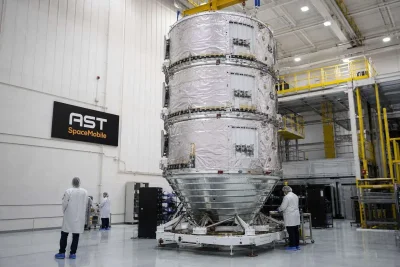
Ground gateways play a crucial role in AST's architecture. The company describes a path where a handset signal travels to a satellite, then to a gateway, and finally to a mobile operator's network. The gateway processing compensates for transmission delays and Doppler frequency shifts, which are inherent in satellite communications. This technical setup is essential for ensuring reliable connectivity for standard smartphones.
Receiving weak signals from ordinary phones requires a large antenna in orbit. AST lists the BlueBird 1–5 satellites with a 693 square foot array, while its next-generation spacecraft will feature an approximately 2,400 square foot array—a 3.5-fold increase. The company claims a 10-fold data capacity improvement with the next generation, but these are manufacturer figures, not verified test results in Brazil.
Regulatory Framework and Experimental Status
Brazil currently allows satellite-to-phone testing under an Anatel 'sandbox' that permits temporary frequency authorizations until April 22, 2029. However, this experimental framework is not equivalent to a commercial launch approval. Definitive direct-to-device (D2D) rules could be introduced earlier, potentially closing the sandbox sooner. Independent reporting by TeleSíntese on October 23 found no announced service-start date, underscoring the uncertainty around the commercial timeline.
What the Evidence Shows
The filings provide clear evidence of a signed intent among the three carriers and AST, but they stop short of detailing final terms. Key unknowns include the exact spectrum allocation, gateway costs, and satellite availability. These factors are essential for estimating service capacity or investment returns. Unifique's CEO, Fabiano Busnardo, described satellite as 'the next natural step' after fiber and 5G, but the company's English-language filing offers no activation schedule.
The proposed service aims to support voice, broadband data, and video on unmodified smartphones, but without concrete capacity commitments, the market remains speculative. Investors will be watching for the next disclosures to answer a pivotal question: how much capacity will each carrier secure, and when will customers actually receive the service?