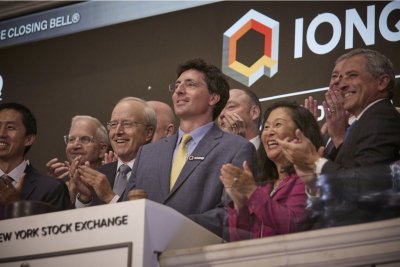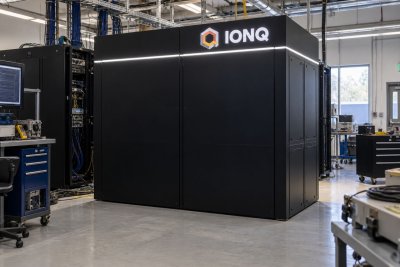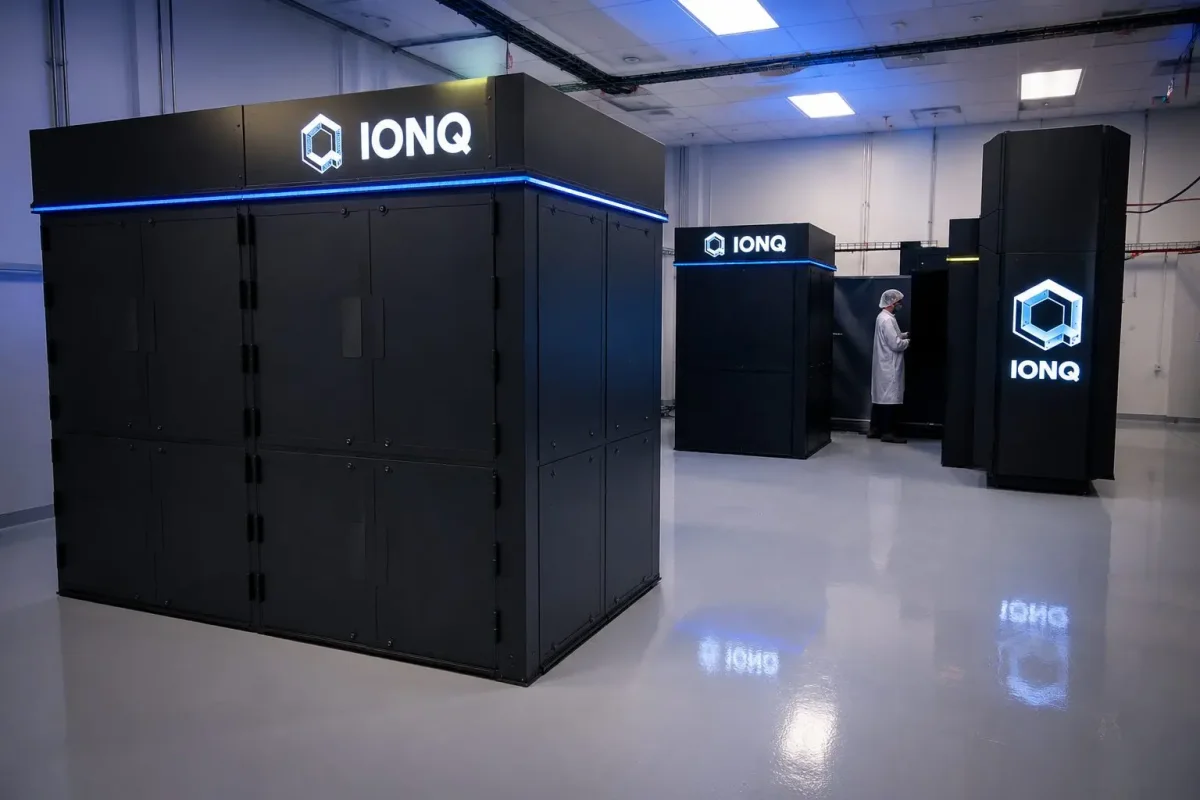
Shares of IonQ (IONQ) climbed 2.8% to $65.43 in premarket trading Tuesday, as U.S. markets reopened after the Memorial Day holiday. The move came despite the company being conspicuously absent from a major new federal quantum computing funding initiative.
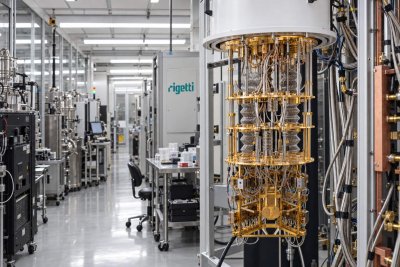
The U.S. Commerce Department announced $2.013 billion in proposed CHIPS and Science Act incentives for nine companies focused on fault-tolerant quantum computers. IBM (IBM) emerged as the largest beneficiary, receiving $1 billion in proposed funding for a new quantum chip foundry called Anderon. D-Wave (QBTS) and Rigetti Computing (RGTI) each secured $100 million in planned investments.
IonQ’s exclusion from the award list has sparked debate among analysts. B. Riley characterized the omission as a “distinction, not a slight,” highlighting IonQ’s existing cash reserves, government contracts, DARPA projects, and its partnership with SkyWater Technology (SKYT) for foundry services. However, the absence from the CHIPS program raises questions about the company’s competitive positioning in the rapidly evolving quantum landscape.
On the earnings front, IonQ reported first-quarter revenue of $64.7 million, a staggering 755% year-over-year increase, driven by sales of quantum systems, increased cloud usage, and demand for its Tempo product line. The company raised its full-year 2026 revenue guidance to between $260 million and $270 million, while remaining performance obligations surged 554% to $470 million.
Despite the impressive top-line growth, concerns over valuation and financial sustainability persist. Stone Fox Capital on Seeking Alpha noted that IonQ trades at nearly 90 times sales, with an adjusted EBITDA loss of $96.8 million and significant cash burn. The contributor suggested the recent rally may represent an exit opportunity for investors.
Market participants have been treating quantum stocks as a unified basket rather than evaluating them individually. On May 21, 24/7 Wall St. reported that IonQ rose 10%, D-Wave surged 25%, and Rigetti added 24%, as investors traded the group collectively despite the distinct technologies underlying each company.
The competitive dynamics are now sharply defined. IBM’s massive proposed award and manufacturing scale give it a significant advantage. D-Wave and Rigetti have direct federal funding commitments. IonQ’s strategy relies on its trapped-ion technology, existing cash reserves, and the SkyWater foundry deal to remain competitive without CHIPS Act support.
Quantum computing remains in its early stages, with qubits offering fundamentally different information processing compared to classical chips. However, high error rates and scaling challenges continue to hinder practical applications, as noted by Reuters. The technology’s commercialization timeline remains uncertain, adding risk to all players in the space.
If Tuesday’s trading momentum fades, markets may refocus on risks including potential dilution from government stake sales, extended timelines for quantum commercialization, IonQ’s acquisition strategy, and the persistent gap between revenue growth and operating losses. Additionally, IBM cautioned that the Anderon project’s launch depends on finalizing definitive documents with the Commerce Department, meaning the largest award is not yet locked in.