Royal Bank of Canada (RBC) shares closed lower on Friday, giving back early gains that had pushed the stock into fresh 52-week high territory, after Canada's banking regulator reduced a key capital buffer for the country's largest lenders.
The stock ended at C$284.08 on the Toronto Stock Exchange, down 0.36% from the previous close, after rising as high as C$287.68 during the session. Trading volume was 5.62 million shares, well above the 3.21 million average, according to Google Finance data.
Regulatory Change
The Office of the Superintendent of Financial Institutions (OSFI) lowered the Domestic Stability Buffer (DSB) to 3.0% from 3.5% of risk-weighted assets, effective immediately. The DSB is additional capital that banks must hold to absorb losses and maintain lending capacity during economic downturns. OSFI also reduced its expected Common Equity Tier 1 (CET1) ratio requirement to at least 11.0%; the big banks' average CET1 ratio stood at 13.5% as of April 30.
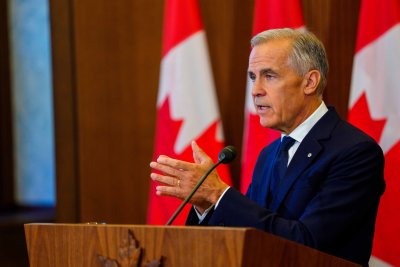
Superintendent Peter Routledge described the move as “prudent and proactive action,” noting that the lower buffer provides Canada’s largest banks with more flexibility to deploy capital. He estimated the capital cushion equates to roughly C$74 billion, which could support an expansion in risk-weighted assets of up to C$673 billion.
Market Reaction
The policy change applies to all domestic systemically important banks, including TD Bank, Bank of Montreal, Bank of Nova Scotia, CIBC, and National Bank of Canada. However, investors did not broadly bid up the sector. Reuters reported that the heavily weighted TSX financials sector dipped 0.1% on the day.
The broader market also softened. The S&P/TSX Composite Index fell 111.92 points, or 0.3%, to 34,857.34, posting a 0.2% weekly decline as gold miners dragged the index lower. The materials sector dropped 2.1%, while energy rose 0.7% as oil prices recovered some ground.
RBC’s NYSE-listed shares did not trade on Friday because U.S. markets were closed for Juneteenth. The stock last traded on Thursday at $201.56, up 0.43%, with after-hours trading unchanged.
Implications for Investors
For investors, the read-through is mixed. Lower capital constraints can support lending and improve strategic flexibility, especially for a bank with RBC’s scale in Canadian retail banking, wealth management, and capital markets. However, the share reaction indicated that a looser buffer is not equivalent to stronger credit demand or lower loan losses.
The risk is that the macroeconomic reasons behind the policy shift become the dominant narrative. OSFI noted that vulnerabilities remain elevated, with household debt high relative to income and house prices still above fundamentals, even as delinquencies and credit losses have stabilized. If trade talks with the United States sour, Middle East tensions disrupt client operations, or Canadian consumers weaken, banks could keep the extra room defensive rather than convert it into growth.