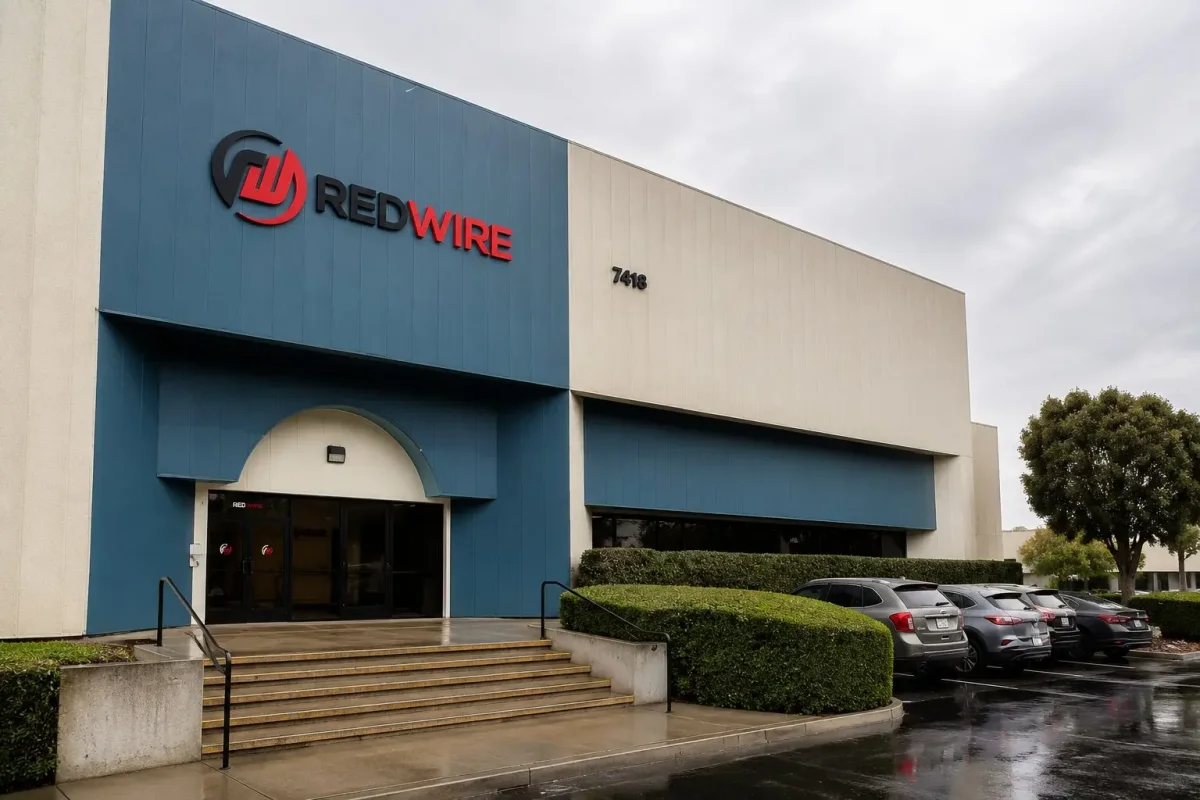
Redwire Corporation (NYSE:RDW) saw its shares climb 4.4% to $12.21 in early New York trading Tuesday, following news of a contract to supply its Penguin Mk2.5 VTOL uncrewed aircraft system to the Taiwan Coast Guard through Taiwan Color Optics. The space and defense company did not disclose the financial terms of the deal, leaving investors to focus on the broader funding dynamics that have weighed on the stock in recent weeks.
The contract, announced roughly three weeks after Redwire filed a prospectus supplement for an at-the-market (ATM) offering of up to $500 million in stock, highlights the company's push into international markets. The Penguin Mk2.5 is touted for its long-endurance, vertical takeoff and landing (VTOL) capabilities, and is equipped with EO/IR sensors for maritime surveillance. Josh Stinson, co-president and chief growth officer of Redwire Defense Tech, described the aircraft as 'field proven' in all-weather intelligence, surveillance, and reconnaissance (ISR) operations.
While the Taiwan deal provided a short-term boost, the ATM offering remains a key overhang. The original June 8 filing used $18.57 per share as an example, implying a sale of 26.9 million shares. However, with the stock now trading near $12.21, the same $500 million would require approximately 41 million shares — a 52.2% increase in the number of shares needed. This dilution risk is a major factor behind the stock's decline from its June 8 levels. The company has stated that proceeds could be used for working capital, debt repayment or refinancing, acquisitions, investments, and R&D, with agent fees capped at 3% of gross sales.
The ATM's size is substantial relative to Redwire's market capitalization. At Tuesday's price, a full $500 million offering would represent roughly 21% of the company's $2.36 billion market cap. This has amplified investor concerns about share dilution, especially given the company's current financial position. Redwire reported Q1 revenue of $97.0 million, a backlog of $498.1 million, but a net loss of $76.5 million. Total liquidity stood at $175.2 million, highlighting the need for additional capital to fund its growth trajectory, which includes a 2026 revenue target of $450 million to $500 million.
Adding to the complex picture, FTSE Russell removed Redwire from the Russell Microcap Index during its final June rebalancing, effective after the U.S. market close on June 26. LSEG noted that the 2026 Russell Microcap range was $30.1 million to $1.1 billion in market cap, with a median of $291.9 million as of the April 30 ranking. Redwire's market cap of about $2.36 billion far exceeds that range, suggesting the stock has outgrown the microcap classification. While this removal could lead to forced selling by index-tracking funds, it also signals the company's evolution into a larger-cap player.
The stock's intraday volatility on Tuesday was notable, with a range of $1.21, or 10.4% of the prior close. This compares to a 0.7% range for the iShares Russell 2000 ETF (NYSEARCA:IWM) and a 0.3% range for the SPDR S&P 500 ETF Trust (NYSEARCA:SPY), underscoring the heightened uncertainty around Redwire's near-term prospects. The Taiwan contract offers a positive catalyst, but the combination of the ATM, index removal, and ongoing losses keeps the stock in a volatile position.
For investors, the key takeaway is that Redwire's funding dynamics are shifting more rapidly than its contract wins. The company's ability to execute on its revenue guidance and manage dilution will be critical in determining whether the stock can stabilize. The Taiwan deal is a step in the right direction, but the path ahead remains fraught with challenges as Redwire navigates its transition from a microcap to a more established defense contractor.