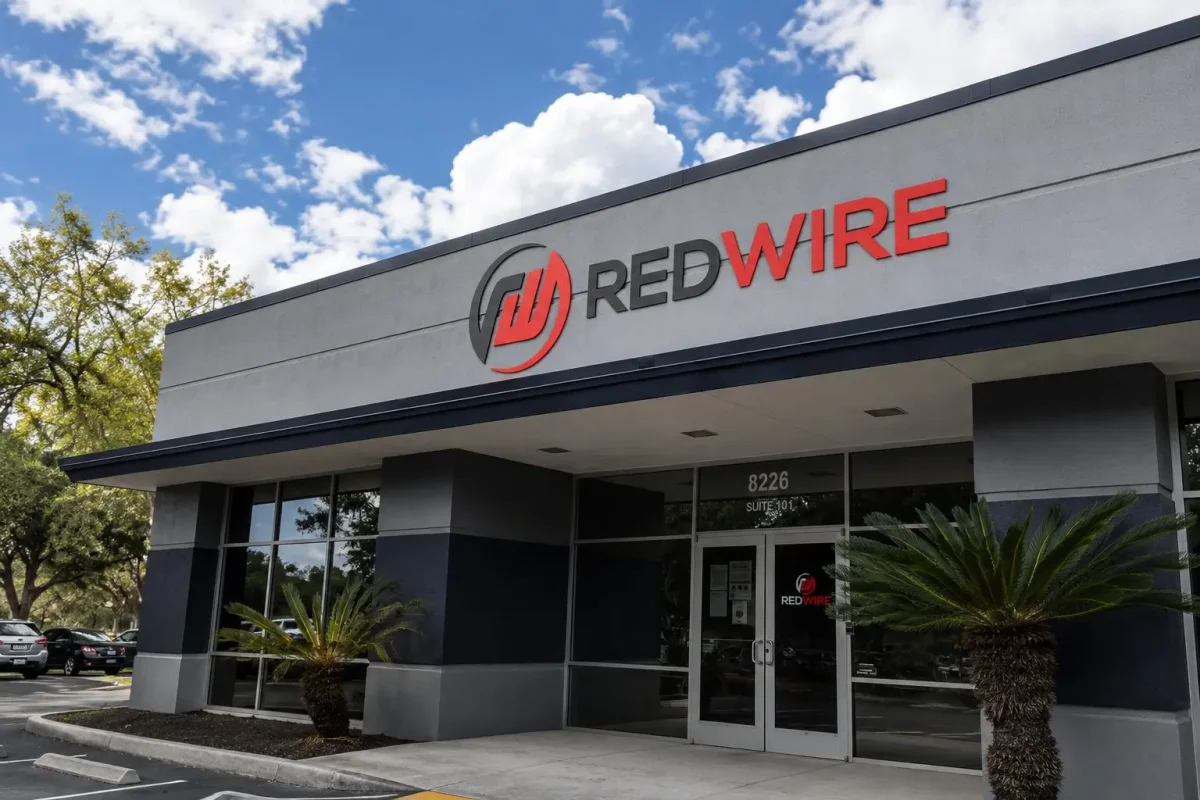
Redwire Corporation saw its stock fall sharply on Wednesday, declining 8.7% to $18.78 by midday in New York, as the broader space sector pulled back ahead of SpaceX's anticipated record-breaking initial public offering. The drop came after Jefferies downgraded the stock from Buy to Hold, citing valuation concerns following a 163% rally earlier this month.
The downgrade by Jefferies analyst Sheila Kahyaoglu reflected a cautious view on near-term upside. While she raised her price target to $24 from $13, she noted that the stock's recent surge had already priced in much of the positive momentum. “We see limited near-term upside from here,” she wrote, according to Barron’s. The stock had gained sharply in recent weeks, driven by strong contract wins and growing demand for space-related services.
Redwire’s first-quarter earnings report, released earlier this year, showed robust growth. Revenue jumped 57.9% year-over-year to $97.0 million, and the company reported a record backlog of $498.1 million—representing contract work not yet recognized as revenue. CEO Peter Cannito highlighted “very strong demand” and a book-to-bill ratio of 1.92, indicating that new orders outpaced recognized revenue. However, the company also posted a net loss of $76.5 million and negative adjusted EBITDA of $9.2 million, raising concerns about profitability.
The sell-off was not limited to Redwire. Other space stocks also declined on Wednesday, with Rocket Lab dropping 5.9%, Intuitive Machines falling 12.5%, and AST SpaceMobile losing 7.9%. The Procure Space ETF declined 3.9%, reflecting broad weakness in the sector as investors reassess valuations ahead of SpaceX’s IPO. SpaceX is reportedly seeking to raise $75 billion at $135 per share, which could be the largest IPO in history, according to Reuters.
Redwire has been expanding its presence in the defense drone market. On May 20, the company announced a $15 million follow-on order for Stalker drone systems from the U.S. Army Aviation Center of Excellence. A day later, it secured a high-eight-figure, multi-year deal from an unnamed NATO ally for Penguin Mk3 tactical drones. Steve Adlich, president of Redwire Defense Tech, emphasized that the Stalker system is “purpose built to meet multiple mission needs” and will help the Army detect and track threats. These contract wins underscore Redwire’s strategic push into defense, but investors are wary of the time it takes to convert these orders into revenue.
Despite the encouraging backlog and new contracts, Redwire faces significant risks. The company’s latest quarterly filing warns that contracts may be changed, canceled, or cut short, and many multi-year deals require annual funding. Redwire also relies heavily on U.S. government contracts, which are subject to funding approvals and strict regulations. The market is now demanding evidence that these contract wins will translate into actual revenue, margins, and cash flow, rather than just boosting the backlog.
With shares up sharply since spring, the stock’s valuation is under scrutiny. The Jefferies downgrade highlights the tension between Redwire’s growth story and the need for tangible financial results. As SpaceX’s IPO looms, the entire space sector is resetting, and investors are becoming more selective. Redwire’s ability to turn its record backlog into sustainable profitability will be key to its future performance.