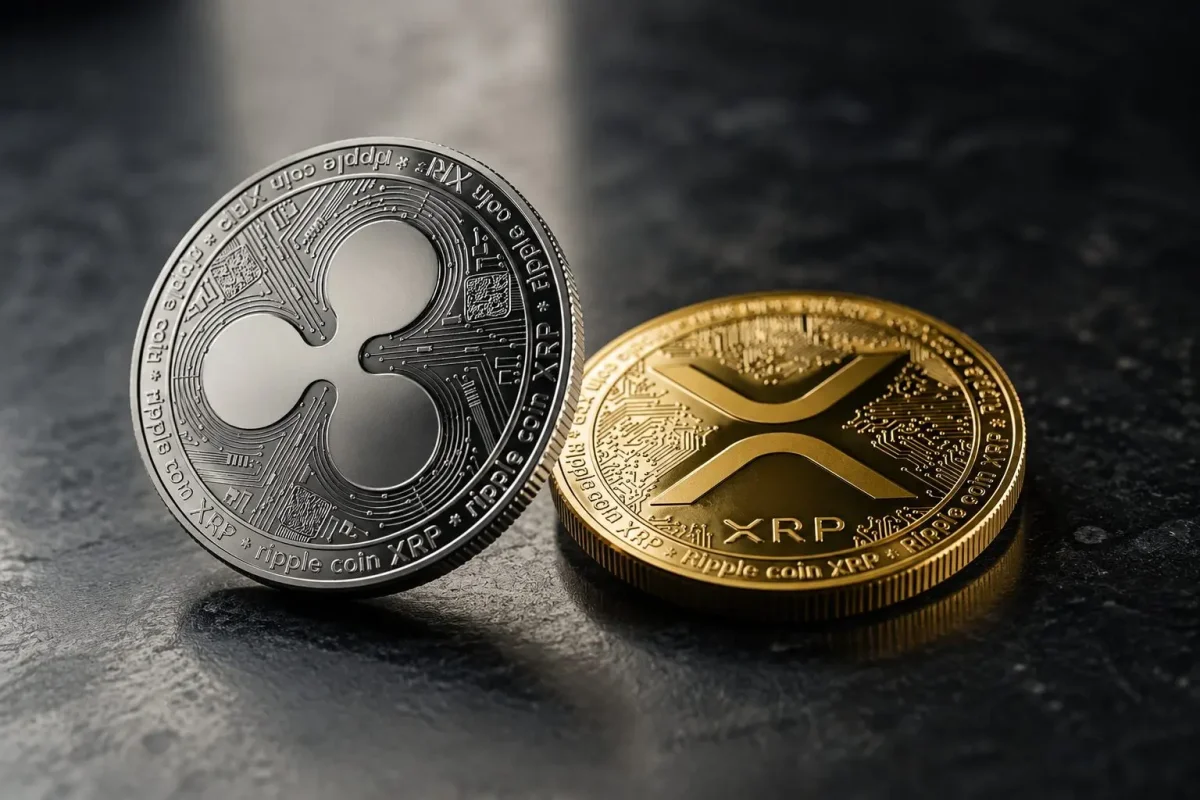
Ripple CEO Brad Garlinghouse disclosed that the company seriously considered closing its doors and distributing its XRP holdings back to shareholders following the SEC's lawsuit in 2020. Had that plan been executed, those reserves would now be valued at approximately $40 billion, a stark contrast to the company's near-collapse just a few years ago.
The revelation comes as Ripple's XRP stockpile approaches a $40 billion valuation, closely mirroring the company's valuation from an outside funding round in November. This figure represents about 80% of the $50 billion valuation Ripple assigned to its March buyback program. As of June 30, Ripple held 37.656 billion XRP, which traded at $1.059 on Monday afternoon.
Garlinghouse emphasized that the shutdown plan would have primarily benefited Ripple's institutional backers rather than individual XRP holders. He noted that holding XRP does not confer equity, dividends, voting rights, or any claim on Ripple's assets—a distinction that often becomes blurred when company news impacts token prices.
The majority of Ripple's reserves are locked in escrow, with only 5.056 billion XRP—worth about $5.35 billion at current prices—available outside of smart contracts. Garlinghouse revealed that the company has spent approximately $150 million on legal defense, with total expected outlay including fines reaching $275 million.
Reflecting on the decision to fight the SEC, Garlinghouse said, "The government had infinite power and resources." He and co-founder Chris Larsen chose to press on, risking hundreds of jobs despite uncertain outcomes. "I'm glad in retrospect, but that was not obvious at the time," he added.
The legal battle concluded with a split ruling: a federal judge determined that XRP sales on public exchanges were not securities, while institutional sales through direct contracts were. After both parties dropped appeals in August 2025, Ripple faced a $125.04 million fine and an ongoing injunction.
Ripple's private valuation of $50 billion now surpasses two major public competitors. It is approximately 21% above Coinbase Global's (NASDAQ: COIN) market cap of $41.43 billion and nearly triple Circle Internet Group's (NYSE: CRCL) $16.74 billion valuation. However, comparisons are complicated by Ripple's private tender basis versus public market pricing.
Industry analysts offered contrasting views. Gregoire le Jeune, CEO of Darika Labs, argued that Ripple's treasury and broader financial services portfolio place it in a stronger position than Circle. Meanwhile, Eliézer Ndinga of 21Shares suggested that gross revenue serves as a simpler valuation proxy, but emphasized that more detail is needed to understand how XRP relates to Ripple's equity value.
The $39.9 billion figure should not be viewed as a liquidation value. With 87% of reserves locked in escrow, any significant sale could depress XRP prices well before shareholders realize that total. Pro-XRP lawyer Bill Morgan has advocated for Ripple to release more than the current 1 billion tokens per month and reduce the amount locked back into escrow, highlighting ongoing debate about future supply dynamics.
At Monday's prices, the combined legal defense and penalty costs represent less than 0.7% of Ripple's total XRP reserve. While this does not necessarily make Ripple shares a bargain, it underscores the importance for investors to distinguish between the private company's operating business and its substantial, volatile token holdings—assets that management once considered returning to shareholders entirely.