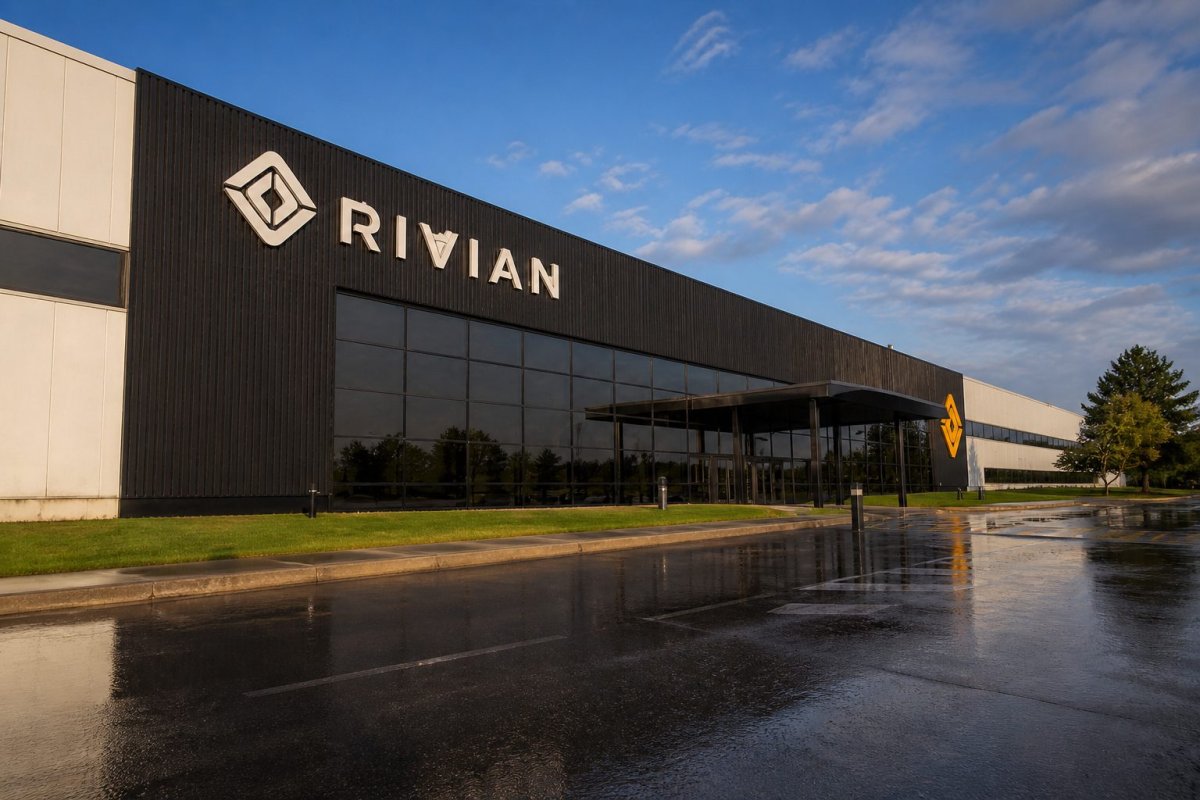
Rivian Automotive saw its stock decline 5.7% to $15.47 on Friday morning after the electric vehicle maker disclosed that the federal loan for its planned Georgia manufacturing facility would be reduced to $4.5 billion. The development comes as the company ramps up production of its R2 SUV, a model that represents a critical expansion beyond its premium R1 lineup and into a more competitive price segment.
Loan Details and Production Plans
The revised loan package, which includes approximately $4.01 billion in principal and $494 million in capitalized interest, marks a significant reduction from the previously anticipated $6.6 billion. Rivian now expects to draw on the funds in early 2027, subject to conditions. The company has also increased the initial capacity target for the Georgia site to 300,000 vehicles annually, a 50% boost over its earlier goal, with production slated for late 2028. CEO RJ Scaringe characterized the restructured deal as a reflection of confidence in the company's midsize platform.
Quarterly Performance
For the first quarter, Rivian reported revenue of $1.38 billion, an 11% increase year-over-year, beating expectations. The net loss narrowed to $416 million from $541 million a year earlier, helped by a $506 million gain related to a capital raise and the deconsolidation of Mind Robotics. Adjusted EBITDA loss stood at $472 million. However, automotive revenue slipped 2% to $908 million, partly due to a $100 million decline in regulatory credit sales. Software and services revenue jumped 49% to $473 million.
R2 SUV and Market Competition
The R2, which just began saleable production at Rivian's Normal, Illinois plant, is the company's bid to challenge Tesla's Model Y with a lower price point. Customer deliveries are expected in a few weeks. The launch comes amid intense competition and after the loss of a key U.S. EV tax credit, which has dampened demand across the industry. CFO Claire McDonough cautioned that R2 launch costs would likely weigh on automotive gross profit through the second and third quarters, with improvement not expected until the fourth quarter. Scaringe also flagged supply chain uncertainties, including raw material price volatility and the need for backup suppliers.
Partnerships and Funding
Volkswagen Group invested $1 billion after the two companies' software joint venture met winter-testing milestones, with Rivian issuing about 62.9 million Class A shares at $15.90 each. Additionally, SMB Holding, an entity linked to Uber, committed to invest $300 million, with a potential additional $950 million if targets are met. The partnership aims to develop and deploy R2-based Level 4 robotaxis.
Financial Position and Outlook
Rivian ended the quarter with $4.83 billion in cash and short-term investments, and total liquidity of $5.39 billion including its revolving credit facility. Free cash flow was negative $1.08 billion. The company maintained its 2026 delivery forecast of 62,000 to 67,000 vehicles, having produced 10,236 units and delivered 10,365 in the first quarter. Rivian also filed an automatic shelf registration on April 30, allowing it to issue various securities as needed for future capital needs related to the R2, Georgia operations, and autonomy initiatives.