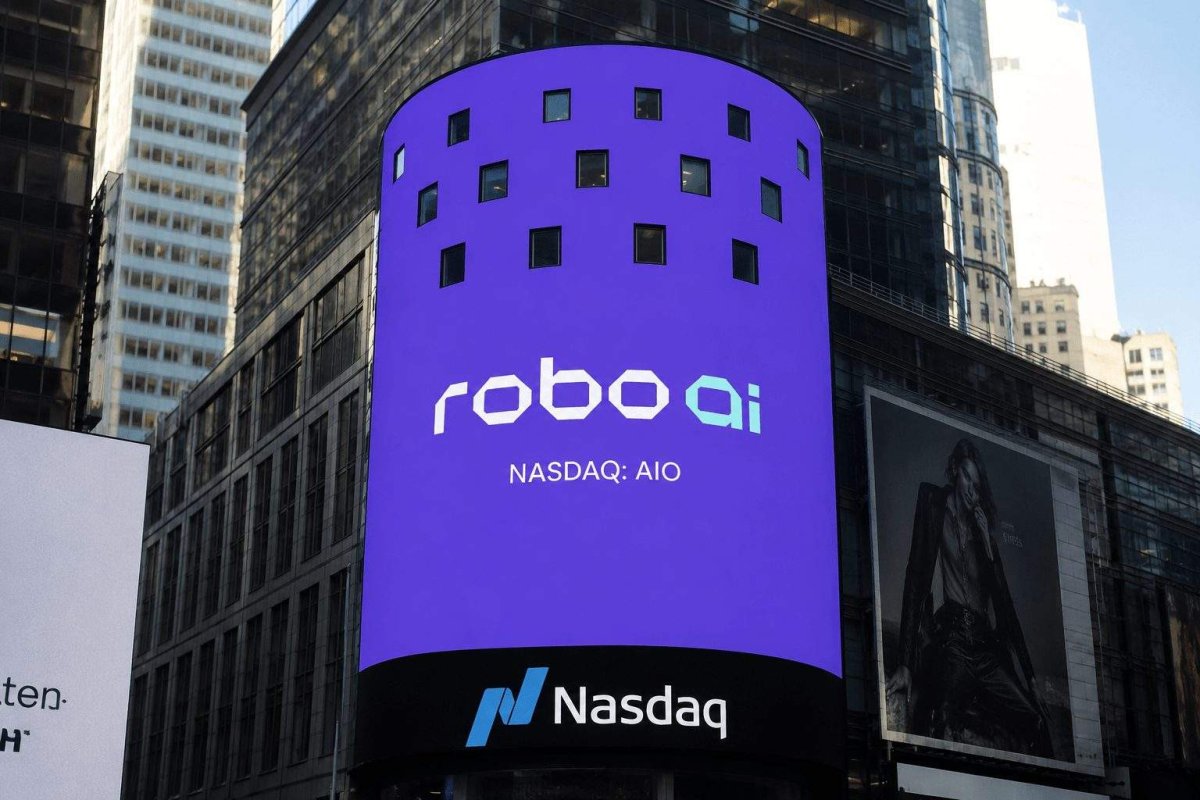
Robo.ai Inc. (NASDAQ: AIIO) saw its stock price double following the announcement that its subsidiary, Neurovia AI, has launched NeuroStream, a new visual-data compression platform designed for physical AI applications. The product is aimed at reducing the massive data loads generated by robotics, autonomous vehicles, and smart city systems, which rely heavily on video processing.
According to internal tests, NeuroStream compressed a 5.5GB 4K video at 60 frames per second down to just 278MB—a reduction of approximately 95%—while maintaining the original resolution and frame rate. The platform is optimized for edge computing, allowing data to be processed directly at the source, such as cameras or sensors, rather than relying on cloud infrastructure.
Acquisition Details and Stock Movement
The launch comes just days after Robo.ai announced a deal to acquire Neurovia from Aetheron AI for $100 million in stock. The transaction involves issuing 149,097,957 Class B ordinary shares, which are subject to an eight-year lock-up period with no exceptions for the first four years. The closing is scheduled for June 16, pending standard conditions.
Shares of Robo.ai closed at $2.61 on Thursday, giving the company a market capitalization of approximately $48.33 million. Over the past year, the stock has traded in a wide range between $0.54 and $69.60, reflecting significant volatility. The 100% surge on the NeuroStream news has drawn attention from traders and analysts alike.
Leadership and Strategic Direction
To bolster oversight of the new asset, Neurovia's board has appointed Mansoor Ali Khan as chief technology officer. Khan brings experience from Abu Dhabi-affiliated firms, including Aleria LLC and Modon Holding. In a statement, Khan highlighted the rising costs of storage and transmission in AI applications, positioning NeuroStream as a cost-effective solution for handling visual data without compromising quality.
Financial Challenges and Market Context
Despite the product launch and stock rally, Robo.ai faces significant financial headwinds. The company's 2025 annual report revealed net revenue of just $1.0 million, a 92.1% decline from $12.0 million in the prior year. Net loss for the year reached $167.6 million, and the company reported an accumulated deficit of $904.4 million. The filing also noted substantial doubt about the company's ability to continue as a going concern.
The competitive landscape is intense. Nvidia's Metropolis platform targets visual AI agents across edge and cloud environments, while Ambarella focuses on edge AI vision processors for automotive, security, and industrial applications. Robo.ai's ability to differentiate NeuroStream and convert its claims into revenue will be critical.
Key Risks and Outlook
Several risks remain. The Neurovia acquisition is still pending, and the deal could be delayed or fall through. The issuance of a large number of shares may dilute existing shareholders. Additionally, customer adoption of NeuroStream is unproven beyond internal tests. The company's cash position remains tight, and without meaningful revenue from the new platform, the financial strain could persist.
Investors will be watching closely for the closing of the Neurovia deal, initial customer announcements, and evidence that the compression technology translates into real cash flow. For now, the stock's rally reflects optimism, but the underlying fundamentals demand caution.