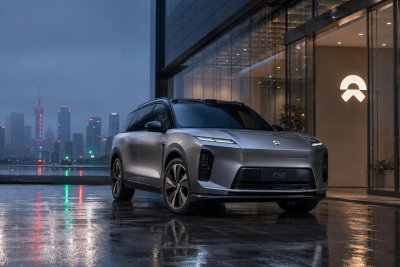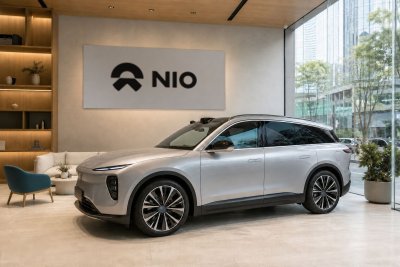
NIO Inc. saw its Hong Kong-listed shares climb more than 4% on Thursday, as investors positioned themselves ahead of the official debut of the company's new ONVO L80 SUV. The stock last changed hands at HK$50.45, according to data from AASTOCKS, marking a notable gain in a session that also saw rival Li Auto preparing for its own model announcements.
The rally comes at a critical juncture for NIO, which is striving to demonstrate that its three-brand strategy—encompassing NIO, ONVO, and Firefly—can drive volume growth while preserving margins in an increasingly competitive market. The company's April delivery figures offered some encouragement: 29,356 vehicles were handed over to customers, a 22.8% increase from the same month last year. Breaking this down, the core NIO brand accounted for 19,024 units, ONVO contributed 5,352, and Firefly delivered 4,980 vehicles.
However, the broader Chinese auto market remains under significant pressure. Reuters reported that overall car sales in China fell for the seventh consecutive month in April, declining 21.6% year-over-year. Sales of electric vehicles and plug-in hybrids also dropped, underscoring the challenging environment that NIO and its peers must navigate. The company is scheduled to release its unaudited first-quarter financial results before U.S. trading opens on May 21, with a management conference call to follow at 8 p.m. Beijing time.
The spotlight is firmly on the ONVO L80, a five-seat all-electric SUV with a pre-sale price tag of 245,800 yuan. This model represents NIO's push into a more accessible price segment, while still leveraging the premium cachet of the parent brand. Meanwhile, Li Auto is countering with its own L9 Livis, a six-seat hybrid SUV priced from 559,800 yuan, intensifying the rivalry in China's smart SUV market.
Analysts have noted that the stock's recent strength may also reflect investor focus on overseas expansion opportunities, given the sluggish domestic outlook. Daiwa analyst Kelvin Lau, in a note cited by Dow Jones via Morningstar, pointed out that NIO's share price movement is not solely tied to the L80 launch but also to the broader question of whether the company can sustain growth beyond China's increasingly crowded home market.
NIO's product offensive continues to gather pace. Founder and CEO William Li told attendees at the Auto China show last month that all three brands—NIO, ONVO, and Firefly—are undergoing a comprehensive refresh and evolution. The company confirmed that its flagship ES9 model will launch and begin deliveries in late May, while ONVO's L80 has already started taking pre-orders following its product and technology reveal.
In a less headline-grabbing but strategically important move, CnEVPost reported that Firefly has rolled out an over-the-air software update. The upgrade boosts peak motor output on older Firefly models and introduces a new parking-assist feature specifically designed for use at battery swap stations. NIO currently operates 3,846 such stations across China, a network that remains a key differentiator but also a significant cost burden.
The company is also investing heavily in proprietary chip development. In April, Li told Reuters that while Nvidia's automotive silicon commands very high gross margins, NIO's own chips—though more expensive to develop initially—offer better integration with its sensors and algorithms. This long-term bet on vertical integration underscores NIO's commitment to technological independence, even as it faces near-term margin pressures.
The overarching risk, however, is that new model launches may arrive in a market where buyers remain scarce. Robust sales of premium electric and plug-in hybrids have not been enough to offset the slump in lower-cost vehicle demand, and if price wars intensify, NIO will be forced to choose between chasing volume and protecting its margins. In the U.S., NIO's American depositary receipts jumped 7.57% on Wednesday to close at $6.54, with trading volume exceeding the 50-day average, often a leading indicator for the next Asian session.
Looking ahead, the focus will shift from share price movements to the order book. Investors are keenly watching the conversion rate for the L80, delivery timelines for the ES9, any guidance on gross margins, and the capital outlay required to sustain the battery-swap network amid a persistently sluggish Chinese car market.