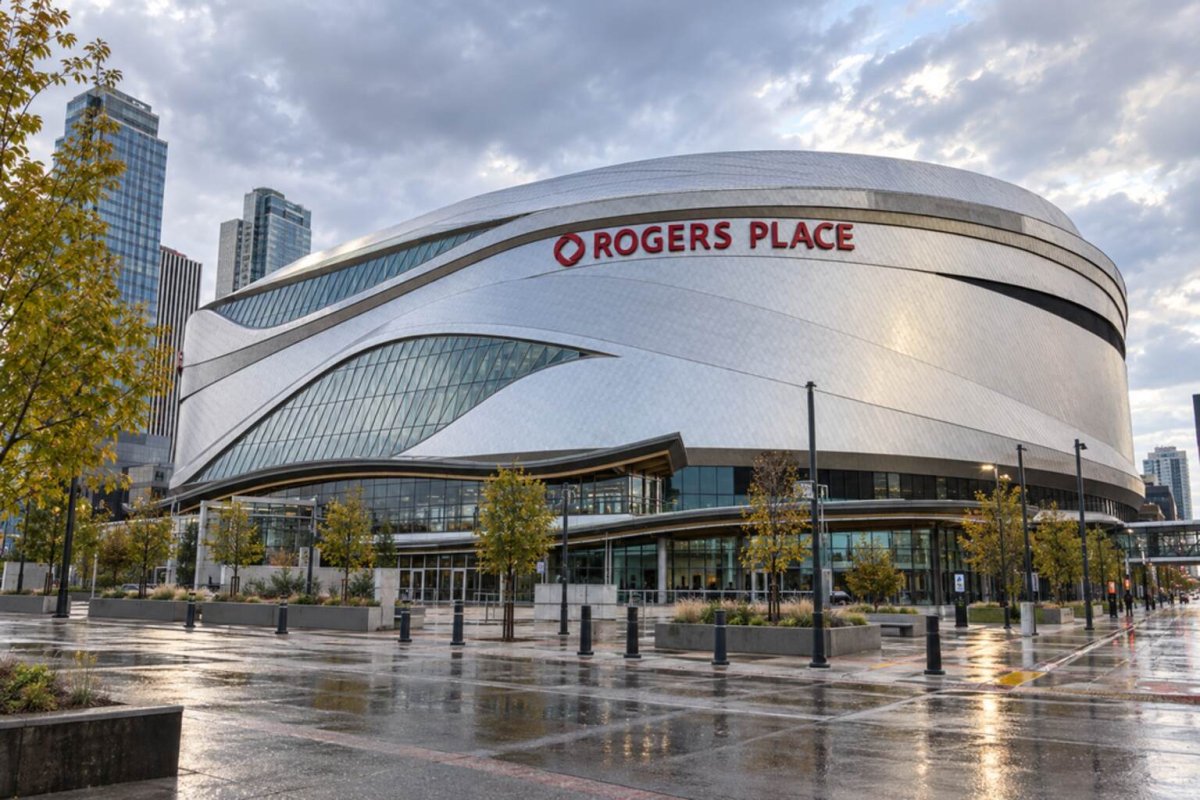
Rogers Communications has solidified its long-term presence in Edmonton by extending its naming rights and partnership agreement for Rogers Place, home of the NHL's Edmonton Oilers, through 2036. The announcement coincides with the arena's 10th anniversary, but notably, the company did not disclose the financial terms of the extension. For investors, this lack of transparency suggests the deal is more about strategic continuity than immediate financial impact.
The extension, agreed with OEG Sports & Entertainment, includes comprehensive branding and advertising placements throughout the arena, spanning signage, concourses, the rink, and in-game activations. Rogers will also provide customers with over 1,500 Oilers tickets for the upcoming season, including 300 for the September 29 home opener against the Vancouver Canucks. A new in-arena feature, the 'Rogers Goal Cam,' adds another customer engagement element.
This agreement fits within Rogers' broader hockey ecosystem. The company holds Canadian national NHL media rights through the 2037-38 season, and Sportsnet serves as the Oilers' exclusive regional broadcaster through 2035. Extending the arena partnership closes a potential branding gap, giving Rogers physical, broadcast, and customer-loyalty touchpoints around the same team.
The undisclosed contract value is a key point for shareholders. Naming rights can be valuable, but only if the price paid generates sufficient advertising value, customer retention, or incremental sales. Rogers disclosed none of the inputs needed to calculate that return. Consequently, investors should not interpret the 2036 end date as evidence of higher earnings on its own. The company also did not clarify whether the new deal alters the economics of its regional broadcast or national NHL rights, which remain separate contracts.
The arena deal arrives as sports becomes a more significant part of Rogers' business. In its second-quarter results, Rogers reported C$1.2 billion in sports and media revenue, up 53% year-over-year. Organic revenue grew 13% excluding the effect of Maple Leaf Sports & Entertainment (MLSE), and adjusted EBITDA improved by C$61 million to C$69 million. While this growth is notable, the C$69 million still represents only 2.8% of Rogers' consolidated adjusted EBITDA of C$2.442 billion for the quarter, underscoring the gap between the sports portfolio and the wireless and cable operations that drive most of the company's cash flow.
The larger financial stakes lie in Rogers' plan to acquire the remaining 25% of MLSE for C$4.35 billion in cash, funded through existing and new short-term credit facilities. As of June 30, Rogers' debt leverage ratio stood at 3.8, with free cash flow of C$982 million and available liquidity of C$6.1 billion. After gaining full ownership of MLSE, Rogers intends to sell a minority interest in a combined sports and media portfolio that includes MLSE, the Toronto Blue Jays, Rogers Centre, and Sportsnet. Management suggests this sale could unlock value, but the filing cautions that price, timing, and completion are not guaranteed.
For RCI investors, several factors warrant attention. The valuation of the minority sale will be a key indicator of whether management's thesis holds. Debt reduction is another priority, as investors will watch how quickly transaction funding is replaced with sale proceeds and free cash flow. Media profitability must also continue to improve, with revenue growth converting into EBITDA as the new national NHL rights cycle expands both opportunity and cost. Finally, evidence of telecom benefits—such as reduced customer churn, higher average revenue per user, or increased bundled-product adoption—would demonstrate whether sports access strengthens the core wireless and cable franchise.
The bull case for Rogers is that it is building a hard-to-replicate ecosystem of teams, venues, rights, distribution, and subscriber relationships. The bear case is that long-duration sports commitments consume cash while financial returns remain opaque. The extension of the Rogers Place naming rights supports the former narrative, but only disclosed economics and successful asset monetization can resolve the latter.
