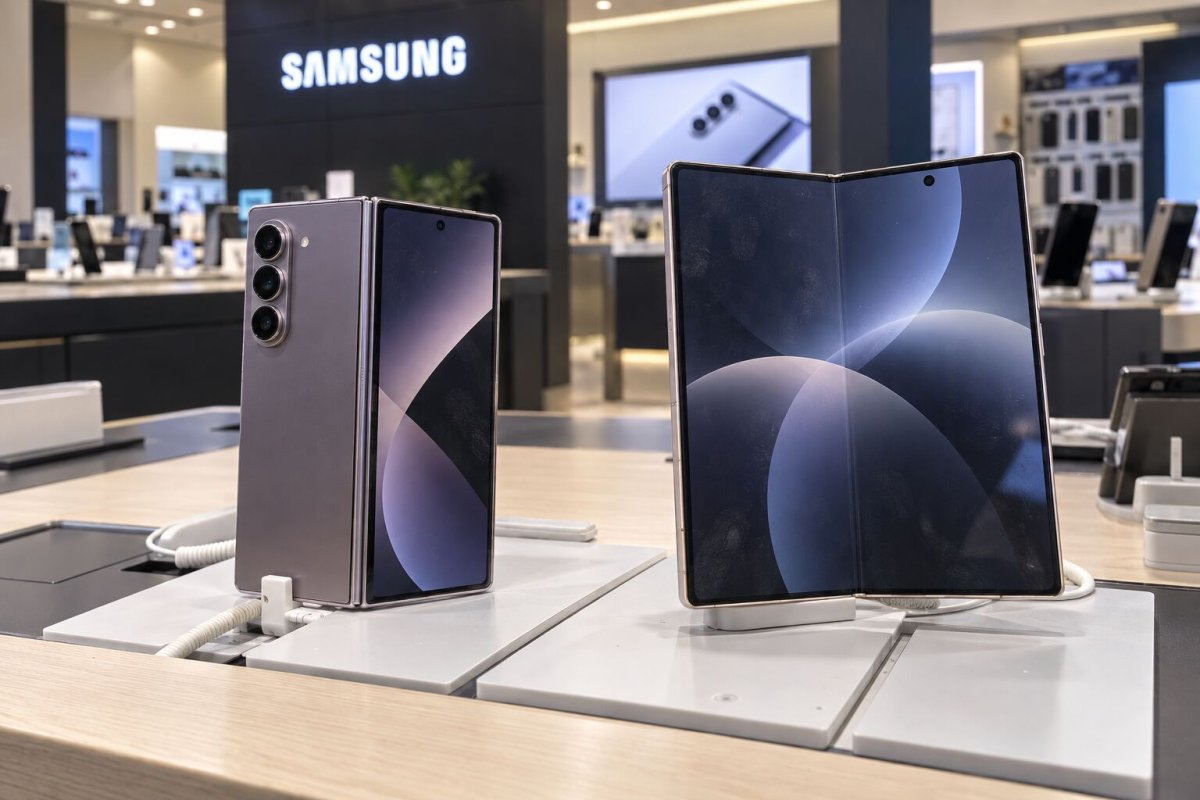
Samsung Electronics has reported that combined European sales of its Galaxy Z Fold8 and Fold8 Ultra are 50% higher than the Galaxy Z Fold7 during the same period since launch. While this signals strong demand for its premium foldable lineup, it does not yet demonstrate that the mobile division's profitability is recovering. Shares of Samsung Electronics closed unchanged at KRW269,500 in Seoul on Wednesday, reflecting investor caution.
The muted market reaction is understandable given the limited data disclosed. Samsung provided only a growth percentage, without unit sales, revenue, or margin figures. Additionally, U.S. promotions are already offering discounts of up to $300 on the new devices, which could erode the financial benefits of higher unit sales.
What the 50% Figure Actually Represents
The announcement, made on September 9, compares combined sales of the Galaxy Z Fold8 and Fold8 Ultra in Europe against the Fold7 from launch through the current period. Samsung began selling the new Z series in select markets on August 7. This comparison is encouraging but asymmetric, as the company now offers two book-style foldables—the wider Fold8 and the higher-spec Fold8 Ultra—versus a single Fold7 model in the base period. Samsung did not specify whether the sales figure reflects sell-through to consumers or shipments to retailers, nor did it break down contributions from each model.
Furthermore, no average selling price was disclosed. A 50% increase in units can yield far less operating leverage if discounts, trade-in subsidies, or launch marketing costs consume the gross profit. For investors, product mix and margins are more critical than the headline growth rate.
Broader Sales Data: Positive but Less Dramatic
Samsung's global launch release indicated that pre-orders for the entire Galaxy Z lineup—Fold8, Fold8 Ultra, and Flip8—were more than 30% above the previous generation, with devices set to reach 106 markets. However, independent tracking firm Counterpoint Research found that the entire Z8 series sold only 8% more units globally in its first two weeks compared to the Z7 series in a similar period. Counterpoint's weekly data also showed Samsung's overall smartphone sales recovering above the 2025 baseline after the Z8 launch.
These figures are not necessarily contradictory; they cover different geographies, model groupings, and measurement windows. Together, they suggest that Europe and the book-style devices are outperforming, while the worldwide uplift across all three foldables is more modest.
A 0 Discount Tests Pricing Power
The Fold8 starts at $1,899.99 in the U.S., and the Fold8 Ultra at $2,099.99. This week, TechRadar reported an upfront discount of up to $300 at Samsung's official store, $100 more than its cited pre-order offer. That discounts represents roughly 15.8% of the Fold8's list price and 14.3% of the Fold8 Ultra's price, and is separate from larger headline savings that require eligible trade-ins or carrier plans. The upfront cut can broaden demand, especially around competing handset launches, but it weakens the inference that sales gains come from full-price buyers.
Promotions are standard in the premium smartphone market, and an early discount does not necessarily signal distress. The key question is whether Samsung can ease incentives after the launch window without losing momentum. Persistent discounting would turn an attractive unit-growth story into a less impressive revenue and margin result.
Why Foldable Profitability Matters Now
Samsung's Mobile eXperience and Networks businesses reported KRW33.2 trillion in second-quarter revenue and a KRW700 billion operating loss, according to the company's latest results. That quarter ended before the Fold8 family went on sale, so the third quarter will provide the first financial test of the launch.
That loss makes premium mix valuable. A buyer moving from a lower-priced Flip to a Fold can lift revenue per customer and may attach accessories, insurance, and services. Samsung says the number of users moving from a Flip to a Fold8 model has tripled versus the Fold7 generation. In Europe, 20% of Flip8 buyers switched from competing brands. These are strategically useful indicators, but neither reveals contribution margin. Investors need evidence that higher-priced devices can absorb component costs, launch spending, and channel incentives—not merely that customers are trying a new form factor.
What Would Confirm the Bullish Reading
- MX profitability: A return to operating profit in the third quarter with management crediting flagship mix would be the clearest validation.
- Promotion durability: Lower incentives without a sharp drop in sales would signal genuine pricing power.
- Geographic breadth: Unit or revenue disclosures outside Europe would show whether the 50% increase travels.
- Channel health: Stable inventories and sell-through would be stronger than shipments that sit with retailers.
The Fold8 update is better than a marketing footnote: two premium models are gaining real traction in a major region. But at KRW269,500, Samsung stock is still primarily priced on memory profits, AI-chip investment, and the durability of a record earnings cycle. Foldables become a material second engine only when sales growth arrives with margins attached.