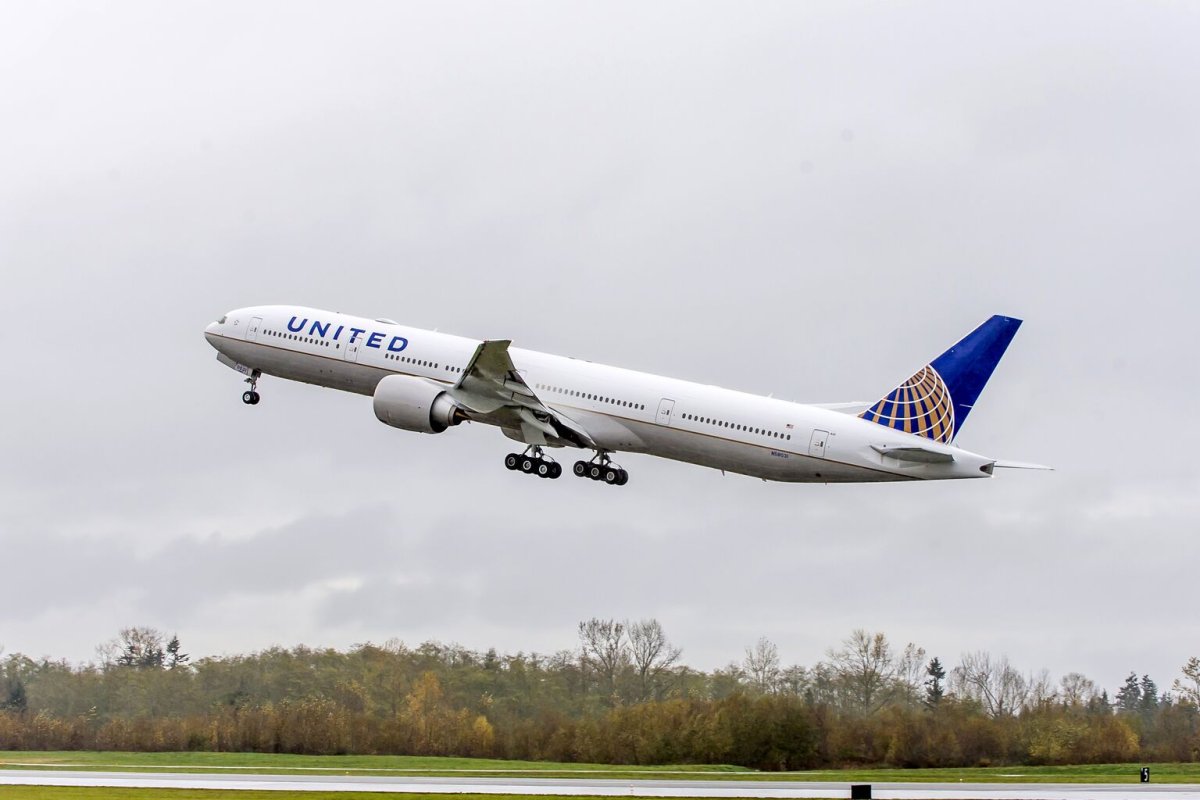
United Airlines' sole nonstop service to Dubai remains grounded indefinitely, yet the financial impact of this single route is overshadowed by a more pressing concern: the airline's ability to manage soaring fuel expenses. While the absence of the Dubai flight is a visible gap in United's network, the real test for the carrier's earnings lies in its capacity to pass on higher jet fuel costs to passengers amid ongoing Middle East tensions.
United's operational bulletin continues to list all departures to and from Dubai as canceled "until further notice," with no firm restart date announced. A review of the airline's latest schedule by aviation publication FlyMag indicates that the Newark–Dubai service is absent from the core winter timetable spanning November 1 through March 13, with a provisional reappearance only in March 2027. This distinction is crucial: a scheduled flight number does not equate to a committed relaunch, and timetables can shift as security conditions, airspace restrictions, and booking patterns evolve.
The loss of the Dubai route is significant but manageable within United's broader portfolio. Before the suspension, the airline operated a daily 350-seat Boeing 777-300ER on the route, which translates to roughly 93,100 seats removed from the market over 133 days of winter flying. Each departure also carried 60 Polaris business-class seats and 24 Premium Plus seats, inventory that is disproportionately important to the economics of a long-haul flight.
However, for United as a whole, Dubai is a portfolio decision rather than an earnings cliff. In the second quarter, the company reported $16.1 billion in passenger revenue, with its Middle East, India, and Africa segment contributing $225 million, or about 1.4% of that total. Regional passenger revenue fell 16.4% year-over-year as capacity dropped 34.4%, yet passenger revenue per available seat mile rose 27.5%—a sign that management has been shrinking exposed flying faster than revenue declines. The parked Dubai route costs United local and connecting demand, including feed into its Emirates partnership, but it also frees up a scarce widebody aircraft and crew rotation for markets with safer operating profiles or stronger booking curves.
The more critical earnings test is oil. United closed Wednesday at $107.12, down 1.0% from the prior session's $108.24, as Brent crude climbed back above $100 a barrel amid renewed Middle East attacks. Fuel is the number that dwarfs the Dubai capacity loss. United's second-quarter aircraft-fuel expense reached $5.11 billion, up 84% year-over-year, at an average of $4.19 per gallon. In July, the airline estimated that its full-year 2026 fuel bill would be nearly $6 billion higher than initially expected.
Management said it recovered about half of the second-quarter fuel increase through the revenue environment and expects to recover 80% to 90% in the third quarter, with full recovery by the fourth. This claim—not the revenue from one daily route—is the critical assumption behind United's full-year adjusted earnings guidance of $9 to $11 per share. At Wednesday's close, the stock trades at about 10.7 times the midpoint of that range, a multiple that is not demanding if the fuel pass-through works. But it becomes less attractive if oil prices persist above $100, consumers resist further fare increases, or regional conflict forces more capacity changes.
What could change the thesis? The bullish case is that United has options. It ended the second quarter with $19.6 billion in available liquidity, raised $3.7 billion in new liquidity during the period, and reported trailing 12-month net leverage of 2.2 times. Its international network is still expanding, with 10 new international destinations announced for 2027, several using the smaller A321XLR rather than a 350-seat widebody.
The counterargument is that Dubai was strategically valuable beyond its local traffic. It served as United's bridge into Emirates' network across South Asia, Africa, and the Middle East, and a prolonged absence hands the nonstop market to Gulf carriers. A suspension stretching into spring 2027 would also demonstrate that safety and geopolitical risk can override otherwise attractive network economics for a full year.
Investors should monitor four key indicators: whether United publishes a firm Dubai restart date, whether March inventory remains bookable as the sales window approaches, the trajectory of Brent and jet-fuel prices, and the recovery rate United reports with its next quarterly results. A safer Gulf operating environment would restore a useful route, but evidence that fares are absorbing most of the fuel shock would do much more for the stock.