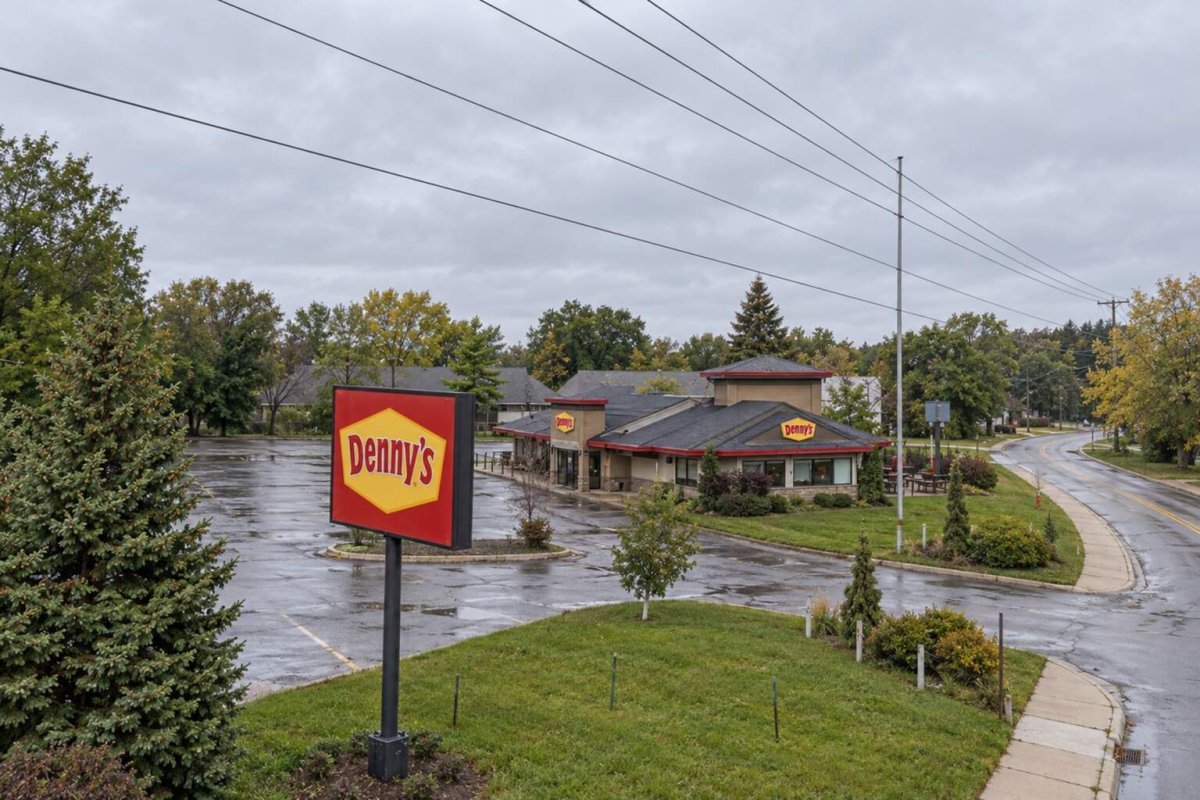
Denny's has temporarily closed five of its restaurants in Minnesota and Wisconsin following the financial collapse of franchisee M15 Inc. The closures, which took effect on September 3, came after M15 informed employees that mounting debt and aggressive collection efforts had left the company unable to cover payroll, food, or supply costs. Denny's has confirmed the shutdowns and indicated that it is actively seeking new operators to reopen as many of the affected locations as possible.
The five closed sites are located at 255 Century Avenue North in Maplewood, Minnesota; 12950 Aldrich Avenue South in Burnsville, Minnesota; 2045 Twin Lakes Parkway in Roseville, Minnesota; 38681 Tanger Drive in North Branch, Minnesota; and 1000 Gateway Boulevard in Hudson, Wisconsin. According to Denny's, the company's current locator still lists eight other restaurants in Minnesota and 18 in Wisconsin, indicating that the brand has not exited either state.
Franchisee Financial Distress
M15 Inc., the franchisee operating these locations, told employees that despite borrowing substantial sums over the past year, revenue and cash flow were insufficient to continue operations in the face of lender collection activity. The company plans to file for Chapter 7 bankruptcy, a liquidation process, and warned that employees with unpaid wages may need to submit claims in bankruptcy court.
It is crucial to note that these statements pertain solely to M15 Inc., not to Denny's Corporation. As a franchise model, each restaurant is independently owned and operated, with its own financing and operational obligations. Therefore, the closures do not indicate any financial distress at the corporate level, nor do they suggest that Denny's itself is facing bankruptcy.
Impact on the Take-Private Turnaround
These five closures represent a small fraction of Denny's overall footprint. As of March 2025, Denny's reported 1,491 brand restaurants, of which 1,430 were franchised or licensed. The closures account for roughly one-third of one percent of the system. While they are unlikely to derail the $620 million take-private acquisition by TriArtisan Capital Advisors, Treville Capital Group, and Yadav Enterprises, they do underscore the importance of franchisee financial health.
Denny's collects royalties based on franchise restaurant sales, while franchisees bear the burden of labor, food, rent, and most debt. A weak unit can close without the franchisor absorbing its full operating loss, but the brand still loses royalty revenue and market presence. Repeated failures could also make it more difficult for the company to secure financing for remodeling and new-unit development.
Context of the Broader Turnaround
The new owners inherited a deliberate pruning program. Denny's closed approximately 150 underperforming restaurants during 2024 and 2025, aiming to remove the weakest fifth of its estate and boost average unit volume from about $1.9 million toward $2.2 million. According to Nation's Restaurant News, the chain's 2025 sales declined 2% even as the turnaround shifted toward restaurant modernization, catering, and menu changes.
These closures are not an earnings event for publicly traded peers, but they serve as a warning signal for investors in restaurant franchisors. Dine Brands Global, owner of IHOP and Applebee's, offers the closest listed franchise-model comparison, while First Watch competes more directly for breakfast traffic, and Cracker Barrel serves a similar value-conscious family-dining customer.
The next Denny's update will be more informative than the raw closure count. Investors should watch how many of the five sites secure replacement operators, whether unpaid obligations complicate transfers, and whether more multi-unit franchisees show comparable distress. A quick refranchising would support the private owners' claim that pruning can strengthen the system. A widening trail of abrupt closures would suggest the turnaround has a franchise-capital problem, not merely a real-estate cleanup.