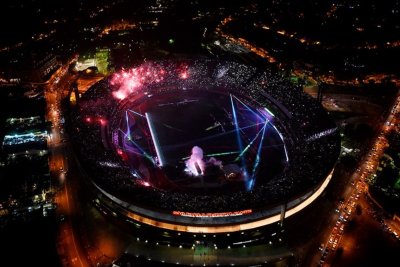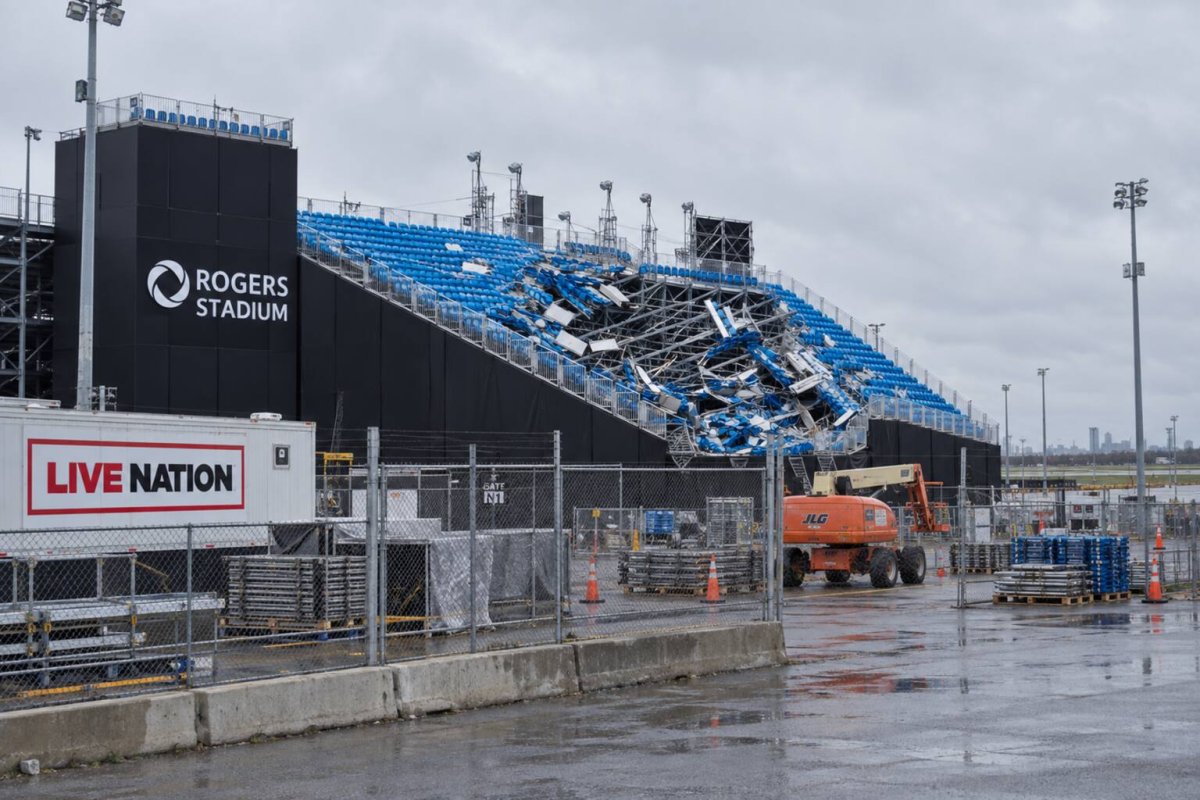
Live Nation Entertainment (NYSE: LYV) shares remained steady near the $170 mark on Wednesday, as the City of Toronto confirmed it has received the long-awaited engineering report on the storm-damaged Rogers Stadium. However, neither municipal officials nor the concert promoter have indicated whether the 50,000-capacity venue will be cleared in time for AC/DC's sold-out September 16 performance.
The development narrows the immediate uncertainty surrounding the temporary venue, which suffered structural damage during a September 2 storm that collapsed portions of its north grandstand. The city has not released the findings, but the report is a critical first step in a seven-part unsafe-building order that requires Live Nation to implement remedial measures and provide an update by September 11. Reconstruction would also necessitate a building permit.
As of Wednesday evening, the official Rogers Stadium schedule still listed the AC/DC concert, and Live Nation had not announced any cancellation or relocation. The city has deferred all scheduling questions to the promoter, leaving fans and investors in a state of cautious anticipation. With just one week to go, silence is not the same as confirmation.
Rogers Stadium: A Key Venue in Live Nation's Growth Strategy
Rogers Stadium is not merely a side project for Live Nation; it is a cornerstone of the company's venue expansion plans. In its first-quarter investor update, Live Nation projected that the Toronto venue's 2026 show count would be 40% higher than its inaugural 2025 season. The temporary stadium, built on former Downsview Airport land, was designed to add large-show capacity in a key touring market.
The broader strategy is even more ambitious. Live Nation now expects $1.1 billion in capital expenditures for 2026, with approximately $800 million allocated to venue expansion and enhancements. The company's pipeline includes more than 25 large venues slated to open through 2027, adding capacity for 15 million fans on a run-rate basis. Management anticipates these projects will generate returns exceeding 20%.
A weather-damaged grandstand does not invalidate that model, but it does highlight risks that are often overlooked in financial projections: engineering costs, permitting delays, repair responsibilities, insurance claims, event relocations, and potential reputational damage with artists and fans. Live Nation has not disclosed a repair estimate or how costs will be allocated among venue partners, nor has it detailed its insurance recovery. Investors should be cautious about assigning a speculative loss figure to this incident.
Financial Strength Provides a Buffer
Live Nation's latest quarterly results offer a counterbalance to concerns about the Toronto venue. In the second quarter, revenue rose 9% to $7.67 billion, operating income increased 7% to $522 million, and adjusted operating income reached $817 million. Nearly 49 million fans attended its events, up 10% year-over-year, while event-related deferred revenue climbed 25% to a record $6.4 billion.
The company also reported approximately $1.93 billion of free cash, its non-GAAP liquidity measure adjusted for client funds and deferred event revenue. Even a substantial repair bill for Rogers Stadium is unlikely to strain corporate liquidity. The more significant downside would be if the damage leads to multiple lost shows, a costly redesign, or heightened regulatory scrutiny of temporary structures across the industry.
What to Watch Next
The September 11 update should provide clarity on three key questions: whether the grandstand can be repaired or isolated in time, whether capacity will need to be reduced, and whether Toronto will authorize the venue to reopen. A firm go-ahead for September 16 would contain the event risk. A cancellation without a replacement venue would trigger refunds, vendor costs, and a less quantifiable hit to customer trust.
For shareholders, the appropriate response is proportional. Rogers Stadium is too small to override record ticket demand or Live Nation's global scale. But as the company invests heavily to own and operate more venues, it also takes on more building, weather, and execution risk. The stock's muted reaction suggests investors currently view the Toronto situation as contained; the repair clearance will determine whether that assumption holds.