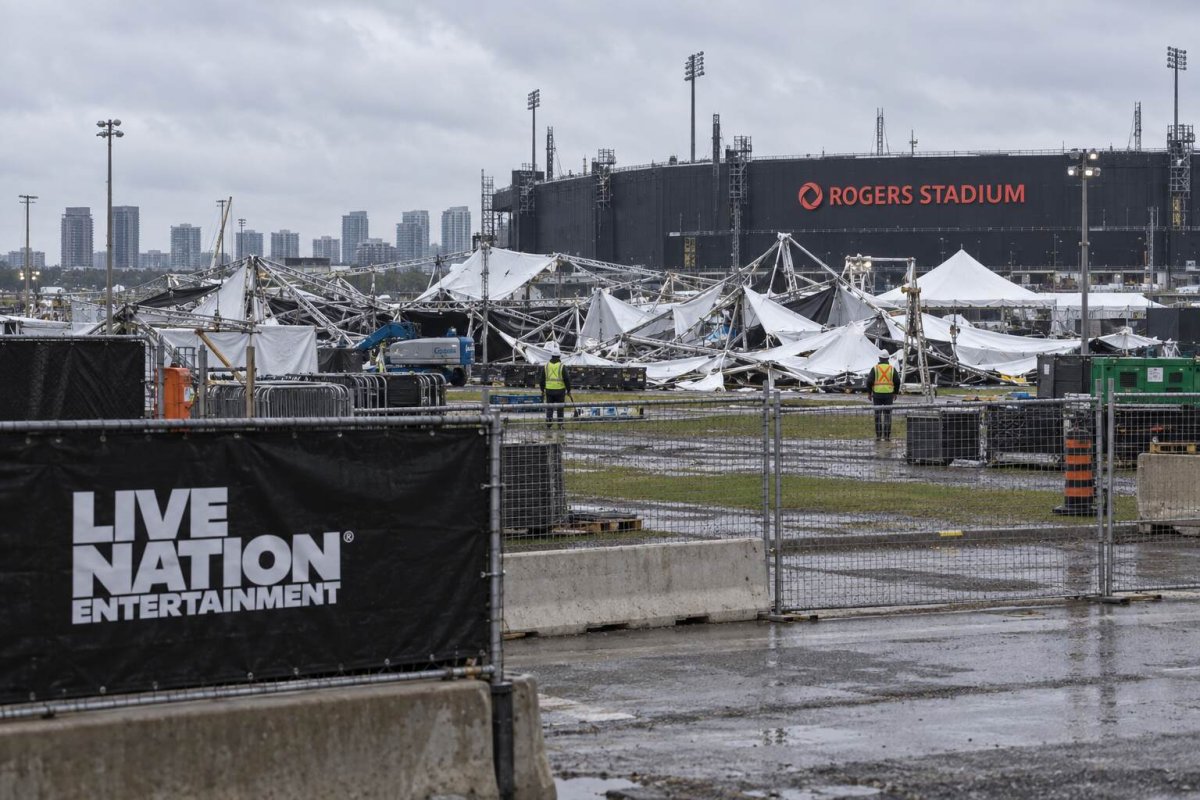
Live Nation Entertainment (NYSE: LYV) saw its shares decline 1.8% on Tuesday, closing at $170.45, as a critical deadline arrived in Toronto's order concerning the storm-damaged Rogers Stadium. The city had issued an "Order to Remedy Unsafe Building" following a September 2 storm that caused significant structural damage to the temporary outdoor venue.
The immediate concern for investors is whether the venue can be repaired in time for a scheduled AC/DC concert on September 16. However, Live Nation has not announced a cancellation or revised its financial outlook, suggesting the company views this as an operational challenge rather than a material earnings event. The distinction is important: while the concert is at risk, the financial impact on the company's overall results is expected to be minimal.
Scope of the Damage and Regulatory Requirements
Toronto inspectors determined that parts of the north side of the stadium had collapsed, seats were displaced, and some areas were potentially unsafe. Live Nation was instructed to restrict access, retain an engineer, and submit findings and proposed solutions by September 8. The company must also follow the engineer's recommendations and provide an update to the city by September 11, with any reconstruction requiring a building permit.
As of Tuesday's market close, tickets for the AC/DC concert were still being sold on Live Nation's event page, and the band's tour schedule still listed Toronto between Montreal and Winnipeg. This indicates the event has not been officially withdrawn, but it does not confirm that the structure has been cleared for occupancy.
Financial Implications and Investor Perspective
Live Nation has not disclosed a repair estimate, potential insurance recovery, or alternative venue plans. The company stated it is assessing "significant damage," but no injuries were reported. For investors, the key takeaway is that the direct financial impact of one 50,000-capacity show is likely to be too small to materially affect earnings, unless costs escalate or more events are disrupted.
Rogers Stadium, located on the former Downsview Airport lands, hosted nearly 700,000 fans in its first summer in 2025. Live Nation expects its Venue Nation division to host close to 75 million fans worldwide in 2026. A single Rogers Stadium date represents roughly 0.067% of that annual attendance target, underscoring the limited direct financial exposure.
Operational Significance for Live Nation's Growth Strategy
Despite the small financial impact, the incident carries operational significance. Live Nation's investment case hinges on its owned and operated venues, with the company projecting $1.1 billion in 2026 capital spending, including $800 million for venue expansion and enhancements. More than 25 large venues scheduled through 2027 are expected to add capacity for 15 million fans, with projects targeting returns above 20%.
In its second-quarter results, Live Nation reported revenue growth of 9% to $7.7 billion, but adjusted operating income rose only 2% to $817 million. Concerts adjusted operating income fell 14%, reflecting show timing, venue pre-opening costs, and new international festivals. Adjusted free cash flow reached $516 million. This backdrop highlights that profit conversion is already under pressure, making operational execution even more critical.
What Investors Should Watch by September 11
The first key question is whether the engineer's plan leads to permitted work and a city-accepted completion update by Friday. The second is whether AC/DC remains at Rogers Stadium, moves, postpones, or cancels. A timely clearance with no additional date losses would support the view that this is a contained weather incident. A relocation or cancellation would not necessarily be material to group earnings, but it would reveal more about refund exposure, insurance, and the resilience of a temporary stadium.
Tuesday's share decline should not be attributed entirely to the Toronto order. The stock had already retreated from $188.46 on August 14 and is now 9.6% below that level. The market is also weighing a capital-heavy venue buildout, slower Concerts profit, and broader equity conditions. The clean near-term read-through is narrower: no disclosed guidance change, one show still on sale, and a safety process whose decisive evidence should arrive before the gates can reopen.