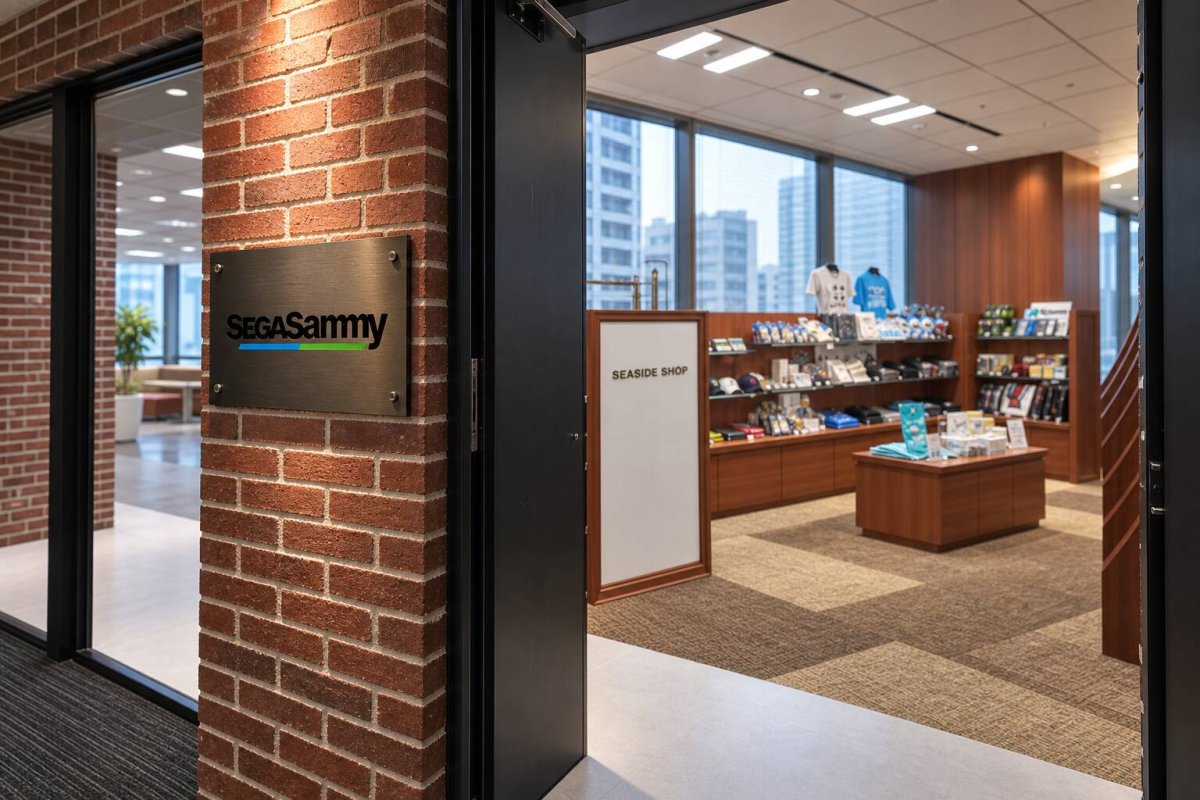
Sega Sammy Holdings' shares saw minimal movement on Tuesday, even as the company quantified its strategy to monetize fans who engage with its franchises beyond playing games. The Tokyo-listed parent of Sega has set a licensing revenue target of ¥20.8 billion for the fiscal year ending March 2027, a figure that underscores its push into transmedia and consumer products.
The stock closed at ¥3,132 on September 8, up just ¥4 (0.1%) from the previous session's ¥3,128. The muted reaction reflects investor caution, as licensing growth, while promising, is not yet large enough to offset the volatility of the core games business.
Understanding the "Non-Player" Audience
Shuji Utsumi, president and COO of Sega Corporation, recently told Nikkei (as reported by Automaton) that the audience following game streams and purchasing merchandise without necessarily playing the games is expanding. He highlighted that 60-70% of buyers of Like a Dragon merchandise are women, illustrating a fan base that goes beyond traditional players.
For shareholders, the key takeaway isn't a new definition of fandom, but Sega's effort to generate revenue from its intellectual property through films, retail collaborations, and other formats. This strategy aims to create steadier, capital-light royalty income between major game releases, while also potentially funneling new audiences into the games themselves.
Measurable Licensing Growth
According to Sega Sammy's June entertainment strategy presentation, the ¥20.8 billion licensing target for the year ending March 2027 represents a 16.2% increase from the ¥17.9 billion recorded in the prior year (excluding Sonic film revenue allocations). The number of licensees has grown to 748, up from 410 four years ago.
The company's licensing network is also broadening. Its March 2026 licensing event attracted 144 participants from 83 companies, compared with 79 participants from 43 companies a year earlier. Sega Sammy describes its transmedia unit—encompassing licensing, film, animation, and live experiences—as a coordinated business rather than isolated promotions.
Upcoming film releases provide visible milestones: The Angry Birds Movie 3 is slated for North America on December 23, 2026, followed by Sonic the Hedgehog 4 on March 19, 2027. While these films' box office performance won't directly count toward the licensing target, they will test whether screen audiences convert into sustained demand for games and merchandise.
The Game Pipeline Remains the Larger Test
The latest quarterly results highlight the challenges. In the June quarter, Entertainment Contents revenue rose just 1.0% to ¥68.4 billion, while segment operating profit fell 31% to ¥4.9 billion. Within that, Consumer operating profit dropped 75% to ¥1.3 billion, and full-game unit sales declined to 9.8 million from 11.5 million, due to a lack of new releases.
Management still targets ¥357 billion in Entertainment Contents sales and ¥42.5 billion in operating profit for the current fiscal year, representing increases of 9.3% and 31.2%, respectively. However, this depends on a 42% jump in full-game unit sales to 95.3 million, driven by a back-loaded slate including Stranger Than Heaven (January 2027) and Persona 4 Revival (February 2027).
Investor Outlook
Tuesday's flat close on volume of 604,900 shares (about half Monday's volume) suggests investors are waiting for more concrete evidence. The scorecard ahead includes whether licensing revenue approaches ¥20.8 billion, whether film and retail partnerships expand without cost overruns, and whether the delayed game slate lifts Consumer profit. Transmedia can diversify earnings, but it cannot indefinitely compensate for missed game launches or weak player demand.