Uber Technologies (NYSE: UBER) saw its shares decline 3.5% on Tuesday, closing at $73.13, as the broader market also retreated. The stock's performance lagged the Nasdaq Composite, which fell a more modest 0.3% on the day. This pullback comes without any new negative company-specific announcement, leaving investors to focus on the company's recent strategic moves and their potential impact on future growth and profitability.
The session saw Uber trade in a range between $72.72 and $75.43, with the stock ultimately finishing near its low of the day on volume of 24.1 million shares. The decline occurred amid a defensive tone in the broader market, with the S&P 500 losing 0.6% and the Dow Jones Industrial Average down 1.2%. Rising oil prices, with Brent crude briefly touching $99.50, and concerns about inflation and higher bond yields contributed to a risk-off sentiment.
These market conditions are particularly relevant for growth-oriented names like Uber. Higher discount rates can pressure the valuation of long-duration growth investments. Additionally, elevated oil prices could increase costs for drivers on the platform, although Uber's marketplace has mechanisms to adjust pricing and incentives over time.
Restructuring: More Than a Margin Story
Last week, Uber announced a workforce reduction of approximately 10%, as detailed in a memo from CEO Dara Khosrowshahi. The restructuring aims to streamline the organization by removing over seven layers of management, reducing management roles by about 20%, and almost halving the number of 'micro-teams.' The move is expected to affect around 3,300 jobs, according to Reuters.
For shareholders, the key question is how the savings from these cuts will be deployed. Khosrowshahi indicated that the freed-up resources would be reinvested into growth and innovation initiatives. This reframes the layoffs as an execution bet rather than a straightforward near-term earnings boost. While fewer layers could accelerate decision-making, there is also the risk of losing experienced talent, especially as Uber simultaneously expands its autonomous vehicle partnerships and integrates acquisitions.
London Robotaxi Launch: Strategic, Not Yet Financial
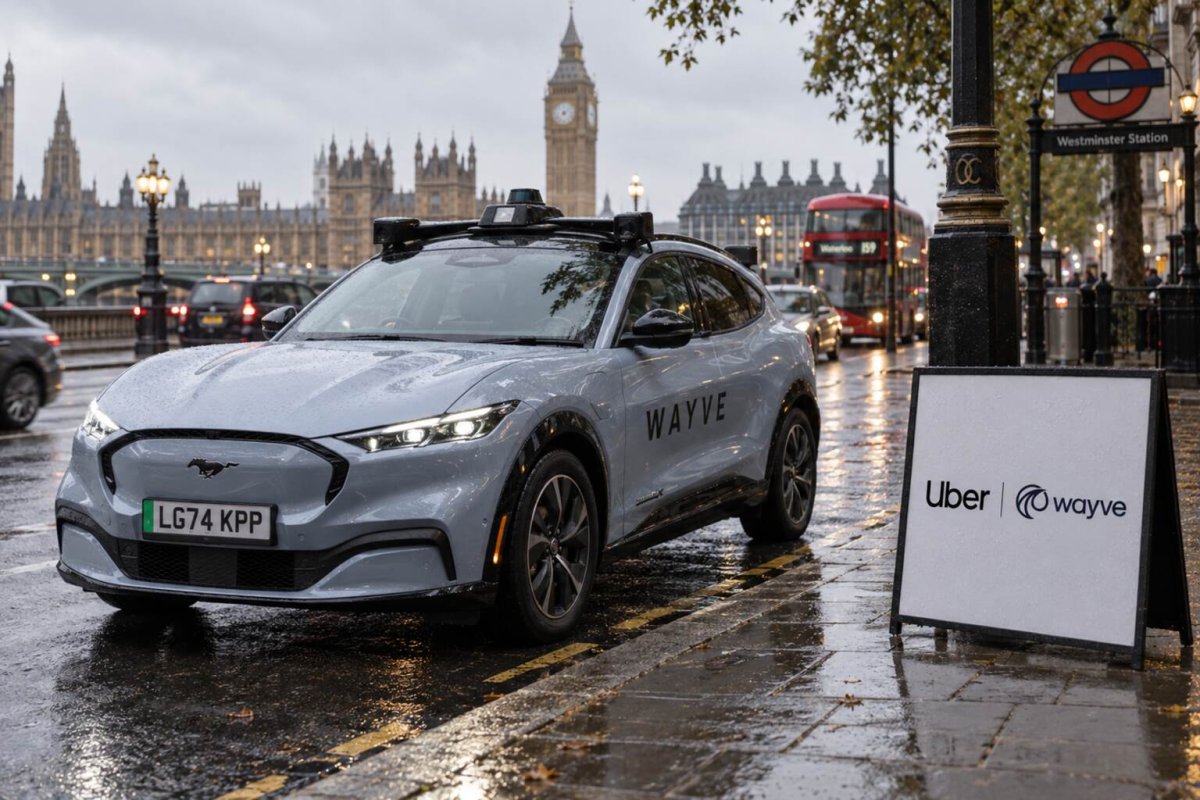
On September 3, Uber and Wayve launched a limited number of supervised autonomous rides in London. The vehicles, Ford Mustang Mach-E SUVs equipped with Wayve's technology, will have a safety operator in the driver's seat, and riders must opt in. The initial phase excludes airport trips, as detailed in Wayve's announcement, indicating this is a learning opportunity rather than a significant revenue source.
The strategic importance of this launch is clearer than its immediate financial impact. Uber states it partners with over 30 autonomous vehicle companies and aims to have AVs available on its platform in as many as 15 cities by the end of the year. The marketplace model could benefit from supplying demand, routing, and payment infrastructure to multiple robotaxi operators. However, the economics remain uncertain, with factors like vehicle utilization, fleet ownership, insurance, and revenue share all playing a role in determining whether autonomous rides will enhance or dilute Uber's take rate.
Financial Position and Guidance
Uber's recent financial results provide some buffer for these investments. In the second quarter, gross bookings reached $58.0 billion, up 22% on a constant currency basis. Revenue grew 12% to $14.2 billion, and adjusted EBITDA rose 33% to $2.8 billion. The company also generated $2.8 billion in free cash flow and held $5.4 billion in cash, equivalents, and short-term investments.
For the third quarter, Uber has guided to gross bookings of $58.25 billion to $60.25 billion, non-GAAP earnings per share of $0.84 to $0.88, and adjusted EBITDA of $2.86 billion to $2.96 billion. A bullish signal would be results near the top of these ranges without excessive incentive spending. Conversely, weaker bookings or margin compression during this period of restructuring and AV investment would be a warning sign.
Capital allocation is another factor to monitor. Uber's agreed cash offer for Delivery Hero carries an equity value of $14.8 billion, or $13.7 billion after adjusting for shares already purchased. This acquisition could expand Uber's delivery scale, but it also competes for balance sheet capacity with share buybacks and autonomous vehicle investments.
Tuesday's decline alone does not signal a breakdown in any of these initiatives. Instead, it reflects a market that is growing more sensitive to oil prices and interest rates, and investors are demanding evidence that the company's restructuring will translate into faster growth and cash generation. The next earnings report will need to demonstrate that the reorganization is delivering tangible operating leverage. The London robotaxi launch, while a step forward, only confirms that the technology is being tested in real-world conditions.