Uber Technologies (NYSE:UBER) saw a modest uptick in premarket trading on Wednesday, with shares last changing hands at $75.43, up 0.25% from Tuesday's close of $75.24. The move comes as BMO Capital Markets reaffirmed its Outperform rating and $119 price target, signaling confidence in the ride-hailing giant's ambitious autonomous vehicle strategy.
The $119 target represents a substantial 58% premium over the current share price, underscoring the market's high expectations for Uber's AV initiative. However, the gap also highlights the execution risks embedded in the company's plans to commit more than $10 billion to autonomous vehicle development over the coming years.
Uber's trailing free cash flow has crossed the $10 billion mark, according to the company's second-quarter remarks, providing a solid funding base for the AV push. Yet, as BMO analysts note, the scale of the investment demands disciplined capital allocation, with the company exploring outside financing options to maintain balance-sheet flexibility.
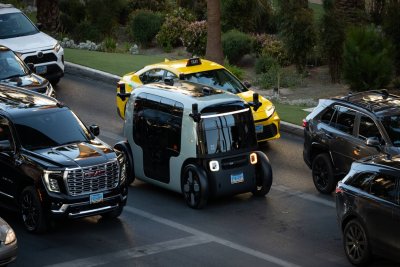
The AV strategy is a multi-faceted commitment, encompassing equity investments, infrastructure spending, and vehicle purchase agreements. Uber has already deployed AVs on its platform in seven cities, with plans to expand to as many as 15 by year-end. Partners have committed approximately 120,000 vehicles to the initiative, signaling broad industry support.
One notable partnership involves a potential investment of up to $1.25 billion in Rivian Automotive (NASDAQ:RIVN) through 2031, tied to autonomy milestones. The plan includes 10,000 R2 robotaxis starting in 2028, with an option for an additional 40,000 vehicles from 2030. Meanwhile, Pony AI (NASDAQ:PONY) has committed to deploying over 2,000 robotaxis in Europe through Uber's platform.
Despite the heavy focus on AVs, Uber's core ride-hailing and delivery businesses continue to perform strongly. Second-quarter gross bookings reached $58.0 billion, up 24% year-over-year, while revenue grew 12% to $14.2 billion. Adjusted EBITDA rose 33% to $2.8 billion, and quarterly free cash flow matched that figure at $2.8 billion.
CEO Dara Khosrowshahi emphasized that Uber is "investing from a position of strength," pointing to the company's robust cash generation and expanding marketplace. For the third quarter, Uber forecasts gross bookings between $58.25 billion and $60.25 billion, with non-GAAP earnings per share expected in the range of $0.84 to $0.88.
Investor sentiment remains cautiously optimistic, with the median analyst price target at $101 and a range of $72 to $150, according to FT/LSEG data. Rosenblatt Securities initiated coverage with a Buy rating and $100 target, adding to the positive outlook. However, Uber shares remain approximately 26% below their 52-week high, reflecting lingering concerns about the pace of AV adoption and potential regulatory hurdles.
Key risks include delays in commercial AV launches due to regulatory approvals, safety performance, and partner technology readiness. Any setbacks could push investments ahead of revenue generation, putting pressure on cash flow. Additionally, outside financing could become more expensive if credit conditions tighten.
Investors will be watching two critical markers: the year-end city launches to gauge deployment speed, and the next quarterly earnings report, expected in early November, to assess whether cash generation keeps pace with the AV investment cycle.