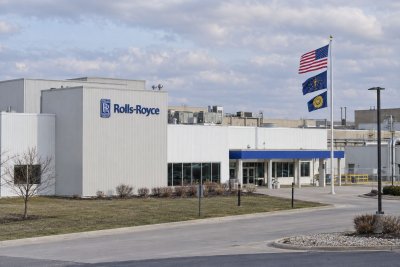
Rolls-Royce Holdings is set to distribute a 6 pence-per-share interim dividend on Friday, September 18, but the payment will only reach investors who held the stock before the ex-dividend date in early August. The entitlement was locked in on August 7, the record date, with shares trading without the dividend from August 6 onward. As a result, anyone buying the shares now will not receive the payout.
This distinction is crucial for investors interpreting the payment as a fresh buying signal. At 1,448p in early London trading on September 11, the 6p dividend represents just 0.41% of the share price. The more significant question is whether Rolls-Royce can sustain the cash generation that supports both its dividend and its much larger share repurchase program.
Dividend Timetable and Eligibility
The official shareholder timetable for the interim payout includes four key dates: August 6 (ex-dividend), August 7 (record date), August 28 (deadline for dividend-reinvestment instructions), and September 18 (payment). For American depositary receipt (ADR) holders, the payment is scheduled for September 25, with an indicated distribution of $0.080232 per ADR.
In practical terms, a holder who purchased London-listed shares on August 5 and held them through the ex-date qualifies. Those who bought on August 6 or later do not. Selling after the ex-date generally does not remove an entitlement already established under normal settlement, though investors should verify their broker's treatment of unsettled trades and any tax withholding.
The stock was trading at 1,448p at 9:54 a.m. BST on September 11, up 1.3% from the previous close of 1,430p, with an intraday range of 1,435.2p to 1,450.6p. The September 18 transfer should be viewed as the fulfillment of a liability already reflected in the share price, not an event that suddenly creates 6p of value.
Dividend vs. Buybacks: The Larger Story
The interim dividend is expected to cost Rolls-Royce approximately £499 million. While that is a substantial cash outlay, it remains modest relative to the company's planned 2026 share repurchases and its operating cash flow. In its 2026 half-year results, management guided to £3.8 billion to £4.0 billion of full-year free cash flow and £4.7 billion to £4.9 billion of underlying operating profit. The dividend bill represents roughly 12.5% to 13.1% of that free-cash-flow range.
Rolls-Royce also expects to complete £2.5 billion of share repurchases during 2026. By June 30, it had spent £1.11 billion to buy 91 million shares. For shareholders, the buyback is the larger near-term mechanism for returning capital, as it removes substantially more equity than the September dividend distributes in cash.
The company paid a 5p final dividend for 2025 in June and has now declared the 6p interim payment. Together, these total 11p, or 0.76% of the September 11 share price. However, this is a backward-looking comparison across two financial years, not a promised forward yield. Rolls-Royce has not transformed into a high-yield equity simply because distributions have resumed.
What Investors Should Watch Next
The operating numbers explain why the board can return more cash. First-half underlying revenue rose to £11.28 billion from £9.06 billion a year earlier, while underlying operating profit increased to £2.53 billion from £1.73 billion. The operating margin widened to 22.5%, and free cash flow reached £1.96 billion. Rolls-Royce ended June with £2.14 billion of net cash.
These figures also frame the risk. At roughly 1,448p, investors are paying for continued execution: stronger large-engine flying hours and aftermarket pricing, disciplined contract economics in Defence, and delivery of the upper end of management's cash targets. A slowdown in shop visits, weaker airline activity, supply-chain disruption, or higher program costs would make the valuation more sensitive than the 0.41% interim yield might suggest.
Three Key Checkpoints
- Whether full-year free cash flow lands within the £3.8 billion to £4.0 billion target.
- How quickly the remaining 2026 buyback authorization reduces the share count.
- Whether the next dividend grows without sacrificing balance-sheet resilience or investment in engine programs.
For eligible holders, September 18 is simply payday. For prospective buyers, the investment case rests far more on cash conversion and the durability of margins than on capturing a dividend whose cutoff has already passed.