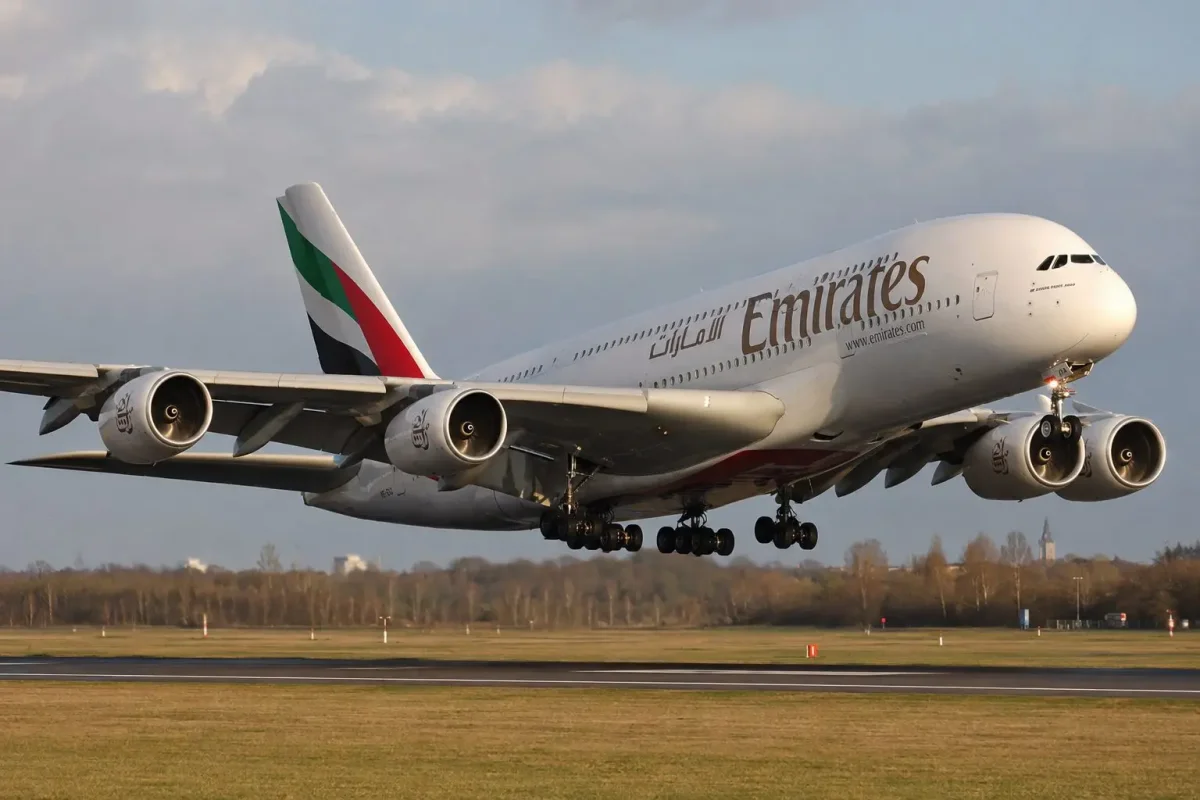
Emirates, the Dubai-based carrier, made history on August 8 when its iconic Airbus A380 touched down in Jakarta for the first time. The flight, which departed after midnight, was a single operation linked to a sports event, not the start of a scheduled service. The airline currently operates 14 weekly flights to Jakarta and two daily to Bali, but has not confirmed any further A380 rotations to the Indonesian capital.
The debut, while attention-grabbing, carries more brand significance than financial weight. Emirates' Indonesia manager Majid Alfalasi said, "We are proud to welcome the iconic A380 to Jakarta for the very first time." The aircraft also transported AC Milan back home after their friendly with Chelsea.
Boeing Dominates Order Book
Beyond the Jakarta spectacle, Emirates' future fleet strategy is clearly visible in its order book. As of March 31, Boeing accounts for 313 of the airline's 367 publicly reported aircraft orders, representing 85.3% of the total. This includes 270 Boeing 777X, 35 787 Dreamliners, and eight 777 freighters. Airbus holds the remaining 54 orders, all A350s, making up 14.7%.
This imbalance underscores Boeing's central role in Emirates' expansion, while Airbus retains a niche for A350 deliveries and continued support for the A380 fleet. Rolls-Royce, the engine maker, stays involved through Trent 900 servicing agreements for A380s, with revenue tied to engine hours and TotalCare contracts.
Financial Strength Backs Ambitions
Emirates' ability to execute these plans is underpinned by robust finances. As of March 31, the airline held AED 54.9 billion in cash assets, a 10% year-on-year increase, and generated AED 32 billion in operating cash flow. Revenue reached AED 130.9 billion, up 2%, while pretax profit climbed 7% to AED 22.8 billion, yielding a 17.4% margin.
The carrier also continues its cabin retrofit program, having completed upgrades on 91 of 215 aircraft, leaving 124 planes—57.7%—still to be refurbished. Additionally, Emirates acquired 29 A380s and five Boeing 777s when their leases expired, adding to its owned fleet.
Market Reaction
At the time of publication, European markets were active. Airbus shares edged up 0.05% to €213.70, while Rolls-Royce advanced 0.69% to 1,540.5 pence. In early premarket trading, Boeing was quoted at $234.42, up $2.21.
Analysts maintain a positive consensus on all three suppliers. Boeing shows the widest implied upside to its average target price of $274.69, a 17.18% potential gain, reflecting a broader recovery scenario. Airbus has an implied upside of 7.56% to €229.74, and Rolls-Royce 6.32% to £16.27.
Beyond Aircraft: Arsenal and Branding
Emirates' marketing efforts extend beyond aviation. In London, engineers repurposed aircraft parts to create Arsenal's club crest, featuring a cannon wheel made from an A380 wheel hub and a shield from Boeing 777 fuselage skin. The installation stands 2.4 meters tall and took 34 days to build. Emirates also renewed its front-of-shirt sponsorship with Arsenal through 2033, though financial terms remain undisclosed.
President Tim Clark commented, "We wanted to create something permanent that could only come from Emirates and Arsenal."
Risks and Outlook
Several risks could affect the narrative. The Jakarta A380 service may not transition to a regular route. Fifteen A380s recently underwent wing-spar inspections. Starting in 2027, Emirates plans to handle some Trent 900 maintenance in-house, potentially reducing Rolls-Royce's aftermarket revenue. The value of the Arsenal contract is still private.
Investors should watch for sustained capacity increases in Jakarta, faster retrofit completions, or clearer delivery timelines from Boeing as next meaningful signals. For now, these developments reflect efficient use of existing assets rather than new demand for aircraft.