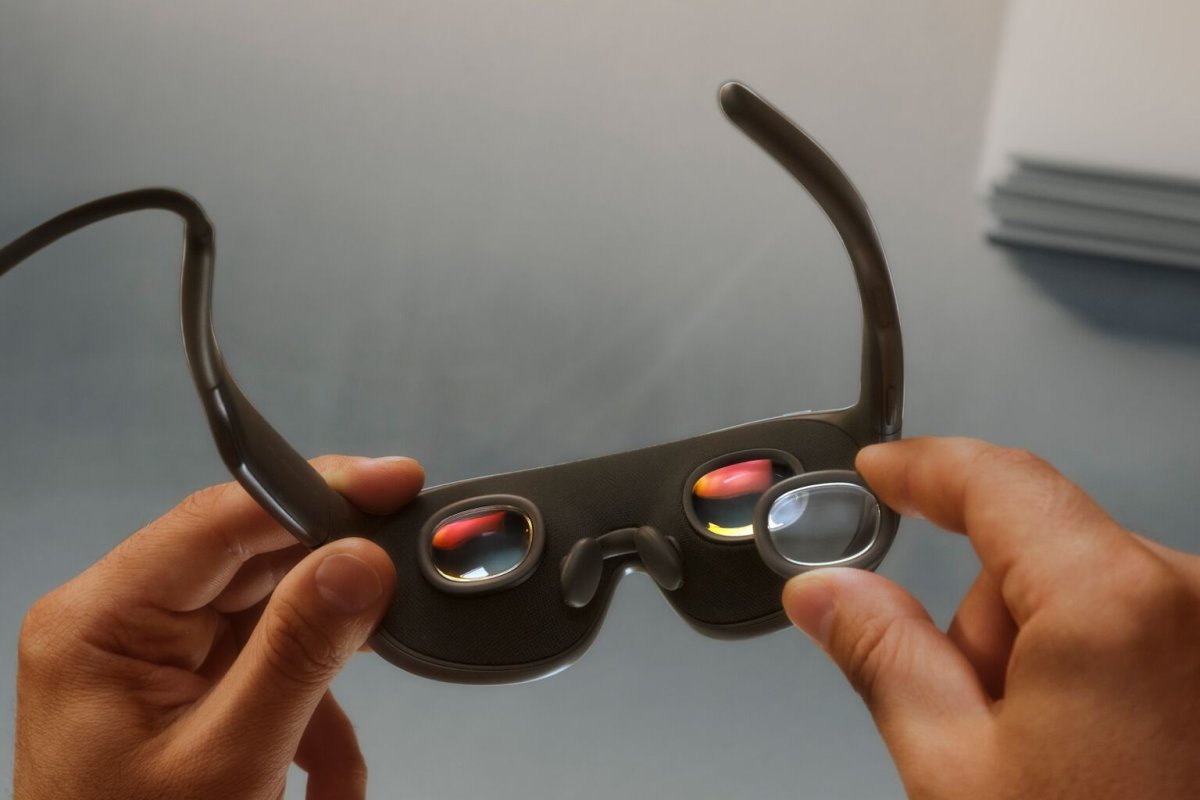
Meta Platforms (NASDAQ: META) has officially priced its next-generation virtual reality glasses at $1,299.99, with a market debut slated for spring 2027. The announcement, made during the company's Connect event on September 23, 2026, positions the lightweight 100-gram device as a premium addition to Meta's hardware lineup, but it also underscores the substantial financial hurdles the company's Reality Labs division continues to face.
The new glasses, which rely on a tethered pocket puck for compute, storage, and battery, offer up to three hours of media playback and feature 5K micro-OLED displays with 37 pixels per degree. This marks a significant leap over the Quest 3S, which offers 20 pixels per degree and starts at $349.99. The premium price—roughly four times the Quest 3S entry point—signals Meta's intention to prioritize margin potential over mass-market penetration, a strategy that will be closely scrutinized by investors.
Reality Labs' Financial Drag
Reality Labs, Meta's augmented and virtual reality unit, reported second-quarter revenue of $431 million, but its operating loss widened to $4.619 billion—a ratio of 10.7 times sales. That loss represents about one-fifth of the operating income generated by Meta's Family of Apps, which earned $23.394 billion in Q2. For the full year, Meta expects Reality Labs losses to remain near 2025's $19.19 billion, underscoring the long road to profitability for the division.
Meta's advertising business remains the financial engine funding these hardware bets. In July, CEO Mark Zuckerberg stated that AI was 'accelerating our core business today,' but the company's heavy investment in next-generation devices continues to weigh on overall profitability.
Market Reaction and Analyst Optimism
Following the announcement, META shares closed at $744.10, up 1.02% on volume of 30.24 million shares—about 59% above the recent average. The stock touched an intraday high of $763.90 before giving back most of its gains, suggesting that while the hardware reveal was supportive, it was not a decisive catalyst.
Analysts, however, have been raising their price targets in anticipation of the new device. Cantor Fitzgerald's Deepak Mathivanan lifted his target to $860 (15.6% upside), while KeyCorp's Justin Patterson raised his to $900 (20.9% upside). BofA's Justin Post reiterated a Buy with an $810 target, and Jefferies' Brent Thill moved his target to $875. These moves reflect growing optimism about Meta's hardware roadmap, even as the financial metrics remain challenging.
Content and Ecosystem
Meta is betting that content will justify the premium price and the tether. The company promises more than 75 launch games and over 100 immersive live sports events annually. However, no preorder date or unit sales forecast has been disclosed, leaving the market to speculate on adoption rates.
The glasses' success may hinge on the strength of Meta's content ecosystem and the willingness of consumers to accept a tethered form factor. A common platform could eventually drive media, game, and subscription sales across devices, but Meta has not provided attach rates or partner economics.
Risks and Outlook
The $1,299.99 price point could limit mass-market adoption, and the pocket puck may dilute the convenience of a glasses form factor. Additionally, lower Quest sales and sustained Reality Labs losses could keep new hardware from lifting group cash flow in the near term.
The first concrete test arrives in November, when select Disney+ markets begin offering 3D streaming—a feature likely to showcase the glasses' capabilities. But with the device not shipping until spring 2027, the critical question remains: how many units must Meta sell to meaningfully improve Reality Labs' margins? Until then, the division's losses will continue to be a drag on Meta's financial story.