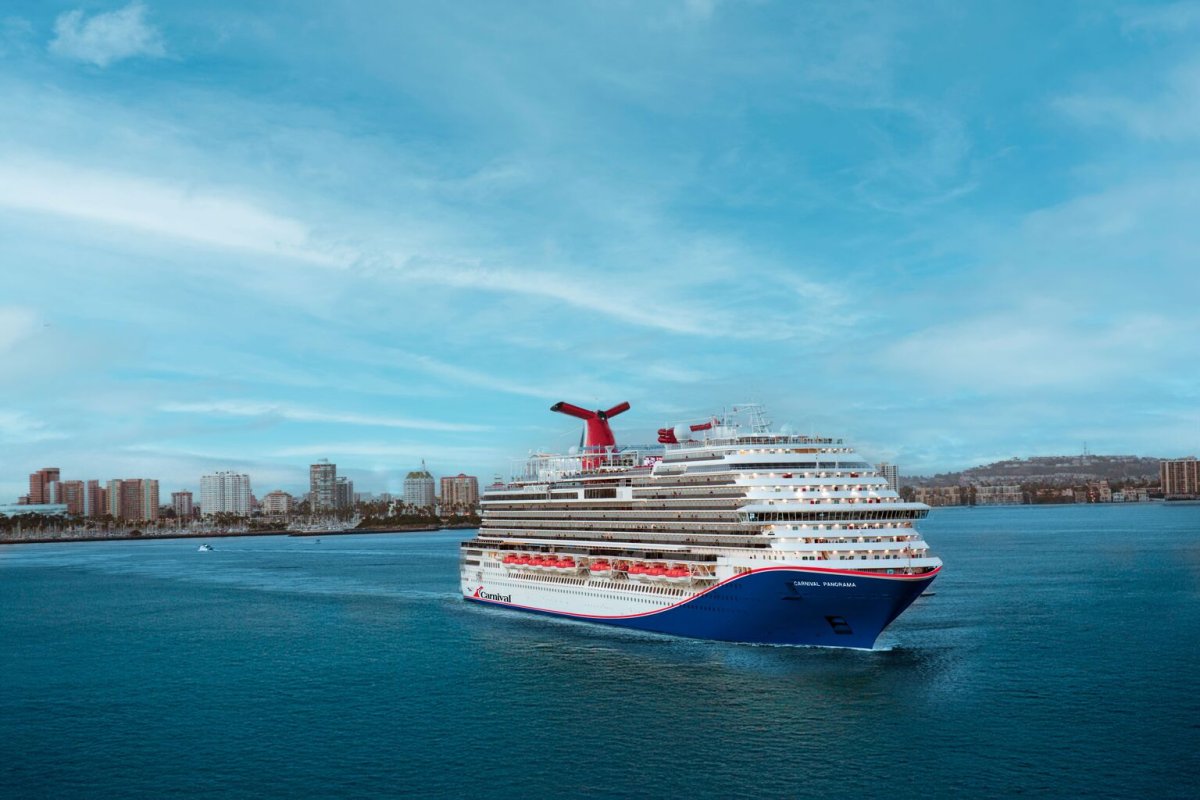
Carnival Corporation's stock edged lower on Wednesday as the company navigates a tragic incident at sea and prepares for its third-quarter earnings report next week. The U.S. Coast Guard has officially suspended its search for Tom Gigler, a 56-year-old passenger who went overboard from the Carnival Panorama, after an extensive 41-hour operation covering more than 1,700 square miles of ocean.
Shares of the cruise operator closed at $21.805, down 2.13% from the prior session's $22.28 close. The stock traded within a range of $21.52 to $22.16 during the day, with volume reaching 28.76 million shares, roughly 69% of Nasdaq's average. In after-hours trading, the stock inched up 0.16% to $21.839, suggesting that investors are more focused on the upcoming earnings release than the incident itself.
Incident Details and Company Response
Carnival confirmed that its crew reviewed security footage and immediately notified both U.S. and Mexican authorities after Gigler was reported missing. The Panorama was returning from Puerto Vallarta to its home port of Long Beach, California, when the incident occurred. The search involved aircraft, a Mexican naval vessel, and six other ships, but no trace of the passenger was found.
Coast Guard Captain Jessica Davila acknowledged the difficulty of the decision, stating, "Decisions to suspend search operations are never easy." The search remains suspended pending new information, and the investigation is ongoing.
From an investor perspective, Carnival has disclosed no booking cancellations, regulatory charges, or financial losses related to the incident. This limits any immediate read-through, though a later civil claim or evidence of procedural failures could turn the situation into a legal or insurance issue.
Earnings Preview: Fuel Costs and Bookings in Focus
The market's attention now shifts to Carnival's third-quarter results, scheduled for release on September 29. Analysts will scrutinize net yields, fuel expenses, and advance bookings against the company's June guidance. Fuel prices have surged nearly 30% year-over-year, pressuring gross-margin yields by 3.9%. This cost pressure has already prompted several analysts to adjust their price targets.
TD Cowen trimmed its target to $32 from $34 on Tuesday while maintaining a Buy rating, and Jefferies followed with a $33 target and a Buy recommendation. The broader analyst consensus, based on four recent ratings, shows a target range of $28.70 to $37.00, implying potential upside of 32% to 70% from Wednesday's close. Recommendations span from Hold to Buy, reflecting cautious optimism.
Strong Fundamentals Underlying the Stock
Despite near-term headwinds, Carnival's underlying business metrics remain solid. In the second quarter, the company reported revenue of $6.7 billion and net income of $537 million. Customer deposits reached a record $9.0 billion, surpassing the previous high by $450 million. CEO Josh Weinstein noted that the company is "93 percent booked for the year," indicating robust demand.
For the third quarter, Carnival guides net yields to rise about 1.2% on a constant-currency basis, with adjusted EBITDA of approximately $2.88 billion. Full-year guidance calls for net yield growth of about 1.75% and adjusted EBITDA of $7.11 billion. These figures will be compared against actual results when the company reports.
Market Context and Outlook
The stock's decline on Wednesday may simply reflect broader market volatility or profit-taking ahead of the earnings event. There is no verified evidence linking the overboard incident to the share price movement. Investors will likely focus on whether 2027 booking trends remain ahead of last year, a key indicator of future demand.
Carnival's ability to navigate fuel cost inflation while maintaining pricing power will be critical. The company's strong deposit growth suggests consumers are still willing to book cruises, but margin pressure could weigh on earnings. The upcoming report will provide clarity on whether Carnival can offset higher costs through yield management.
As the investigation into the missing passenger continues, Carnival faces potential reputational and legal risks, but analysts appear to view these as contained for now. The primary valuation drivers remain fuel costs, operational execution, and the trajectory of advance bookings.