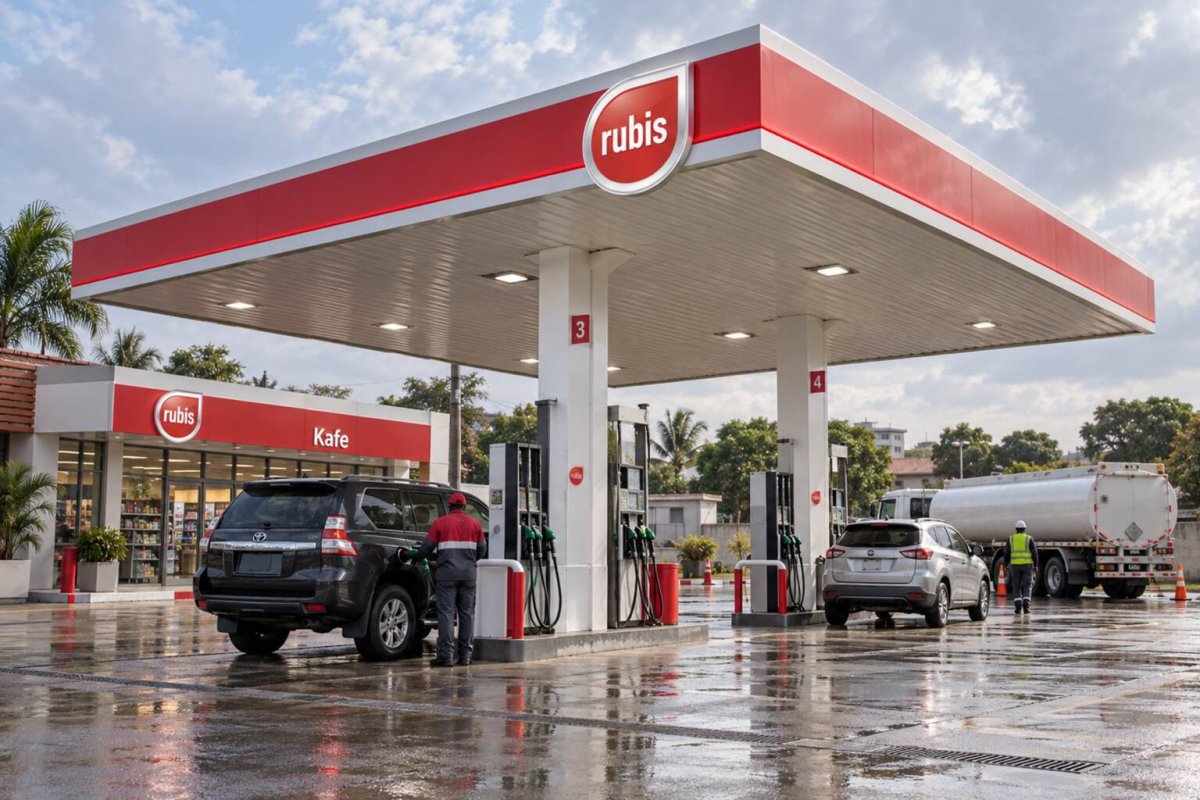
Shares of Rubis (RUI) climbed as much as 4.3% in Paris trading on Tuesday, reaching €35.80 before settling at €35.32, after the fuel distributor raised its full-year profit outlook. The market's positive reaction underscores the significance of the guidance upgrade, which was both substantial and broad-based. However, the more pressing question for investors is whether the company can convert its earnings strength into cash generation in the second half of the year.
Guidance Raised, Hurdle Lowered
Rubis now expects 2026 EBITDA of €775 million to €825 million, up from its previous range of €740 million to €790 million. The midpoint of the range rises to €800 million from €765 million, a 4.6% increase. Management maintained its assumptions of a euro-dollar exchange rate of 1.13 and no change in the accounting impact of hyperinflation from 2025 levels.
First-half results, released on September 8, showed EBITDA of €434 million, up 18% year-over-year, on revenue of €4.07 billion, a 24% increase. Net income attributable to shareholders rose 17% to €191 million, while diluted EPS climbed to €1.85 from €1.58. The strong first-half performance means that the implied second-half EBITDA requirement at the new midpoint is only about €366 million, with a range of €341 million to €391 million—roughly 10% to 21% below the first-half result. This deliberately modest sequential hurdle reflects management's caution about high oil prices dampening demand, softer Nigerian activity, normalized European LPG growth, and potential margin compression in bitumen despite volume growth.
Cash Flow: The Lingering Concern
While the income statement accelerated, cash conversion deteriorated. Adjusted cash flow from operating activities fell 19% to €223 million from €276 million in the prior-year period. This equates to cash generation of about 51% of EBITDA, down from roughly 75% a year earlier. The company attributed the decline to higher working capital needs as oil prices rose. Reported operating cash flow was even weaker at €159 million, down 42%, due to a €64 million payment related to a French competition fine concerning Corsica. Although the fine is exceptional, the ongoing absorption of cash by inventories and receivables in a higher-price environment represents a more persistent challenge.
Corporate net financial debt increased to €885 million at June 30 from €602 million at the end of 2025, after dividend payments, while total net financial debt rose to €1.47 billion from €1.17 billion. Leverage remains within the company's comfort zone—corporate net debt at 1.3 times EBITDA and total net debt at 2.0 times EBITDA—but the upward trajectory of debt suggests that another strong EBITDA print alone may not be sufficient to sustain the stock's rerating.
Operating Strength: Where It Came From
Energy Distribution contributed nearly all of the group's EBITDA, generating €435 million, up 15%. Within this segment, retail and marketing EBITDA rose 22% to €324 million, with Europe up 25%, the Caribbean up 12%, and Africa up 33%. Total distribution volumes advanced 9%, helped by a 44% surge in bitumen volumes, and bitumen gross margins increased 54%.
While geographic diversity has helped Rubis navigate a volatile oil market, and improving activity in Haiti plus growth in Guyana and Suriname could support the Caribbean, the reliance on bitumen—where management expects lower European margins in the second half—poses a risk. Strong volumes do not automatically translate into proportional profit contributions.
The Renewable Electricity Production division, though smaller, saw EBITDA rise 42% to €15 million. Photosol, the company's solar subsidiary, had 799 megawatts peak in operation, up 32% year-over-year, and a secured portfolio of 1.5 gigawatts peak. Rubis maintained its 2027 targets for Photosol, including consolidated EBITDA of €50 million to €55 million and a secured portfolio above 2.5 gigawatts peak. This offers a growth avenue, but the division is not yet large enough to drive group results.
What Investors Should Watch Next
Several factors will determine whether Tuesday's rally is sustainable. First, working capital: inventories and receivables need to release cash or at least stop consuming it at the first-half pace. Second, debt levels: evidence that corporate net debt has peaked would enhance the value of the guidance upgrade. Third, the second-half mix: margins in European bitumen and demand in Nigeria will test whether the conservative-looking EBITDA hurdle is genuinely achievable. Finally, Photosol execution: operating capacity must continue to expand without undue strain on group funding.
The next scheduled update is Rubis's third-quarter and nine-month trading statement on November 3. Tuesday's share price movement reflects improved earnings visibility, but a more durable rerating will likely require the balance sheet and cash flow statement to validate the optimism.