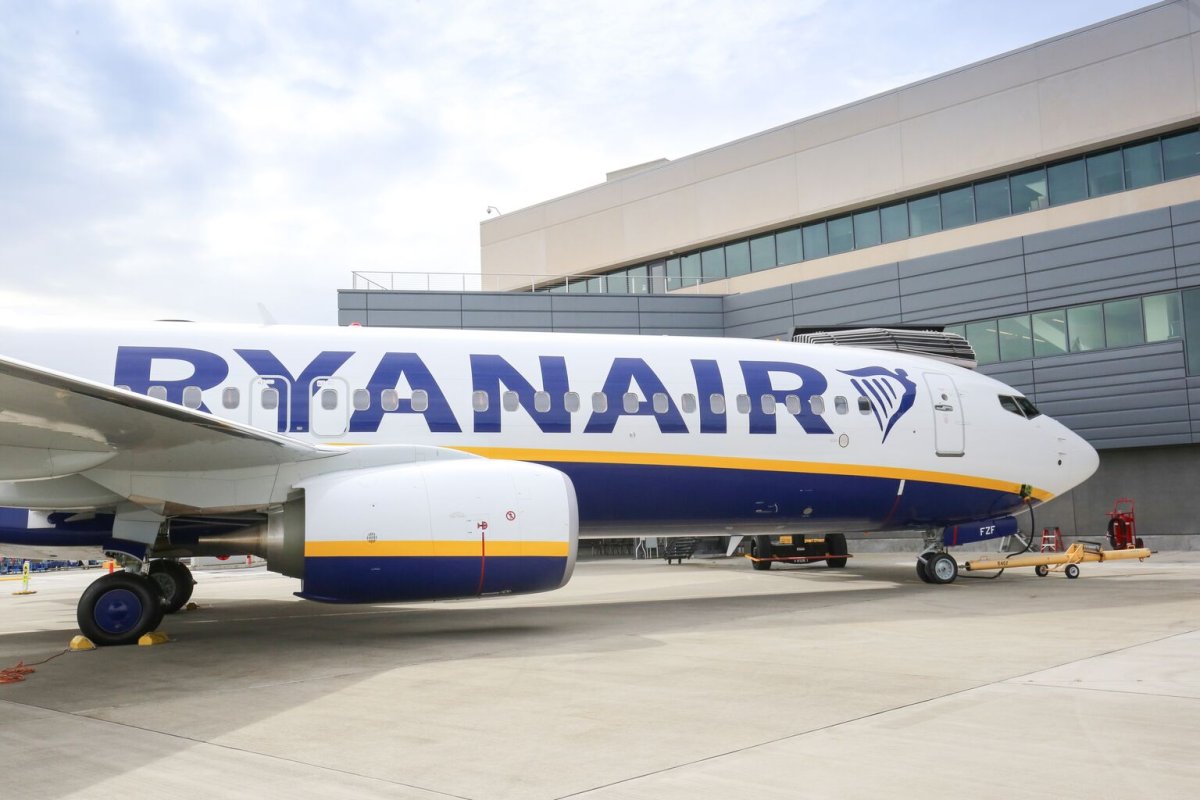
Ryanair's U.S.-listed shares (RYAAY) fell 1.6% to $53.39 in afternoon trading on Thursday, as a public disagreement over a July window blowout resurfaced during the airline's annual meeting. The stock's decline was modest, but the debate over the incident's severity has become a reputational issue for the budget carrier, according to analysts.
The National Transportation Safety Board (NTSB) preliminary report on Flight 1879, which experienced an engine failure and rapid decompression, stated that a flight attendant found a passenger "partially lodged" in the damaged window. The passenger was pulled back by others, and the entire window was missing. The agency classified the passenger's injuries as serious. Ryanair CEO Michael O'Leary, however, has repeatedly disputed the account, insisting that all passengers were belted and no one was "sucked out" of the aircraft.
Investors are taking a cautious view. The ADR's 1.6% drop was roughly in line with the broader airline sector, as the U.S. Global Jets ETF (JETS) declined about 0.6%. "The underperformance is real, but it's not proof that the window story caused the move," said one market analyst. "Oil prices, fare trends, and air traffic disruptions remain far larger variables for airline stocks."
The incident occurred on July 10, when the aircraft, climbing through about 16,000 feet, experienced a fan blade separation in the right engine. Fragments penetrated the fuselage, causing rapid decompression. The crew performed an emergency descent and returned safely to Thessaloniki. Of the 149 passengers and six crew on board, one passenger was seriously injured.
The NTSB's preliminary findings indicate that bird remains were found, and four suspected bird strikes were recorded on the same engine in the previous 12 months. However, materials analysis showed that approximately 37% of the fractured fan blade surface had features consistent with fatigue. The investigation remains open, and no final cause has been determined.
Ryanair's maintenance records show the fan blades passed ultrasonic inspections in November 2025 and again on May 24, just 253 cycles before the accident. This suggests that standard inspections did not detect the fatigue, raising questions about whether current inspection methods are adequate. Additionally, three FAA airworthiness directives related to engine cowl hardware had not been installed on the aircraft, though the compliance deadline is July 2028.
For shareholders, the financial impact of a single incident is likely manageable. Ryanair ended June with over €2.8 billion in gross cash and had repaid its final €1.2 billion bond in May. The company's fiscal first-quarter results showed a 34% drop in profit after tax to €538 million, despite 6% traffic growth. Average fares fell 6%, and operating costs rose 11%, largely due to a spike in jet fuel prices.
O'Leary's comments at the annual meeting about potential fare increases if oil remains high into 2027 are more material to near-term estimates. Ryanair has hedged 80% of its fiscal 2027 fuel at roughly $67 per barrel, but the unhedged portion could significantly impact profits. The company is also facing uncertainty around winter capacity and fare pricing.
Investors should watch for three key signals: the NTSB's final cause determination, any regulatory action on fan blade inspections or modification schedules, and whether Ryanair quantifies costs related to the incident. A systemic finding could lead to additional inspections, aircraft downtime, and a loss of customer trust, but no such fleet-wide order has been issued yet.
In the near term, the window incident may warrant a small governance and safety discount on Ryanair's stock, but oil exposure, winter capacity, and fares remain the primary drivers of the company's valuation.
