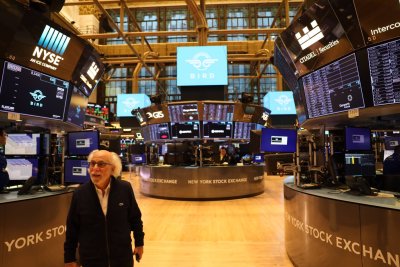
The S&P 500 closed out its eighth consecutive weekly gain on Friday, while the Dow Jones Industrial Average notched another record high ahead of the Memorial Day holiday. The rally persisted as investors continued to buy into strong earnings and artificial intelligence optimism, even as consumer sentiment weakened and bond markets posed challenges.
U.S. markets will be closed on Monday, May 25, for Memorial Day. The shortened trading week brings key inflation data and a handful of late earnings reports. The April personal consumption expenditures (PCE) price index, due Thursday, is the Federal Reserve's preferred inflation gauge and will be closely watched for signs of persistent price pressures.
The S&P 500 rose 0.4% on Friday to 7,473.47, while the Dow added 0.6% to 50,579.70. The Nasdaq Composite gained 0.2% to 26,343.97. For the week, the S&P 500 advanced 0.9%, the Dow climbed 2.1%, the Nasdaq was up 0.5%, and the Russell 2000 jumped 2.7%. The eight-week winning streak is the longest since a nine-week run that ended in December 2023.
"Earnings season looked really good," said James St. Aubin, chief investment officer at Ocean Park Asset Management. He described the fundamentals as "really solid." PC stocks received a boost after Lenovo reported strong revenue, lifting shares of Dell Technologies and HP. Market sentiment also improved on reports of possible progress in Middle East peace talks.
Treasury yields eased later in the week, with the 10-year note falling to 4.558% on Friday. However, the bond market remains a key risk factor. The University of Michigan's final consumer sentiment reading for May dropped to 44.8 from 49.8 in April, with inflation expectations rising. The year-ahead outlook climbed to 4.8%, while the longer-term view reached 3.9%. Survey director Joanne Hsu called the cost of living a "first-order concern."
The Federal Reserve faces a difficult balancing act. Nomura abandoned its forecast for rate cuts in 2026, citing recent data and Fed comments that cast doubt on easier policy, as well as price pressures from the Iran conflict and a memory-chip shortage. Markets now price in roughly a 58% probability of at least one 25-basis-point rate hike this year, according to Reuters.
Wall Street remains broadly bullish. UBS Global Wealth Management raised its year-end 2026 S&P 500 target to 7,900 from 7,500, citing steady consumer spending and sustained demand for AI-related data-center infrastructure. UBS strategists said the main "bull market drivers remain intact" but flagged oil and interest rates as potential pressure points.
However, the outlook is fragile. If oil prices climb again, if Thursday's PCE data shows inflation broadening beyond energy, or if Treasury yields resume their upward trend, investors may decide that strong earnings alone are insufficient. Jim Baird, chief investment officer at Plante Moran Financial Advisors, said inflation concerns "continue to flare" and warned that higher long-term yields could put a "practical lid" on stocks if they persist.
Earnings reports from Costco, Best Buy, and Salesforce are scheduled for the shortened week as first-quarter results wind down. Anthony Saglimbene, chief market strategist at Ameriprise, noted a shift in focus: "The macro environment is starting to take more center stage."