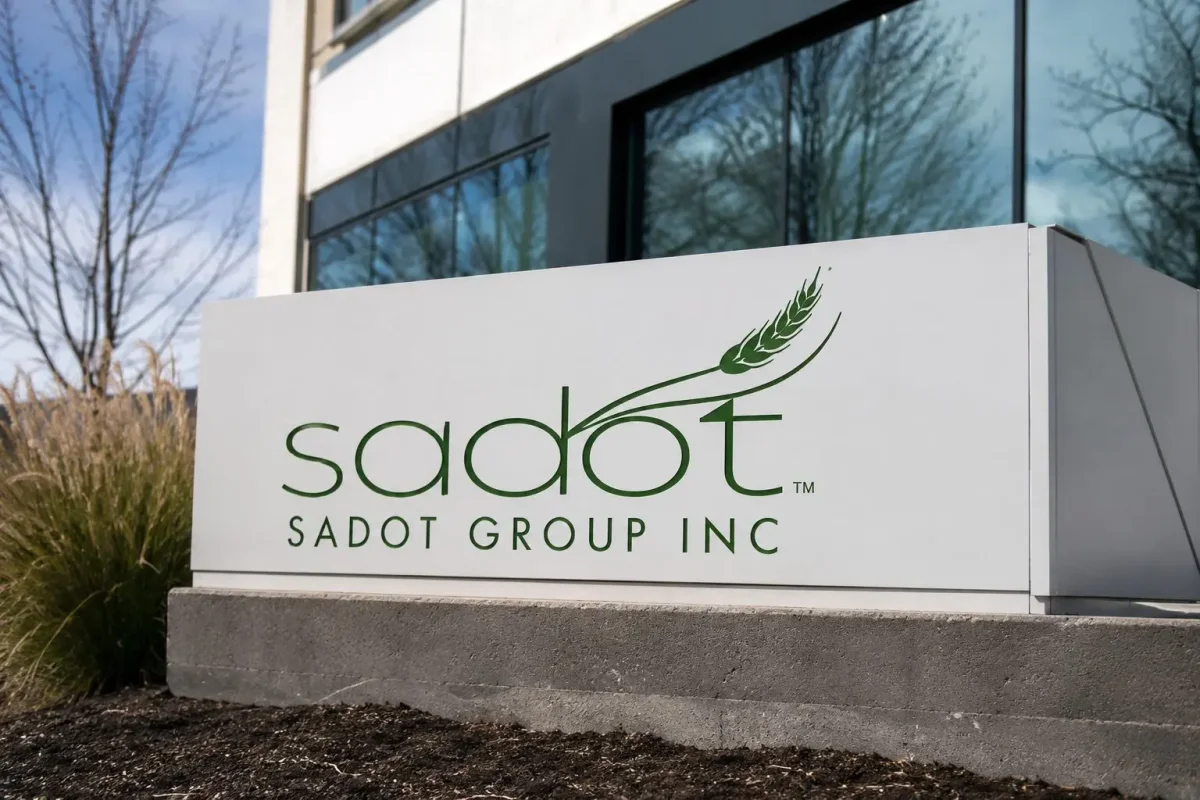
Sadot Group Inc. (NASDAQ: SDOT) experienced a dramatic surge in its stock price on Wednesday, rising as much as 170% after the company announced the acquisition of Anira Consulting FZC, which operates under the brand Tradewell, for $12 million. The deal, structured primarily through stock and convertible notes, marks a strategic pivot toward commodity trading technology for the agri-food supply chain firm.
Shares of SDOT soared to an intraday high of $8.87, up from Tuesday's close of $3.28, with trading volume reaching nearly 37 million shares. The stock opened at $6.06, dipped to a low of $3.20, and then rallied sharply, reflecting a micro-cap momentum-driven move rather than a sector-wide rerating. The move comes just days after Sadot completed a 1-for-20 reverse stock split, which took effect on May 27, as per Nasdaq filings.
Acquisition Details and Strategic Shift
According to a June 3 SEC filing, Sadot acquired all outstanding shares of Anira Consulting, a Sharjah, UAE-based company that operates TradeOS, an enterprise-grade commodity trading and risk management (CTRM) platform. The software is designed to handle trade tracking, logistics, hedging, counterparty exposure, and accounting for physical commodity markets. The platform features a straight-through processing setup, enabling seamless integration across profit and loss, risk, logistics, treasury, and compliance functions.
The acquisition was financed with minimal cash outlay. Sadot issued 135,000 common shares at $3.00 each, 1,000 Series B convertible preferred shares valued at $6,595 each, and a $5 million zero-interest convertible note due June 2, 2028. Both the preferred shares and the note are convertible at $3.00 per share, subject to ownership blockers, a 19.99% change-of-control limit, and Nasdaq shareholder approval rules. This structure allows Sadot to acquire the asset without upfront cash but introduces potential dilution for existing shareholders.
Financial Risks and Concerns
Despite the market enthusiasm, Sadot faces significant financial headwinds. The company's most recent quarterly filing revealed zero commodity sales revenue for the first quarter of 2026, compared to $132.2 million in the same period last year. Sadot attributed this to insufficient working capital to initiate new trades. The company reported a net loss of $4.9 million attributable to Sadot Group for the quarter.
Liquidity remains a pressing issue. As of March 31, Sadot had only $679,000 in cash and a working-capital deficit of $57.8 million, with current liabilities exceeding current assets. Much of the company's debt, originally due on December 31, 2025, remains unpaid, with some obligations extended only until June 4, 2026. Sadot has also issued a "going concern" warning, expressing substantial doubt about its ability to continue operations over the next year.
Furthermore, investors have yet to see Anira's financial statements. Sadot has indicated it will file those statements by amendment no later than 75 days after the report date, leaving the market to trade on incomplete information.
Market Context and Competitive Landscape
The rally in SDOT stands in stark contrast to the broader market. The iShares Russell 2000 ETF (IWM), a benchmark for U.S. small-cap stocks, slipped during the session, underscoring that Sadot's move was company-specific. Meanwhile, larger agri-commodity players such as ADM, Bunge, and The Andersons saw only modest gains, suggesting no sector-wide catalyst.
Sadot's agri-food arm competes with major "ABCD" firms—ADM, Bunge, Cargill, and Louis Dreyfus—but trades at a significantly lower valuation. The company's pivot to commodity trading tech, led by CEO Chagay Ravid, who took over last year, aligns with his stated focus on "AI and tech opportunities connected to commodities."