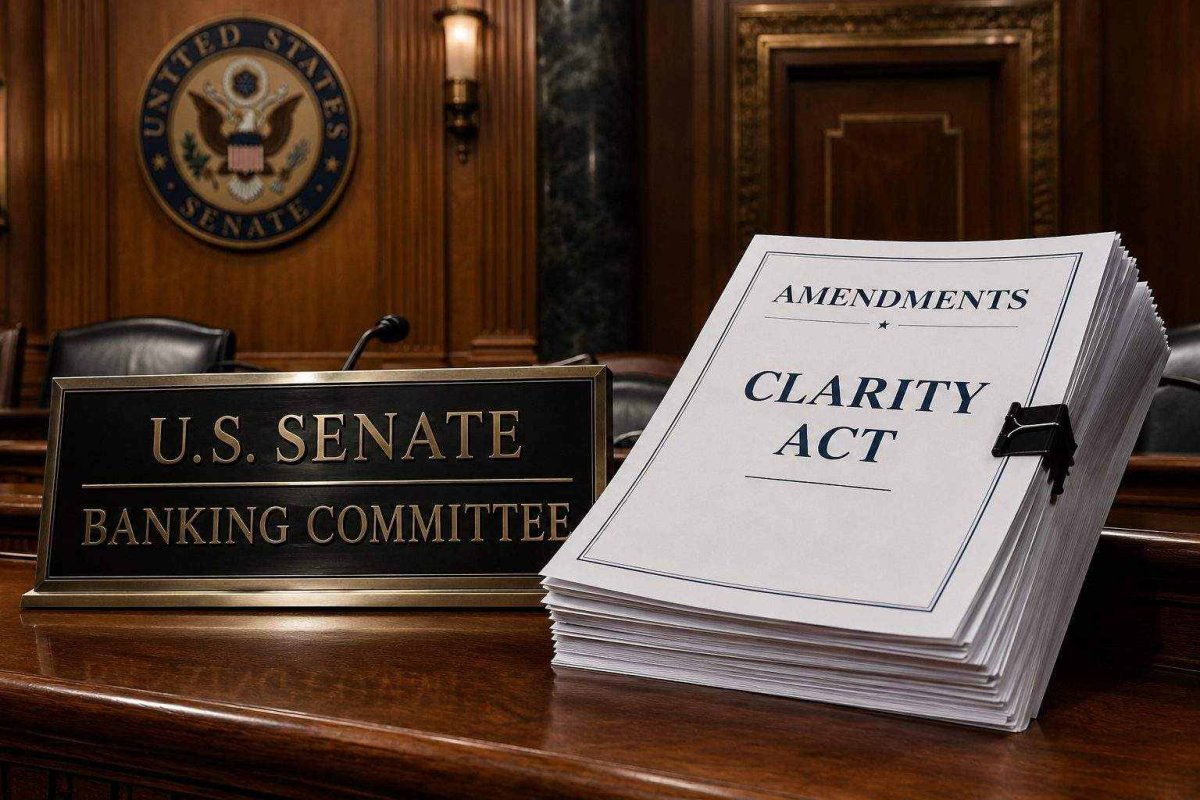
The Senate Banking Committee is set to vote Thursday on the Digital Asset Market Clarity Act, known as the CLARITY Act, amid a growing ethics controversy involving President Donald Trump's cryptocurrency connections. The vote, scheduled for 10:30 a.m. on May 14, will take place in a closed-door executive session, with lawmakers preparing to debate amendments and decide the bill's fate.
The bill, H.R. 3633, represents the Senate's most significant attempt in 2024 to establish broad crypto regulations, clarifying the jurisdictional boundaries between the Securities and Exchange Commission (SEC) and the Commodity Futures Trading Commission (CFTC). This distinction is critical for the crypto industry, which has long sought clear rules. However, passage in the full Senate will require support from at least seven Democrats, making bipartisan backing essential.
Senate Banking Chairman Tim Scott, along with Senators Cynthia Lummis and Thom Tillis, released an updated draft on Tuesday, positioning it as the foundation for markup. Scott emphasized that the text was shaped by discussions with Democrats and feedback from regulators, law enforcement, financial firms, innovators, and consumer advocates. Tillis called it a 'bipartisan compromise,' while Lummis argued that advancing the markup could position the U.S. as a global leader in digital assets.
The stablecoin rewards provisions have drawn significant attention. The latest draft bans rewards for merely holding stablecoins if they resemble bank deposit interest, but allows rewards tied to actual transactions, such as payments. The SEC, CFTC, and Treasury are tasked with developing joint rules to implement these provisions. The American Bankers Association (ABA) has voiced strong opposition, arguing that the bill leaves a loophole allowing digital asset service providers, including exchanges, to offer rewards that effectively function as interest, bypassing last year's stablecoin law.
Democrats are focusing on ethics concerns. Senator Elizabeth Warren, the ranking Democrat on the committee, argued that the Republican draft omits any language addressing Trump's potential conflicts of interest related to his family's crypto businesses. Senator Angela Alsobrooks has indicated she will require a substantive agreement on ethics before supporting the bill. Corey Frayer, a former Senate Banking staffer, noted that Senate procedure does not preclude adding ethics language.
Labor unions have also entered the fray. The AFL-CIO, Service Employees International Union, American Federation of Teachers, National Education Association, and AFSCME have called on senators to reject the bill, warning that it puts workers' retirement funds and public pensions at risk from crypto's volatility. They argue that if speculative crypto investments fail, working people and retirees could bear the losses.
The GOP fact sheet counters that the bill extends Bank Secrecy Act anti-money-laundering rules to digital asset brokers, dealers, and exchanges, requiring customer verification and suspicious activity monitoring. It also grants law enforcement powers to halt suspect transactions under certain conditions and preserves anti-fraud authority.
The draft also targets decentralized finance (DeFi) platforms, defining them as software-driven markets without middlemen. If a platform can exclude users or has backdoor permissions, regulators will not consider it decentralized, subjecting it to the same oversight and reporting requirements as banks. This provision aims to address risks in the rapidly growing DeFi sector.
Coinbase (COIN) and other crypto exchanges are closely watching the outcome. Banks warn that stablecoin rewards could drain deposits from the regulated banking sector, while crypto companies argue that sweeping restrictions would stifle competition. The margin for error is slim: if Democrats balk over ethics, labor issues, or anti-money-laundering provisions, the bill may clear committee but face turbulence on the Senate floor, where it cannot pass without Democratic support. A contentious markup would complicate the road ahead, leaving the crypto sector waiting for the long-sought federal guidelines Congress has yet to deliver.