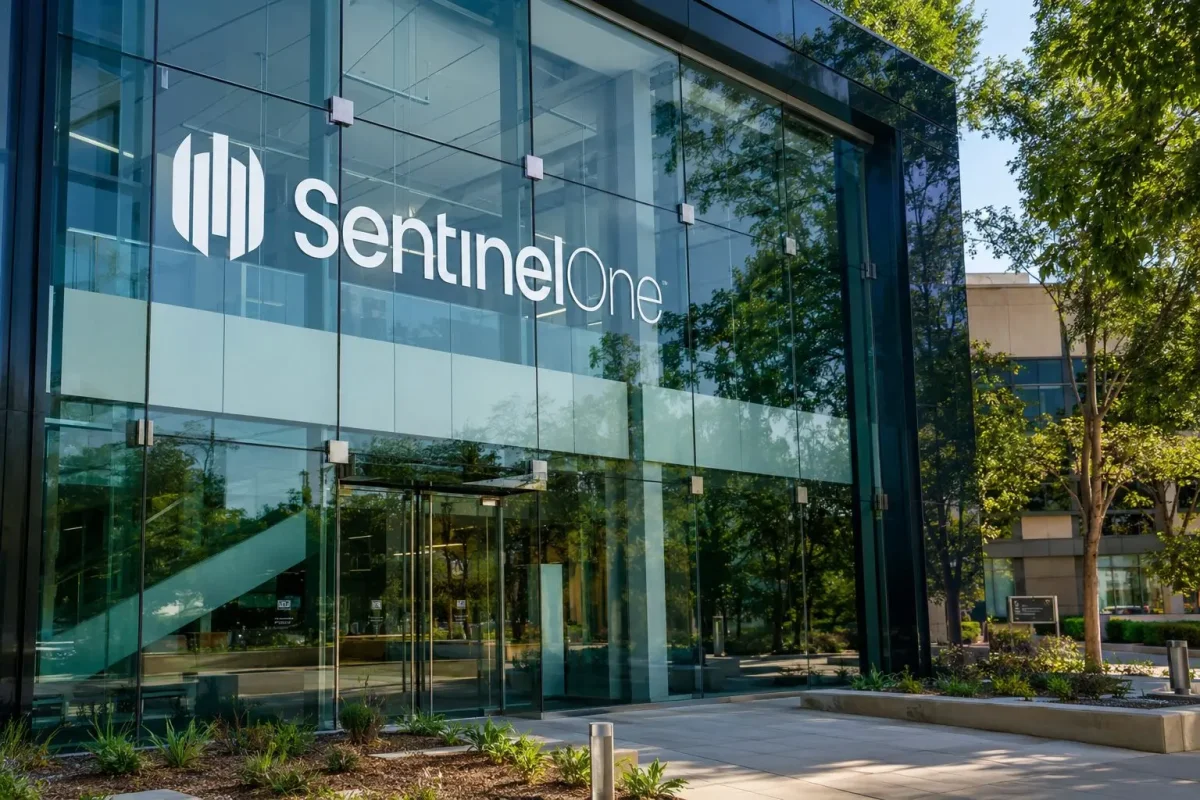
SentinelOne (S) experienced a sharp decline in after-hours trading on Thursday, with shares falling 18.65% to $14.66. The drop came after the cybersecurity company issued a second-quarter revenue forecast that fell short of Wall Street expectations and announced plans to reduce its workforce by approximately 8%.
The stock's after-hours plunge followed a modest 0.39% gain to $18.02 at the close of regular trading. Trading volume exceeded 25 million shares during the session, significantly above recent average levels.
Q1 Results and Q2 Guidance
For the first quarter, SentinelOne reported revenue of $276.7 million, representing a 21% increase year-over-year. Annualized recurring revenue (ARR) reached $1.163 billion, up 23% from the prior year. CEO Tomer Weingarten characterized the quarter as a "solid start," highlighting "record net new ARR growth."
However, the company's guidance for the upcoming quarter disappointed investors. SentinelOne expects second-quarter revenue in the range of $289 million to $291 million, below the $292 million consensus estimate from LSEG. Adjusted earnings are projected at 6 to 8 cents per share, compared to analyst expectations of 8 cents.
Restructuring and Strategic Shift
The company announced plans to cut about 8% of its staff, a move that will result in a $25 million restructuring charge, including $15 million in cash expenses. The layoffs are part of a strategic shift toward artificial intelligence, data, and cloud technologies.
CFO Sonalee Parekh noted a "strong operating profit margin" and indicated the company is raising its operating-income forecast for the year. For fiscal 2027, SentinelOne maintained its full-year revenue guidance at $1.195 billion to $1.205 billion and adjusted earnings forecast at 32 to 38 cents per share. The company raised its non-GAAP operating income outlook to $115 million to $125 million.
Market Context and Competitive Landscape
SentinelOne operates in a highly competitive cybersecurity market, facing rivals such as CrowdStrike (CRWD), Palo Alto Networks (PANW), and Microsoft (MSFT). Microsoft has the advantage of bundling security solutions with its broader software offerings.
The broader market saw the S&P 500 and Nasdaq hit record closes on Thursday, driven by AI enthusiasm and a risk-on sentiment. However, SentinelOne's after-hours decline stood in stark contrast to the broader market strength.
Analyst Perspectives
Investors are concerned that the restructuring may signal slowing demand rather than just cost optimization. According to Reuters, some corporate clients are tightening budgets, scrutinizing deals more carefully, and experiencing longer sales cycles. If these trends persist, SentinelOne's AI and cloud initiatives may take longer to translate into revenue growth.
Execution will be key going forward. SentinelOne scheduled a conference call at 5 p.m. ET to discuss first-quarter results and guidance. The market now must assess whether the job cuts are a move toward higher margins or another indication that growth in cybersecurity is becoming increasingly challenging.