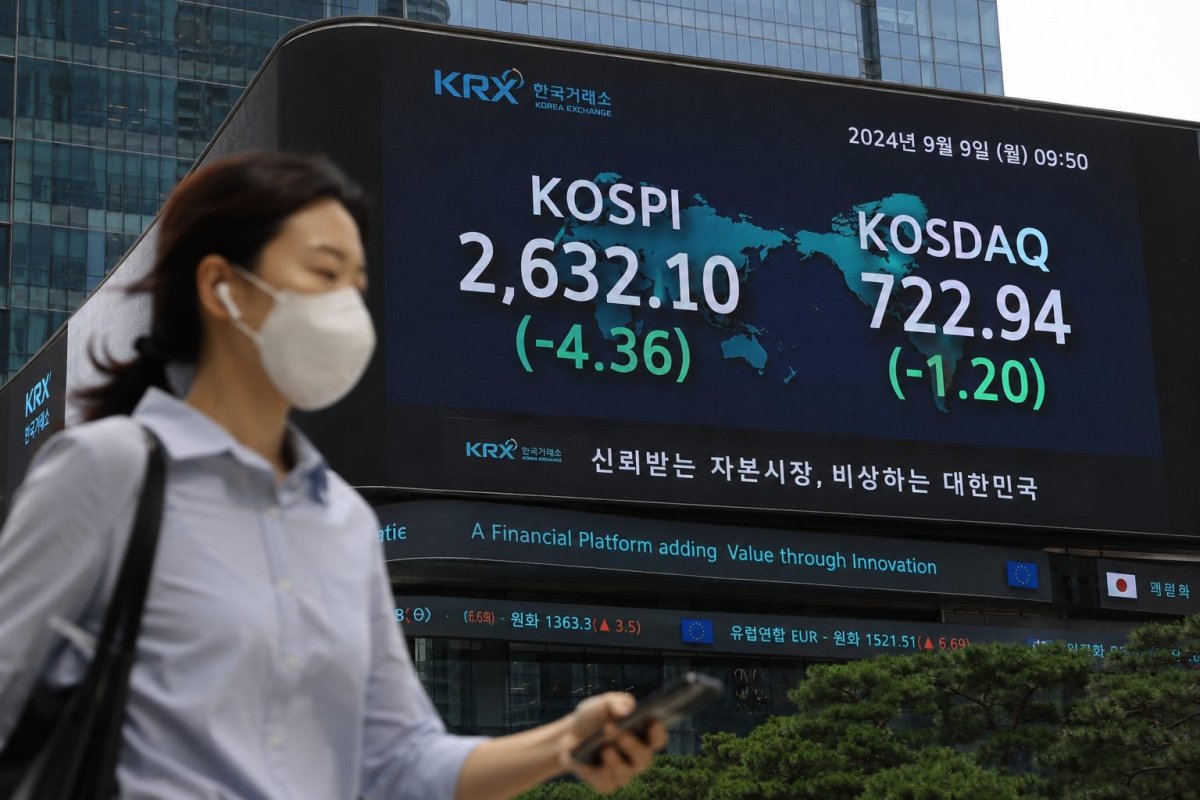
Asian equity markets are entering a shortened trading week with a focus on South Korea, where the KOSPI's recent sharp decline has raised questions about the sustainability of the artificial intelligence-driven rally. The index fell approximately 7% last week, yet it remains up 66% for the quarter and has nearly doubled year-to-date, according to a Reuters snapshot. This divergence between a steep drop and still-lofty gains positions Seoul as a key barometer for how much leverage remains in the AI trade.
Market Structure Under Pressure
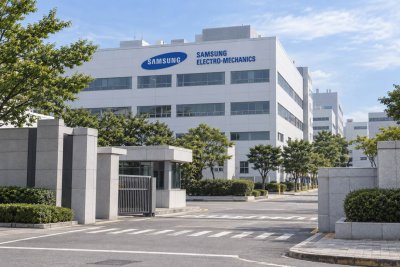
The KOSPI's single-day decline of 9.99% on Tuesday, which saw Samsung Electronics Co Ltd (OTC: SSNLF) and SK Hynix Inc each lose over 12%, has shifted the narrative from valuation to market structure. These two semiconductor giants now represent more than half of the country's total market capitalization. CLSA chief equity strategist Alexander Redman told Reuters that such volatility requires strong retail participation, with leveraged single-security ETFs "pouring fuel onto the fire."
The Philadelphia SE Semiconductor Index dropped 7.7% last week, its worst weekly performance since March 2025, while MSCI's broad Asia ex-Japan index fell nearly 3% on Friday. Mark Hackett, Nationwide's chief market strategist, described the move as "a needed and healthy period of consolidation following the historic run since March" and "a dramatic rotation from tech and everything else."
Economic Data and Central Bank Focus
This week brings a slate of key economic releases, including China's official manufacturing PMI, Japan's Tankan survey, and South Korean export data, all before lower liquidity sets in due to U.S. holidays. Hong Kong's stock market will be closed Wednesday for HKSAR Establishment Day, while NYSE markets take Friday off for Independence Day.
China's industrial profits rose 21.1% in May, following a 24.7% gain in April, with electronics and upstream sectors outperforming. Tianchen Xu, senior economist at the Economist Intelligence Unit, noted that "as shipping through the Strait of Hormuz resumes and international oil prices fall, we should see a gradual recovery in downstream profits." The official manufacturing PMI for May was flat at 50.0, with new orders at 49.9, so Tuesday's reading needs to show more than just easing costs.
The Bank of Japan will release its June Tankan survey on Wednesday at 8:50 a.m. JST, ahead of its next policy meeting scheduled for July 30-31. Board member Naoki Tamura recently said that risks to prices are higher and the BOJ should hike rates "every few months" if its forecast holds, putting yen-sensitive stocks in focus.
Market Mechanics and Policy Developments
South Korea begins trials Monday for its 24-hour won-dollar market, with the official rollout set for July 6. The won has hovered near a 17-year low, and Reuters reported that offshore investors have used the KOSPI bounce to sell and rebalance. "I'm seeing a significant increase in demand for won assets," Hana Bank's Namkoong Taehun said, adding, "We are afraid that our workload will increase significantly."
Samsung Group is planning a pledge of 1,000 trillion won (approximately $648 billion) over 10 years for chips, AI data centers, batteries, and displays. Top executives from Samsung Electronics and SK Hynix will attend a meeting Monday. Kim Tae-yun, a Hanyang University professor, cautioned that "securing skilled workers will be extremely difficult in the southwest, and that will determine whether the project succeeds or fails."
AI Spending and Funding Risks
AI spending remains robust. Australia's Firmus Technologies has struck a deal with Nvidia Corp (NASDAQ: NVDA) to buy Nvidia gear and resell Nvidia cloud services. Reuters said Firmus plans to deploy 170,000 GPUs in Batam, Indonesia, starting in the first quarter of 2027 through early 2028. Co-CEO Tim Rosenfield described the deal as "closing that cost gap" for customers needing AI compute.
However, funding risk is becoming as prominent as demand. The Bank for International Settlements flagged in its annual report that the AI boom is leaning heavily on leverage, and any sudden shift in liquidity could amplify corrections. This week's price action in Seoul may serve as an early warning for markets globally.