Shera Energy, trading on the National Stock Exchange of India under the ticker SHERA, has delivered a compelling financial performance that is drawing attention from investors focused on consistent profitability. The company reported a robust 35% annual growth in earnings per share over a three-year period, a metric that underscores its ability to generate increasing value for shareholders.
This impressive EPS expansion was supported by a substantial 30% increase in revenue, which climbed to ₹15 billion. Notably, the company maintained steady EBIT margins throughout this growth phase, indicating disciplined cost management and operational efficiency even as it scaled its business. This combination of top-line growth and margin stability is a hallmark of a well-run enterprise in the competitive energy sector.
With a market capitalization of approximately ₹2.8 billion, Shera Energy is categorized as a smaller-cap company. However, its financial metrics challenge the notion that size dictates performance. The firm's significant insider ownership, standing at 35%, is a critical factor for investor consideration. This high level of ownership aligns the interests of management directly with those of shareholders, reducing the potential for decisions that might prioritize short-term gains over long-term value creation.
Market Context and Investor Implications
In a global market environment where investors are increasingly scrutinizing corporate governance and alignment, Shera Energy's structure is a notable positive. High insider ownership typically discourages abrupt, large-scale share sell-offs by management, which can introduce volatility and undermine shareholder confidence. Instead, it suggests leadership has a vested, long-term interest in the company's sustained success.
For investors who prioritize profit-generating companies over speculative, loss-making ventures, Shera Energy presents a compelling case study. The consistent delivery of EPS growth, coupled with strong revenue expansion, provides a foundation of fundamental strength. This is particularly relevant in sectors prone to cyclicality, where operational discipline is paramount.
The company's performance arrives amid broader market movements where investors are actively seeking growth opportunities beyond mainstream large-cap indices. This includes attention on various exchanges, such as the ASX, where penny stocks like West African Resources, Regal Partners, and Ora Banda Mining are being monitored for their financial health and growth potential. In this landscape, a company like Shera Energy, which demonstrates proven profitability and growth, can stand out.
Broader Financial News Landscape
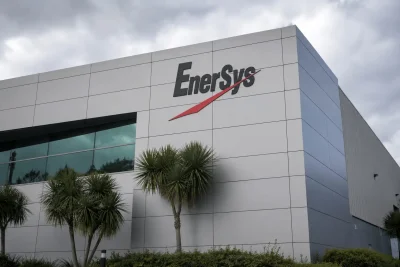
Separately, in corporate event news, EnerSys (ENS), a global leader in energy storage solutions, has scheduled an Investor Day for June 11, 2026, at the New York Stock Exchange. The event will feature the company's leadership, including CEO Shawn O'Connell and CFO Andrea Funk, discussing strategic initiatives under its EnerGize framework and future growth outlook. This highlights a continued trend of companies engaging directly with the investment community to articulate their long-term vision.
Meanwhile, the focus on smaller companies with specific catalysts or strong financials remains a key theme. For instance, analysis of ASX penny stocks reveals a segment of nearly 400 companies offering affordable entry points, albeit with higher risk. Within that universe, firms like Amcil Limited, noted for its rising net income and debt-free balance sheet, and Starpharma Holdings, which reports significant revenue growth from its biopharmaceutical platform despite current unprofitability, illustrate the diverse profiles investors navigate.
Shera Energy's story fits into a broader narrative of identifying value in the market. Its combination of double-digit growth, profitability, and insider commitment positions it not just as a statistical outlier, but as a potential model for sustainable value creation in the small-to-mid-cap segment. Investors will likely monitor its ability to maintain this trajectory and its margin profile in the coming quarters.
As always, while past performance is informative, it is not a guarantee of future results. Investors are advised to consider such reports as part of a comprehensive due diligence process that includes sector analysis, competitive positioning, and overall market conditions.