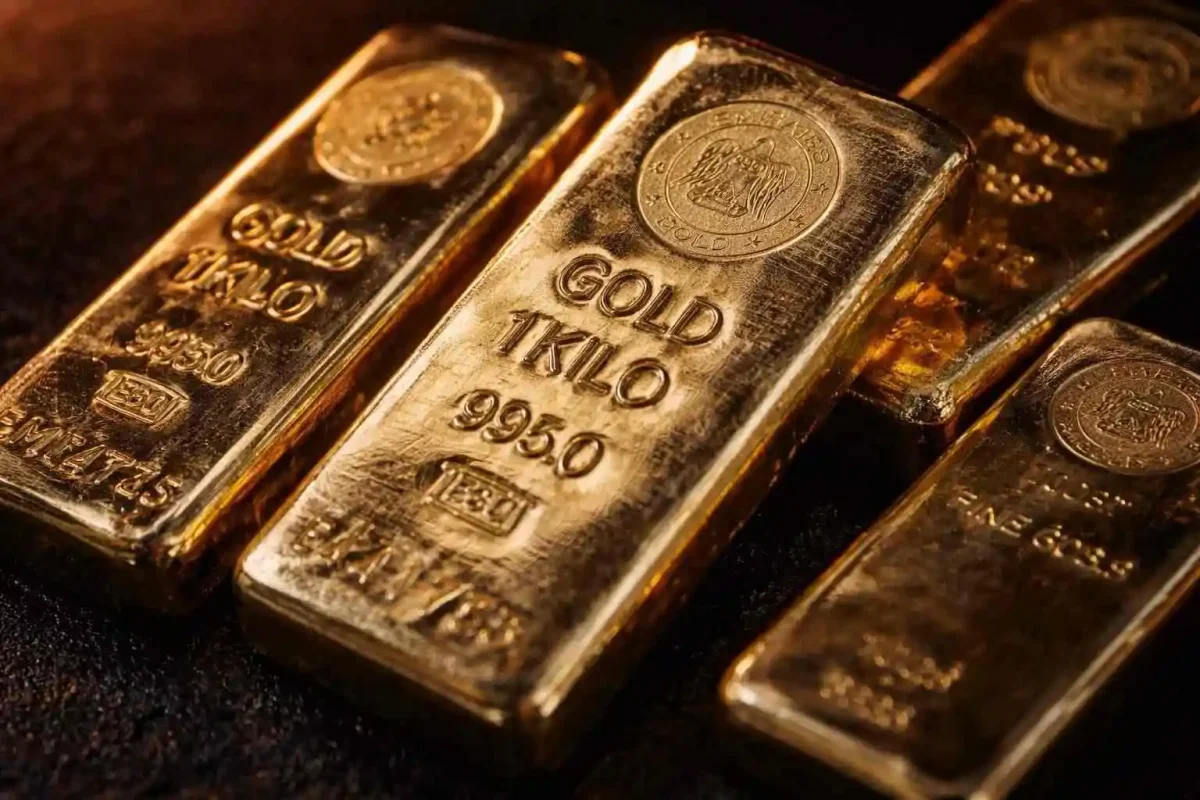
Gold prices ended the week hovering around the psychologically important $4,500 per ounce level, marking a second consecutive weekly decline. The precious metal closed Friday at $4,508.50, down 0.74% for the session, as a combination of rising Federal Reserve rate-hike expectations and oil-fueled inflation fears weighed on investor sentiment.
Spot silver fell 1.52%, platinum dropped 2.49%, and palladium declined 2.98%, reflecting a broad sell-off in the precious metals complex. The moves came amid a shift in market expectations for U.S. monetary policy, with Nomura scrapping its call for rate cuts this year, citing persistent inflation and risks tied to potential conflict with Iran.
According to Rhona O'Connell of StoneX, investors remain "fixed upon Hormuz," linking risks around the strategic Strait of Hormuz to supply chain disruptions, inflation, and the likelihood of higher interest rates. The geopolitical uncertainty has provided some support for gold as a safe haven, but the metal's lack of yield makes it vulnerable when bond yields climb.
The 30-year U.S. Treasury yield hit 5.201% last week, its highest level since 2007, further dampening the appeal of non-yielding assets like gold. Futures markets now price in about a 58% probability of at least one 25-basis-point rate hike by the Federal Reserve before year-end, according to CME data.
Physical demand from key Asian markets remained subdued. In India, dealers offered discounts of up to $78 per ounce relative to official prices, while in China, premiums narrowed to $10-$20 over global benchmarks. Bernard Sin of MKS PAMP attributed the weakness to "Fed rate-hike anxiety" and a stronger U.S. dollar.
Despite the price weakness, precious metals funds continued to attract capital. LSEG Lipper reported inflows of $2.34 billion into commodity funds during the week ending May 20, even as global equity funds experienced their first outflow in nine weeks. This suggests some investors are hedging against inflation and geopolitical risks.
The week ahead is holiday-shortened, with U.S. markets closed Monday for Memorial Day and the London Stock Exchange shut for Spring Bank Holiday. Trading volumes are expected to be light, which could amplify price movements on any economic data releases.
Key data points include the Personal Consumption Expenditures (PCE) price index, the Fed's preferred inflation gauge, due on May 28. Other releases include consumer confidence, a second estimate of first-quarter GDP, jobless claims, durable goods orders, and new home sales. Any upside surprise in inflation could reinforce rate-hike bets and pressure gold further.
Technical analysis shows gold faces resistance near $4,600, with support around $4,350. Marc Chandler of Bannockburn Global Forex noted that gold "has yet to prove itself on the upside," while Kevin Grady of Phoenix Futures observed that "every rally seems to be sold." The $4,500 level remains critical: above it, bulls consider the move a consolidation; below it, the focus shifts back to yield-driven trading.
Looking ahead, the outlook for gold is two-sided. A de-escalation in Middle East tensions or a decline in oil prices could ease inflation concerns and support bullion. However, a higher-than-expected U.S. inflation reading could trigger another wave of rate-hike trades, potentially sending gold toward $4,350, according to TD Securities.