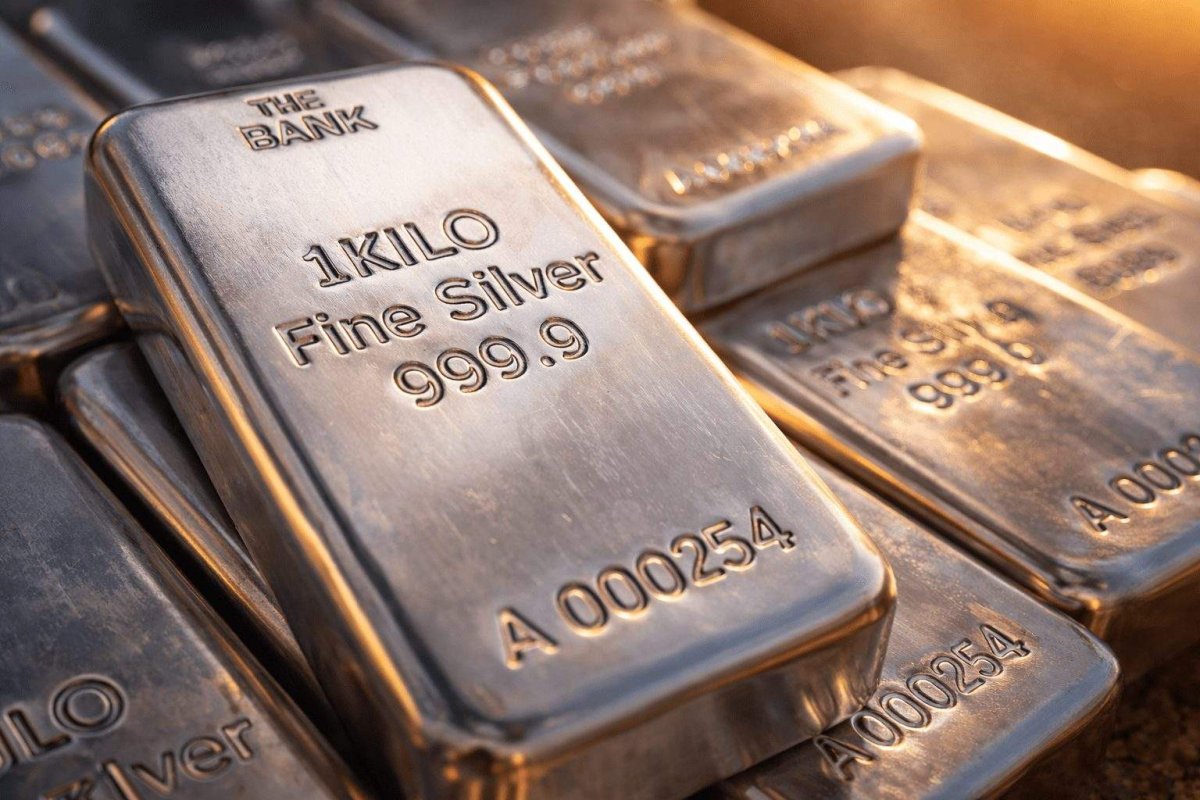
Silver prices experienced a sharp selloff on Thursday, retreating more than 3% as a resurgent U.S. dollar and climbing crude oil benchmarks stoked renewed inflation anxieties, prompting investors to exit bullion positions. By late morning trading in New York, spot silver had fallen 3.2% to $68.97 per ounce, completely reversing a 1.7% gain from the previous session.
Macro Forces Drive the Decline
The simultaneous rise in the dollar and oil created a challenging environment for non-yielding assets like precious metals. Brent crude oil pushed back above $105 per barrel, while the dollar index firmed, making dollar-denominated commodities more expensive for holders of other currencies. Analysts noted that the market's focus has shifted squarely to energy-driven inflation, which diminishes the appeal of safe-haven metals and reinforces expectations that the Federal Reserve may maintain a restrictive monetary policy stance for longer.
"Markets are being driven by oil prices," said Peter Cardillo, chief market economist at Spartan Capital Securities. He highlighted the difficult backdrop for bullion, which offers no yield and becomes less attractive when interest rate cut expectations are pushed out.
Broader Precious Metals Weakness
The pressure was not isolated to silver. The entire precious metals complex traded lower on Thursday. Spot gold declined 1.1% to $4,455.51 an ounce. Platinum fell 3.2% to $1,858.46, and palladium tumbled 4.5% to $1,359.62. This broad-based weakness underscores how macroeconomic drivers are overwhelming individual metal fundamentals.
Jim Wyckoff, senior analyst at Kitco Metals, pointed to the dual headwinds of higher interest rates and persistent inflation as key factors dragging the sector lower. He suggested that a prolonged geopolitical conflict could exert further downward pressure, while a potential ceasefire might allow rate-cut expectations to resurface and support prices.
Volatility and a Distant Record
Thursday's drop leaves silver trading more than 40% below its all-time high of $117.69 an ounce, which was reached on January 26. Despite a significant rally earlier this year, the metal's price action has been notably more volatile than gold's. This is attributed to silver's dual role as both a monetary investment asset and an industrial commodity, leaving it exposed to shifts in both financial market sentiment and economic activity forecasts.
The recent price swings highlight a shift in silver's market behavior. Instead of acting as a traditional safe haven, it has recently moved more in line with assets sensitive to interest rate expectations, closely tracking the evolving narrative around the Federal Reserve's policy path.
Labor Data Supports a Cautious Fed
Traders digested U.S. economic data that offered little impetus for imminent rate cuts. Initial jobless claims for the prior week edged up by 5,000 to 210,000, while continuing claims dropped to 1.819 million—their lowest level since May 2024. These figures paint a picture of a labor market that remains resilient, giving the Federal Reserve leeway to remain cautious as energy-fueled inflation risks persist.
The debate on the timing of rate cuts continues. While some economist polls still point to a potential Fed cut by September, traders have significantly scaled back bets on aggressive easing extending into 2026. Jonathan Millar, an economist at Barclays, suggested it is "entirely plausible" for the Fed to simply ride out the current oil price shock, maintaining a hawkish posture until inflation shows clearer signs of cooling.
Market Outlook and Industrial Demand
The near-term path for silver appears heavily contingent on the trajectory of oil prices and geopolitical developments. If crude prices stabilize or ceasefire talks gain traction, silver could find a floor and potentially rebound as rate-cut speculation returns. Conversely, a protracted conflict and broadening inflation would likely keep the metal under pressure.
On the fundamental side, the Silver Institute projected in a February update that the global silver market is on track for its sixth consecutive annual structural deficit in 2026. However, it also expects industrial fabrication demand to dip by 2%, partly due to thrifting efforts by solar panel manufacturers. This decline may be partially cushioned by growing demand from other sectors, including data centers, artificial intelligence technology, and automotive applications.
Peter Grant, vice president and senior metals strategist at Zaner Metals, noted on Wednesday that sliding oil prices had contributed to a "technical recovery" in metals. However, he cautioned that markets needed to see more sustained cooling in inflation fears before pricing in another U.S. rate cut with conviction—a view that was quickly challenged by Thursday's market reversal.