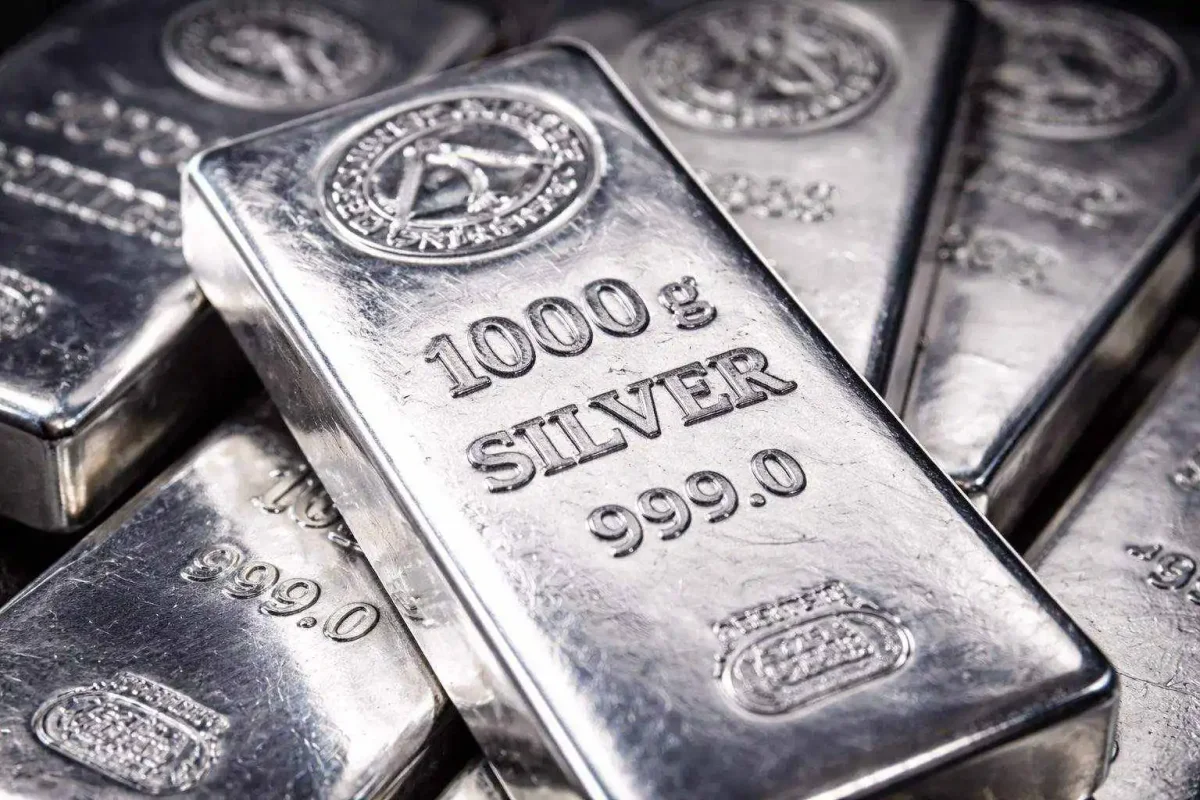
Spot silver declined 0.8% to $87.74 per ounce during early Wednesday trading, partially reversing the previous session's substantial advance. Market participants are adjusting their exposure ahead of the latest U.S. inflation figures, which could significantly influence Federal Reserve policy decisions. Concurrently, gold edged up 0.1%, platinum dipped 0.6%, and palladium moved 0.5% higher.
Inflation Data Takes Center Stage
The focal point for Wednesday is the release of the U.S. Consumer Price Index at 8:30 a.m. Eastern Time. Economists surveyed by Reuters anticipate a monthly increase of 0.3% and an annual rise of 2.4%. Sarah House, a senior economist at Wells Fargo, noted that "progress is stalling out again," highlighting persistent inflationary pressures. For non-yielding assets like silver, even minor shifts in interest rate expectations can trigger substantial price volatility.
Tuesday's Rally and Wednesday's Reversal
On Tuesday, spot silver surged 2.7% to reach $89.39 per ounce. This advance was fueled by a weaker U.S. dollar and a retreat in oil prices from recent peaks, making dollar-denominated metals more affordable for holders of other currencies. Bart Melek, global head of commodity strategy at TD Securities, suggested that "the pullback in oil could 're-energize' investor interest in precious metals as a hedge against currency debasement." Wednesday's decline represents a partial unwinding of those gains as caution prevails ahead of the CPI report.
Safe-Haven Demand and Geopolitical Factors
Despite the daily pullback, underlying safe-haven demand for precious metals remains intact. Nikos Kavalis, managing director at Metals Focus, observes that easing inflation concerns are bringing hedging demand "to the fore." Additionally, geopolitical tensions contribute to the supportive backdrop. The ongoing U.S.-Israel conflict with Iran has effectively closed the Strait of Hormuz, a critical chokepoint that handles approximately 20% of global oil and liquefied natural gas shipments.
Oil Market Dynamics Influence Metals
Oil prices are currently a dominant narrative for commodity markets. Brent crude slid to $87.57 a barrel following a Wall Street Journal report indicating the International Energy Agency advocated for what would be its largest-ever release of emergency reserves. This potential supply increase has tempered near-term inflation anxieties, indirectly affecting sentiment in precious metals trading.
Silver's Dual Role: Industrial and Investment
Silver's market narrative extends beyond safe-haven flows. The metal plays a critical role in various industrial applications, including electronics, solar panels, and electric vehicles, alongside traditional investment products like bars and coins. The Silver Institute recently projected a sixth consecutive year of structural market deficit for 2026, with demand continuing to outpace supply. This forecast persists even as the group expects some cooling in industrial demand by that time.
Volatility and the Fed's Dilemma
The silver market has exhibited significant volatility this year. Prices reached an all-time high of $121.60 per ounce on January 29, representing a 147% gain for 2025, before retreating to around $81 in early February. The path forward remains data-dependent. Jim Wyckoff, senior analyst at Kitco Metals, pointed out that if inflation data exceeds forecasts, the Federal Reserve faces a "quandary." A hotter-than-expected CPI print could push Treasury yields and the dollar higher, applying downward pressure on metals.
Investors are preparing for a consequential week of economic data and central bank commentary. Following the CPI release on Wednesday, the Personal Consumption Expenditures price index—the Fed's preferred inflation gauge—arrives on Friday. The Federal Reserve's two-day policy meeting is scheduled for March 17-18, where officials will deliberate on the appropriate path for interest rates in light of the latest economic indicators.