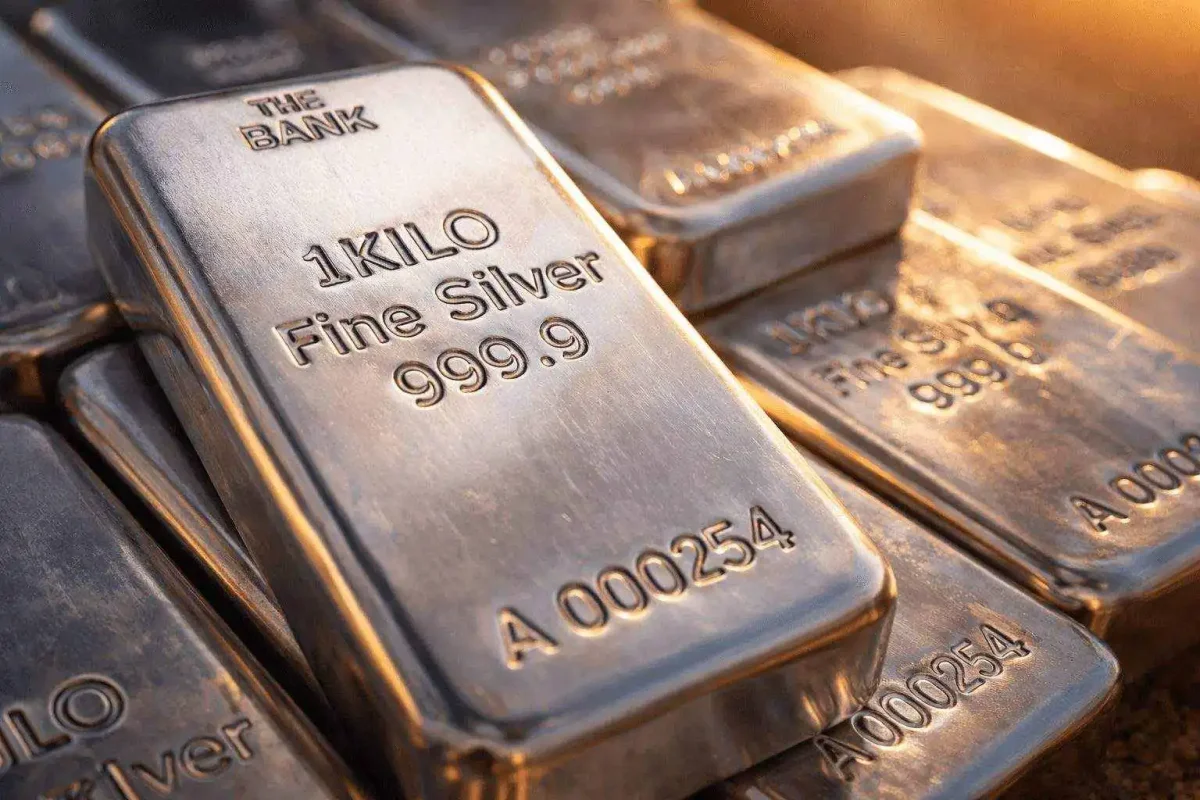
Spot silver concluded trading on Friday at $69.54 per ounce, registering a daily gain of 2.2% but finishing the week essentially unchanged after a period of intense volatility. The metal experienced a trading range between $67.71 and $72.41 over the past five sessions, highlighting the market's current instability.
The week began with silver opening at $69.47 on Monday, following news that former President Donald Trump had halted planned military strikes. Prices remained subdued on Tuesday, inching down slightly to $69.43. However, Wednesday saw a sharp rally to $72.41, a move analysts attributed to a combination of technical factors and a temporary easing of interest rate concerns. Peter Grant of Zaner Metals characterized the advance as a "technical recovery."
This rebound was short-lived. On Thursday, silver plunged 5% to a weekly low of $67.71 as the U.S. dollar strengthened and crude oil prices climbed, dampening hopes for a near-term ceasefire in ongoing geopolitical conflicts. Analysts at Intesa Sanpaolo noted that speculative trading flows have recently undermined the traditional safe-haven status of precious metals. Friday's recovery was viewed by some, including Daniel Pavilonis of RJO Futures, as opportunistic buying following the steep decline.
The fundamental backdrop for silver remains complex. The metal is caught in a crosscurrent: it often benefits from safe-haven demand similar to gold, yet it is highly sensitive to movements in the U.S. dollar, bond yields, and industrial commodity prices like oil. Strengthening in these areas typically signals expectations for sustained higher interest rates from the Federal Reserve, which pressures non-yielding assets. Rajeev De Mello of GAMA Asset Management observed that gold and silver have recently provided limited refuge for nervous investors.
Market attention is now firmly fixed on upcoming economic indicators and international tensions. The U.S. non-farm payrolls report for March, scheduled for release on April 3, is seen as a critical data point. Economists surveyed by Reuters anticipate the addition of 55,000 jobs, with the unemployment rate holding steady at 4.4%. A strong report could reinforce the view that the Fed will maintain its restrictive monetary policy stance. Concurrently, escalating conflict in the Middle East threatens to push energy prices higher, potentially feeding into broader inflationary pressures.
Comments from Federal Reserve officials have underscored a cautious approach. Governor Michael Barr suggested policy may need to stay unchanged "for some time," while Vice Chair Philip Jefferson warned that persistently high energy costs could reignite inflation. Market pricing reflects this hawkish tilt; traders have largely erased bets on rate cuts for 2024 and now assign nearly a 30% probability to an additional rate hike, according to Reuters data, despite a consensus analyst poll pointing to a potential first cut in September.
From a longer-term perspective, silver's current price represents a steep 43% decline from its all-time high of $121.60, reached on January 29. The metal has now settled into the $60-$70 range anticipated by analysts like Saxo Bank's Ole Hansen. Its price action has been more volatile than other precious metals; gold settled Friday at $4,491.78, platinum at $1,868.89, and palladium at $1,377.25. Silver's unique demand profile—with over half of its consumption coming from industrial applications in electronics, solar panels, and other sectors—makes it particularly susceptible to shifts in economic growth expectations and financial conditions.
Underlying physical market dynamics provide some support. The Silver Institute, in a February report, projected a sixth consecutive annual structural deficit for the silver market in 2026, where demand is expected to outstrip supply. This forecast persists even as industrial fabrication demand is anticipated to dip by 2% this year. The Institute also predicted a 20% surge in physical investment demand, which would reach its highest level in three years, explaining the bargain-hunting behavior often seen during sharp price corrections.
Trading in COMEX silver futures, which last traded at $69.77, is paused for the weekend. The next significant catalysts for price movement will be the U.S. employment data and any new developments regarding Middle Eastern tensions, keeping traders on alert for the week ahead.