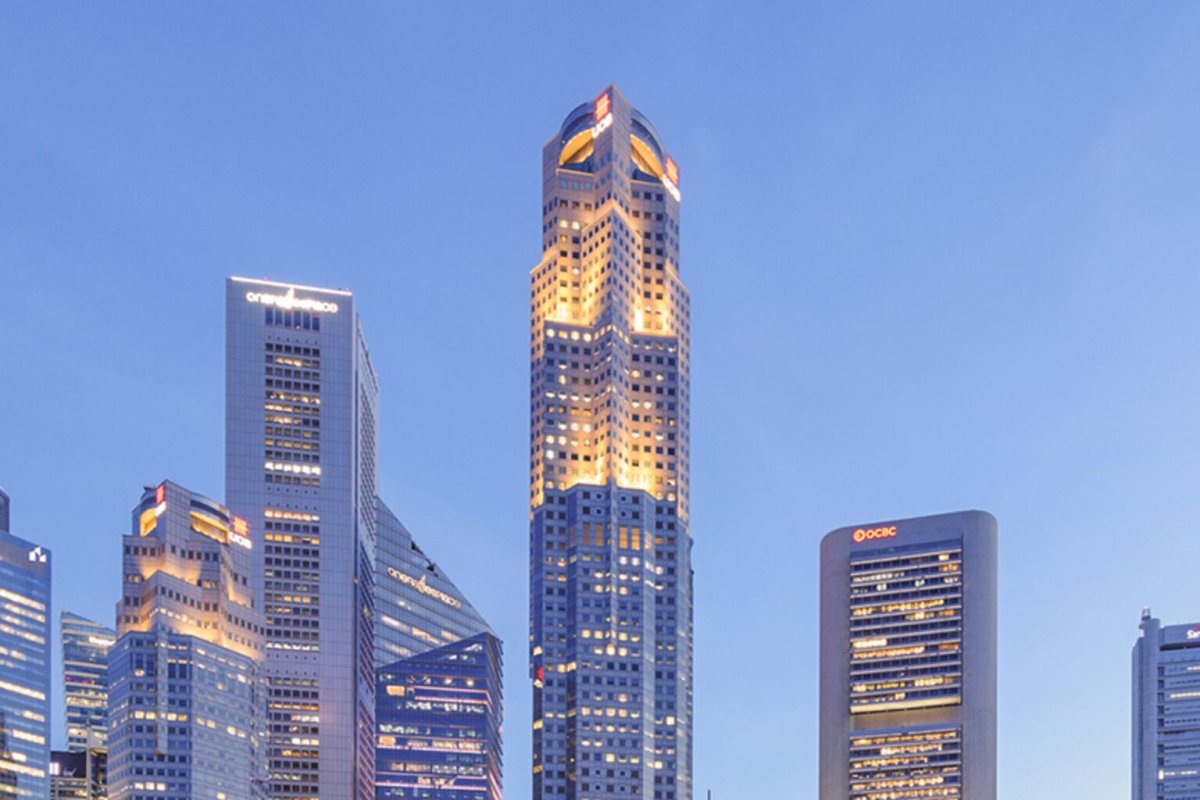
Singapore has initiated the liquidation of assets seized in its landmark S$3 billion money-laundering investigation, a process that will unfold over the next several years. The first two online auctions, featuring 624 lots of luxury handbags, accessories, and jewelry, opened this month, with more than 80 properties slated for sale in phases through mid-2027. While the asset disposal aims to convert frozen holdings into cash, its financial impact on United Overseas Bank (UOB) is indirect, tied more to the bank's ongoing compliance overhaul than to the auction proceeds themselves.
Auction Details and Timelines
The initial sales, conducted by auctioneer Hotlotz, include 338 handbags and accessories and 286 jewelry pieces, with combined estimated values ranging from S$2.9 million to S$3.9 million. Bidding closes on September 20 and September 27, respectively. Interested buyers must register and undergo identity verification, with a 20% buyer's premium added to final bids. A total of 15 online auctions are scheduled through May 2027, covering a wide array of confiscated luxury goods.
The property component is more extensive and slower to execute. Deloitte, appointed by the Singapore Police Force to manage the non-cash asset sales, indicated that over 80 properties and 1,000 luxury items will be sold from September 2026 to mid-2027. As of September 3, 25 properties had been listed, including a penthouse at South Beach Residences with a guide price of S$25.32 million and an office unit at Suntec Tower One guided at S$11.5 million.
For property investors, the phased approach is significant. It avoids flooding the market with all units at once, but the concentration of high-end properties could still influence transaction benchmarks. Successful bids will provide real market data for prime developments like South Beach Residences, Gramercy Park, and Martin Modern, offering clearer pricing signals than guide prices alone.
Early Demand and Market Response
Interest in the portable luxury goods has been tangible. According to The Straits Times, over S$1.3 million in bids had been registered by September 10. However, this figure is not a recovery total; auctions remain open, and the current catalogues represent only a fraction of the overall inventory. The property auctions, which carry far higher value, are yet to commence.
UOB's Compliance and Financial Position
UOB was the only domestic Singapore bank among nine financial institutions penalized by the Monetary Authority of Singapore in July 2025 for breaches linked to the money-laundering case. The bank accepted the S$5.6 million composition penalty and announced enhancements to transaction monitoring, customer due diligence, employee training, and technology. The fine is relatively minor compared to UOB's earnings—it represents roughly 0.19% of the S$2.915 billion net profit reported for the first half of 2026. Consequently, the immediate share price impact is likely limited.
The more pressing concern for investors is whether the strengthened controls can prevent future lapses without undermining operational efficiency. UOB's first-half expenses stood at S$3.152 billion, with a cost-to-income ratio of 44.9%. The bank has not disclosed specific ongoing costs attributable to the money-laundering remediation, leaving investors to monitor expense trends for any signs of structural increases.
UOB shares traded at S$42.33 in a delayed quote on September 14, up about 2.6% from the previous close of S$41.26. This movement appears driven by broader earnings and interest rate expectations rather than the auction process, which does not directly affect the bank's financials.
Implications and Outlook
The auction proceeds will be directed to Singapore's Consolidated Fund, as confirmed by the Ministry of Home Affairs, which also noted that no identifiable victims in Singapore have been linked to the seized assets. For creditors and observers, the key takeaways will be the actual clearing prices of the properties, any further regulatory actions, and UOB's expense trajectory. The spectacle of high-value items going under the hammer should not be mistaken for a new profit or loss item at the bank.