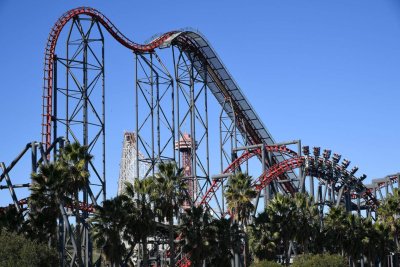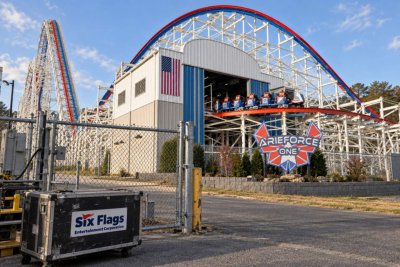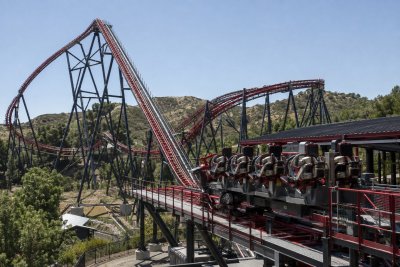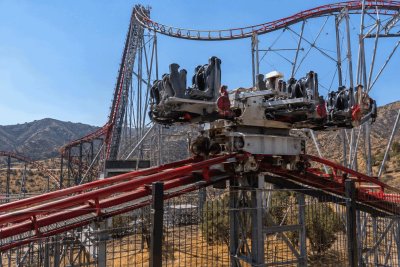
Six Flags Entertainment Corporation (NYSE:FUN) is set to unveil a new thrill attraction on Tuesday, but the company has yet to disclose which park, what type of ride, its opening date, or the capital expenditure involved. These missing details are crucial for investors to assess whether the announcement can meaningfully alter the company's investment thesis.
The announcement is scheduled for September 8, according to Theme Park Insider editor Robert Niles, who cited information from Six Flags' media representatives. This event is separate from a Six Flags Magic Mountain update planned for Thursday. As of Monday evening, no further financial specifics had been released.
This is essentially a pre-announcement test rather than a reason to project revenue. A compelling new ride could boost attendance and season-pass sales, but it also carries capital costs that may not translate into enough consolidated earnings to reduce the company's leverage burden.
The market has not yet priced in Tuesday's reveal. FUN closed at $15.51 on Friday, September 4, up 3.2% on the day but still 1.5% below its August 6 close following second-quarter results. U.S. exchanges were closed Monday for Labor Day, so Tuesday's trading session will provide the first market reaction to the news.
It's worth noting that the ticker symbol matters: older references to NYSE:SIX refer to the former Six Flags entity, while the combined company now trades as FUN. The current issuer's SEC filings confirm the FUN ticker.
The Hurdle Behind Tuesday's Tease
Same-park demand improved in the second quarter, but the company's leverage leaves little room for a purely decorative capital project. Key metrics from Q2 2026 include same-park attendance up 4% to 13.1 million visits, same-park revenue up 2.4% to $864.5 million, and same-park adjusted EBITDA up 7% to $248.9 million. However, per-capita spending dipped 1% to $62.88.
Net debt stood at $4.9 billion against just $135 million in cash. The company's latest regular close was $15.51 on September 4.
Attendance Works, Spending Softens
The operating picture is clear: attendance rose 4% in Q2, revenue increased 2.4%, and adjusted EBITDA gained 7%. This operating leverage is real—the same-park portfolio added $20.2 million in revenue and $15.9 million in adjusted EBITDA year-over-year, implying an incremental margin of about 78%.
But the mix was imperfect. Per-capita spending fell 1% to $62.88, with admissions spending down $0.91 per guest, partially offset by a $0.41 gain in in-park spending. A new attraction would be more valuable if it supports pricing or pass conversion, rather than just driving higher traffic.
Pass trends offer a route to that outcome. Season-pass visitation rose 10%, the active pass base grew 6%, and season-to-date pass sales increased 7%. An attraction with a credible opening window could pull forward 2027 pass purchases. An undated concept cannot.
A New Ride Must Clear the Balance-Sheet Test
Six Flags ended June with $5.0 billion in debt and $4.9 billion in net debt. Cash was $135 million, and available liquidity totaled $837 million, including $703 million under its revolving facility. Interest expense already consumes substantial earnings: Q2 net interest expense was $102.1 million, equal to 42% of reported adjusted EBITDA. Net debt was roughly 5.8 times trailing-12-month adjusted EBITDA, a simple calculation using company data.
This analytical ratio shows why management calls leverage reduction an 'essential financial priority.' CEO John Reilly also tied the quarter's progress to a 'disciplined approach to capital allocation.' Tuesday's announcement will be judged against that standard.
Investors need specifics on the park, opening season, capacity, and capital cost before estimating a return. A 2027 opening could influence current pass sales; a distant project cannot support near-term estimates. Demand, economics, and funding all matter. A single-park attraction can be strategically useful, but the threshold is measurable evidence that it extends visits, converts pass buyers, or improves pricing without delaying deleveraging.
The first confirmation point arrives Tuesday: the actual attraction, its park, and its opening schedule. Cost guidance would make the news investable. Without it, the reveal is marketing information, while the second-quarter attendance trend and debt load remain the harder facts.